ElevenLabs voice cloning consent policy requires users to have the rights and permission needed before cloning or uploading a person’s voice.
- Instant Voice Cloning asks users to confirm they have the right and consent to clone the voice.
- Professional Voice Cloning requires a verification step before training can begin.
- Paid users may use output commercially, but only when their use also follows ElevenLabs terms and prohibited use rules.
- Unauthorized impersonation, fraud, election misuse, harmful deception, and attempts to bypass voice verification are prohibited.
- Consent should be documented in writing, especially for client work, ads, podcasts, audiobooks, agents, and public campaigns.
- Legal risk depends not only on ElevenLabs rules, but also on privacy, publicity, AI transparency, robocall, and local consent laws.
The ElevenLabs voice cloning consent policy has become more than a small checkbox inside an AI audio dashboard. In 2026, ElevenLabs runs under Terms of Service last updated on 31 March 2026, while its official voice cloning documentation explains that cloned voices can generate speech the original speaker never actually said, which is exactly why permission, verification, and responsible use matter so much. ElevenLabs says its AI audio tools are used by millions of individuals and thousands of businesses, and Tennessee lawmakers cited a music economy supporting more than 61,617 jobs and contributing $5.8 billion to state GDP when they expanded legal protection for voice through the ELVIS Act, a useful reminder that a voice is not just sound, it can be identity, labor, trust, and commercial value. This review follows the practical trail from consent requirements to verification rules, commercial rights, prohibited content, and legal risks, so creators, marketers, developers, and businesses can use voice cloning with fewer blind spots. [1][2][3][4]
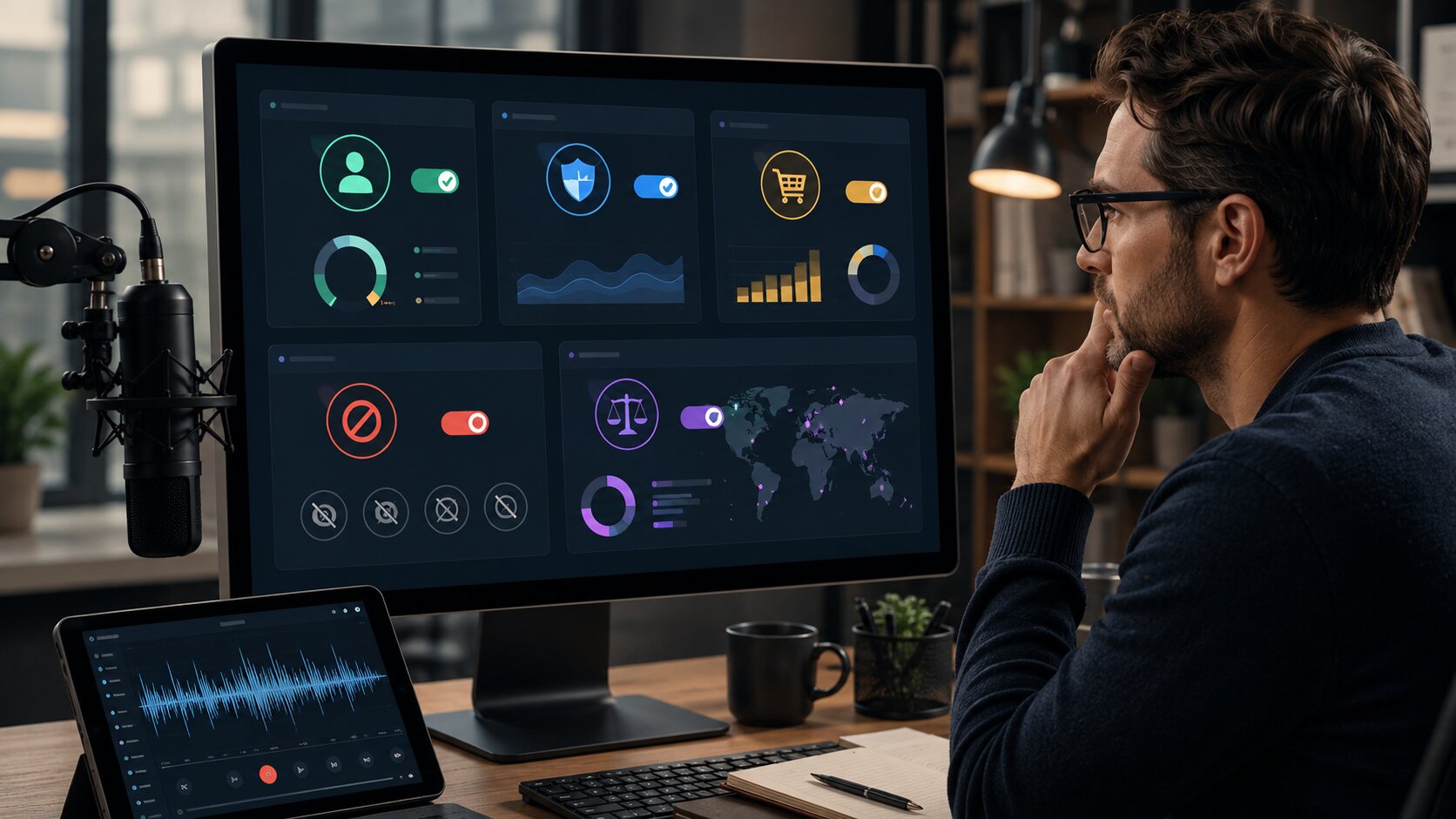
ElevenLabs Voice Cloning Consent Policy Snapshot for 2026
Before going deeper, it helps to separate the platform rule from the legal reality. ElevenLabs can define what is allowed inside its own service, but it cannot magically grant you rights to another person’s voice. That responsibility still sits with the user, especially when the cloned voice will appear in advertising, training content, audiobooks, apps, customer support agents, or any public facing media.
| Policy Area | What ElevenLabs Requires or Signals | Practical Meaning for Users |
|---|---|---|
| Consent | Users must have the rights needed to upload voice recordings, create a User Voice Model, and use the output. | Do not clone someone else’s voice unless you can prove permission or legal authority. |
| Instant Voice Cloning | The dashboard asks users to confirm they have the right and consent to clone the voice. | The clone may be fast, but the permission check should happen before upload. |
| Professional Voice Cloning | Training requires voice verification before the clone can be created. | Verification is a technical gate, not a replacement for a proper contract. |
| Commercial Use | Free users are limited to personal use, while paid users may use output commercially if they comply with the Terms and Prohibited Use Policy. | A paid plan can allow commercial output, but it does not solve talent rights, brand rights, or local law. |
| Prohibited Content | Unauthorized impersonation, fraud, harmful deception, candidate impersonation, unauthorized robocalling, and attempts to evade voice verification are not allowed. | Even with a convincing clone, some use cases remain forbidden. |
| Legal Risk | ElevenLabs places rights responsibility on users and may remove content, suspend accounts, or cooperate with authorities when policies are violated. | Keep written consent, production records, usage limits, and disclosure notes before publishing. |
How the ElevenLabs Voice Cloning Consent Policy Officially Works
The official ElevenLabs voice cloning consent policy is not found in one single sentence. It is spread across the Terms of Service, product documentation, Prohibited Use Policy, and safety materials. That matters because many users search for one simple rule, while the actual compliance picture is built from several layers.
The key phrase in the Terms is the idea of a User Voice Model. ElevenLabs describes this as a voice model that can generate synthetic audio sounding like your voice or a voice you are authorized to share with the company. The same Terms say users may be asked to upload recordings of their own voice or a voice they are authorized to share, and users retain rights in their input and output except as expressly stated in the Terms. [1]
The more important part for businesses is the necessary rights clause. ElevenLabs says users may not provide input or create output unless they have all rights needed to grant ElevenLabs the license described in the Terms, and users represent that their content and voice models will not violate anyone else’s rights or cause injury to any person or entity. In plain English, ElevenLabs does not want the user to upload a voice and later claim the platform should have solved the rights problem for them. [1]
Consent Is Not Just a Button in the ElevenLabs Voice Cloning Workflow
Consent should be understood as a documented permission chain, not only a dashboard confirmation. A clean consent record should identify whose voice is being cloned, who owns or controls the recording, what the cloned voice may be used for, where it may be distributed, whether commercial use is allowed, and how long the permission lasts. This is especially important when the speaker is an actor, employee, host, influencer, executive, customer support agent, narrator, teacher, or public figure.
For small creator projects, that might look like a signed release from the speaker plus a note that the voice will be used for YouTube narration, podcast localization, or internal training. For agencies, it should look closer to a production contract with usage territory, duration, media type, revision rights, client ownership boundaries, disclosure requirements, and takedown procedures. For software teams, consent should also cover model storage, access control, employee access, logs, deletion requests, and whether the cloned voice will be used through API based products.
Why Voice Rights Are Different From Audio File Rights
Owning an audio file does not always mean owning the right to clone the person speaking in it. A company may own a recorded webinar, but the speaker’s voice, likeness, privacy, or publicity rights can still raise separate questions. That gap is where many careless AI projects become risky.
ElevenLabs itself frames voice cloning as the process of capturing vocal characteristics such as timbre, cadence, accent, and pronunciation, then applying those traits to new speech synthesis. Its documentation also clarifies that voice cloning captures a representation of a voice, not a recording of the original audio. That distinction is critical because the output can make the voice appear to say new words, in new contexts, with new commercial meaning. [2]
ElevenLabs Voice Cloning Consent Requirements for Real Projects
Consent requirements are simple in principle but messy in real workflows. The safest starting point is to assume that every cloned voice needs documented permission unless it is your own voice or a voice you have a clear legal right to use. This rule becomes more serious when money, audience reach, paid ads, brand endorsement, political topics, professional advice, or customer interaction enters the picture.
The ElevenLabs voice cloning consent requirements should be read alongside the Terms because the platform gives users access to powerful output while also making users responsible for rights clearance. If a user uploads voice samples, creates a voice model, and distributes synthetic speech, the user must be able to defend each step. A casual “the client sent me the file” is weak evidence if the speaker later objects.
For practical use, consent should cover at least these points:
- Speaker identity: The consent document should clearly identify the person whose voice is being cloned.
- Source recording rights: The user should confirm that the recording was lawfully obtained and may be uploaded for voice model creation.
- Voice model permission: The document should explicitly allow the creation of a synthetic voice model, not only editing or publishing the original recording.
- Allowed use cases: The consent should specify whether the voice can be used for ads, audiobooks, podcasts, social media, AI agents, elearning, localization, internal training, or client work.
- Commercial rights: If the voice will support paid content, sponsored content, product promotion, or business output, commercial use should be written clearly.
- Disclosure expectations: The speaker and publisher should agree whether audiences will be told that synthetic voice technology was used.
- Duration and territory: Consent should explain how long the voice may be used and whether usage is global or limited to certain markets.
- Revocation and takedown: The agreement should explain whether permission can be withdrawn and what happens to already published materials.
ElevenLabs Voice Cloning Verification Rules, Instant and Professional
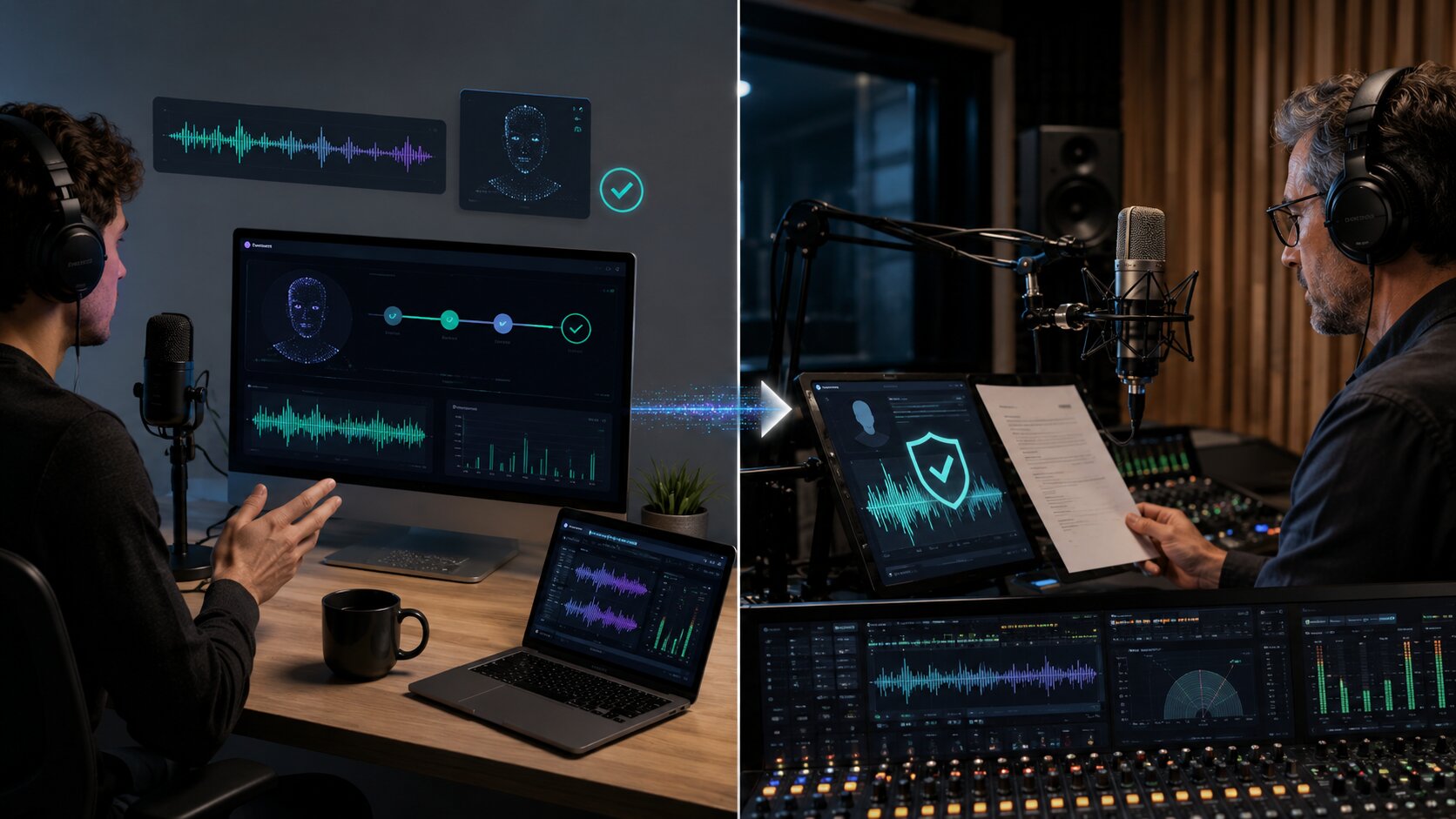
Verification is one of the most misunderstood parts of the ElevenLabs voice cloning consent official policy. It is a safety mechanism, but it is not the same thing as a full legal release. A platform can ask the user to verify a voice or confirm rights, but a business still needs a real consent trail outside the interface.
ElevenLabs separates voice cloning into Instant Voice Cloning and Professional Voice Cloning. The technical difference matters because the verification experience, audio requirements, and risk profile are not identical. Instant cloning is built for speed, while professional cloning is designed for higher quality and requires more friction before training.
ElevenLabs Instant Voice Cloning Consent
In the Instant Voice Cloning guide, ElevenLabs instructs users to upload or record audio, then name and label the voice clone. At the confirmation step, the user must confirm that they have the right and consent to clone the voice before saving it. The same documentation recommends at least one minute of audio and notes that adding more than three minutes may bring little improvement and can even hurt the clone in some cases. [5]
This tells us something important about risk. Instant Voice Cloning can be technically quick, but the consent check should not be quick. The faster the tool, the more important it becomes to slow down before upload, especially when the source audio came from a meeting recording, public video, podcast clip, social media post, customer call, or talent audition.
ElevenLabs Professional Voice Cloning Consent
Professional Voice Cloning has a higher threshold. ElevenLabs says professional clones do not currently support singing and that audio recordings must consist of spoken voice only. Its dashboard guide recommends uploading at least one hour of training audio for best results, ideally close to three hours, then asks users to verify the voice after recordings are uploaded and processed. [6]
The API quickstart is even more explicit about the verification gate. Before training can begin, a verification step is required to ensure the user has permission to use the voice. The process uses a verification CAPTCHA containing lines of text that the voice owner needs to read aloud and record, then the recording is submitted to verify the identity of the voice owner. [7]
Why Verification Does Not Replace a Contract
Voice verification can help reduce misuse, but it does not answer every legal question. It may show that someone had access to the voice owner or that the voice owner participated in a verification step, but it does not automatically define permitted media, duration, territory, exclusivity, payment, revocation, or future reuse. Those details belong in a consent agreement or talent contract.
This is where agencies and companies should be more careful than casual users. If an employee verifies a professional clone for an internal project, that does not necessarily mean the company can later use the same voice in paid ads, public customer service agents, or international product videos. Permission should match the real use, not the most convenient interpretation.
ElevenLabs Voice Cloning Commercial Use and Rights
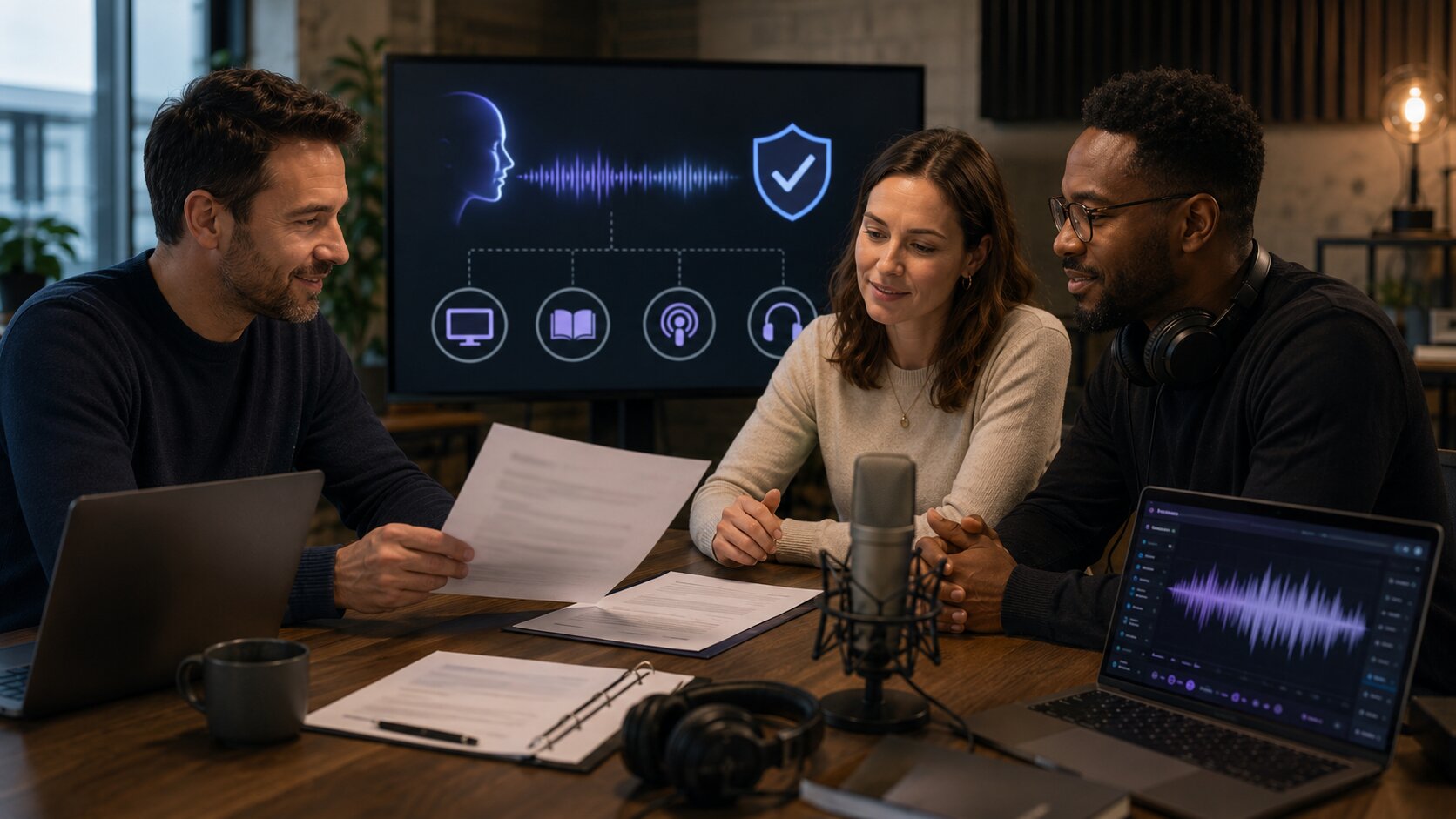
Commercial use is where many users mix up platform permission with legal permission. ElevenLabs Terms say free users may only use the Services for noncommercial purposes, while paid users may use the Services for commercial purposes, but in both cases access, use, and output must comply with the Prohibited Use Policy. That means the subscription level can affect commercial use, but it does not remove the need for voice rights. [1]
The Terms also say users retain rights in their input and output except as expressly stated. At the same time, users grant ElevenLabs a license to use content and User Voice Models to provide the service, operate trust and safety features, improve services, and develop new products, while ElevenLabs says it will not commercialize a user’s voice on a standalone basis without permission. This is a crucial reading point for anyone uploading valuable voice material, because platform use rights and publisher use rights are related but not the same thing. [1]
Commercial Use Requires Two Layers of Permission
The first layer is permission from ElevenLabs under the account plan and terms. The second layer is permission from the voice owner or rights holder. Both are needed for a clean commercial project.
For example, a paid ElevenLabs account may allow a creator to generate a voiceover for a paid course, but if that voice belongs to a narrator who never agreed to AI cloning, the project still carries risk. Likewise, a brand may have a contract to use a celebrity recording in one campaign, but that does not automatically allow training a synthetic voice for future ads. The rights should be specific enough to cover voice cloning, synthetic output, commercial distribution, and the channels where the audio will appear.
Commercial Use Also Needs Audience Trust
Commercial use is not only a legal question. It is also a trust question. If an audience hears a familiar voice endorsing a product, answering support calls, narrating a course, or delivering financial information, they may assume the person personally recorded or approved the message.
ElevenLabs safety materials emphasize transparency and say people should know when they are interacting with AI. Its Prohibited Use Policy also requires organizations using services such as ElevenAgents to clearly and prominently disclose to users that they are interacting with AI rather than a human. For business use, that makes disclosure a practical part of responsible voice cloning, not just a public relations afterthought. [3][8]
ElevenLabs Prohibited Content Policy Voice Cloning Rules
The ElevenLabs prohibited content policy voice cloning rules are direct about impersonation. The policy prohibits creating or using audio output to intentionally replicate another person’s voice without consent or legal right, in a way that harasses or harms that person, or in a manner intended to deceive others about whether the voice was generated by AI. It also prohibits evading guardrails, including voice verification mechanisms such as Voice CAPTCHA. [8]
This is where the ElevenLabs voice cloning safety consent official framework becomes more than a legal formality. Consent is not a magic shield for every use case. A person may allow a voice clone for an audiobook, but that does not allow scam calls, deception, harassment, unauthorized sexualization, or political impersonation.
ElevenLabs also prohibits fraudulent, predatory, or abusive practices, including scams, manipulation, unauthorized robocalling, spam, and efforts to gain unauthorized access to sensitive information. The policy separately restricts election misuse, including voter suppression, candidate impersonation, and political campaigning in the election context. For creators, this means a cloned voice should not be used to fake authority, pressure a listener, mislead voters, impersonate a candidate, or make people believe a real person said something they did not say. [8]
Prohibited Content Is Broader Than Voice Theft
Unauthorized voice cloning is only one category. The policy also bars illegal behavior, intellectual property violations, privacy violations, certain high stakes automated decision making, and tailored professional advice without qualified professional review and clear AI disclosure. It also prohibits violent, hateful, harassing material outside fictional contexts, along with misinformation in specific harmful categories. [8]
For a publisher or business, this matters because a legally cleared voice can still be used in a prohibited way. A licensed narrator voice used for a harmless tutorial is different from the same voice being used to deliver medical advice without review, push a financial scam, impersonate a public official, or deceive a customer into thinking a human support agent is speaking. Permission to use a voice does not equal permission to mislead.
Safety Enforcement and Traceability
ElevenLabs says its systems are designed to trace generated content back to the user who generated it. Its Help Center also says all audio generated by its models can be traced back to the responsible user, and known infringements will be reviewed and actioned. The Safety page describes a layered system that includes AI classifiers, human reviewers, internal investigations, user reports, blocking of celebrity and other high risk voices, and technological verification for Professional Voice Cloning. [3][9]
There is one important caveat. ElevenLabs says no safety system is perfect, and its AI Speech Classifier page says the classifier uses only the first one minute of an uploaded sample and does not reliably classify audio generated with the ElevenV3 model. In practical terms, detection tools help, but they should not be treated as a complete compliance system. [3][10]
ElevenLabs Voice Cloning Legal Risks in 2026
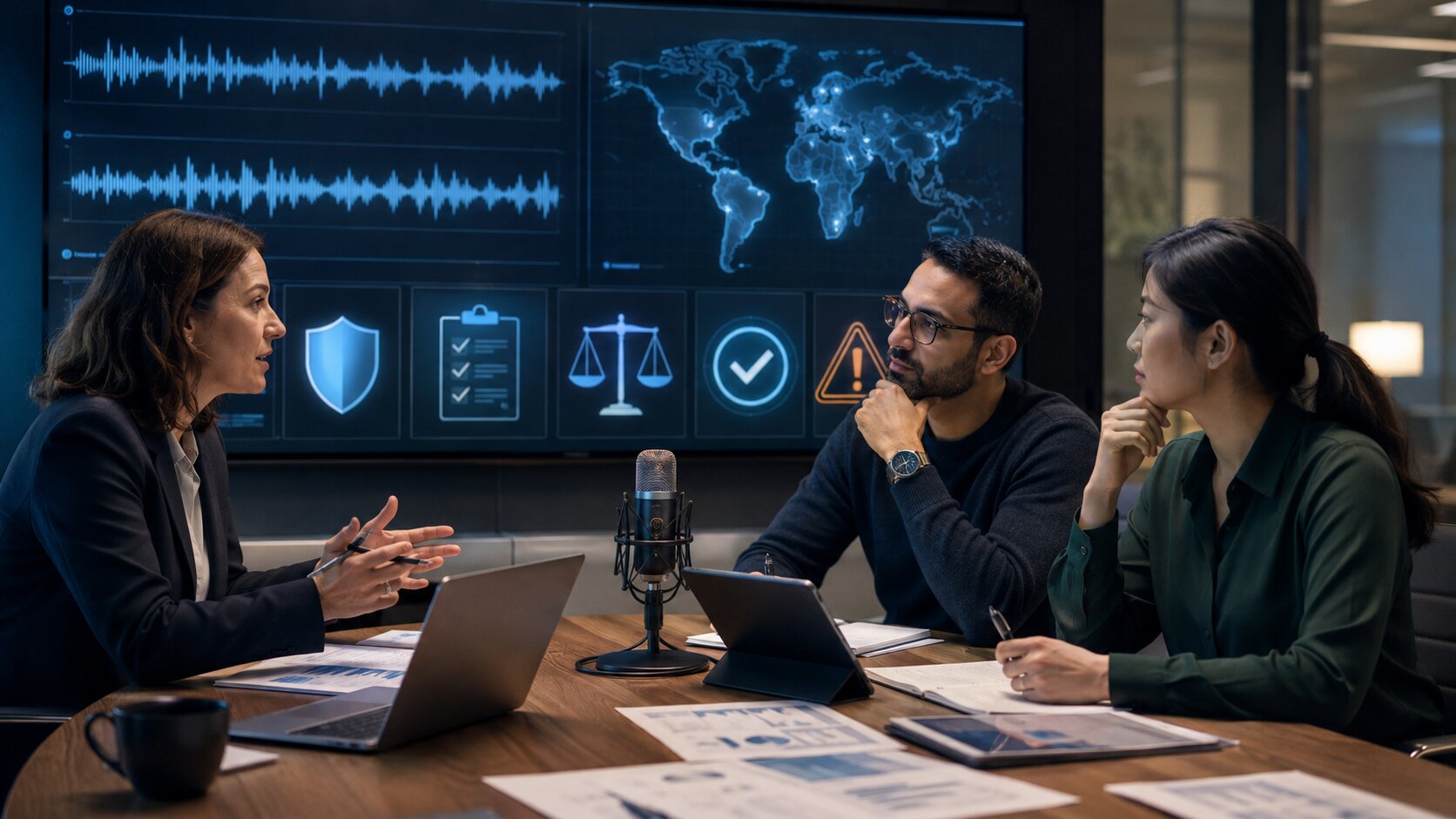
Legal risk does not stop at ElevenLabs account rules. Voice cloning can touch privacy law, publicity rights, consumer protection law, advertising law, election law, robocall rules, AI transparency obligations, and contract law. The exact risk depends on where the speaker lives, where the user operates, where the audience receives the content, and how the audio is distributed.
The FTC has repeatedly treated AI enabled voice cloning as a fraud and consumer protection concern. In its discussion of approaches to AI enabled voice cloning, the FTC said there is no silver bullet to prevent voice cloning harms and that companies releasing tools with misuse potential may be held liable in certain circumstances if they do not implement guardrails. It also stated that there is no AI exemption from existing laws. [11]
The FCC has also acted in a specific channel, phone calls. Its February 2024 Declaratory Ruling confirmed that the Telephone Consumer Protection Act restrictions on artificial or prerecorded voice include current AI technologies that generate human voices, meaning covered calls require prior express consent unless an emergency purpose or exemption applies. For anyone using cloned audio in outbound calling, this is a major warning sign. [12]
Publicity Rights and Performer Rights
Voice can function as a personal and commercial identity marker. In Tennessee, the ELVIS Act updated state personal rights protection by adding voice to the protected realm and addressing AI generated synthetic media that can exploit artists, songwriters, performers, and other music professionals. The governor’s office framed the law as a response to personalized generative AI cloning models that enable human impersonation and unauthorized fake works in the image and voice of others. [4]
This does not mean every jurisdiction has the same rule. It does mean that businesses should stop treating a voice as a generic audio texture. If a cloned voice sounds like a recognizable person, especially a performer, influencer, public figure, employee, executive, or professional narrator, the safer approach is to get explicit written permission before cloning, publishing, monetizing, or sublicensing the output.
AI Transparency and Deepfake Disclosure
The EU AI Act adds another layer for teams distributing AI generated or manipulated media in Europe. The European Commission’s 2026 Code of Practice on Transparency of AI Generated Content explains that Article 50 transparency obligations apply from 2 August 2026 and relate to marking, detection, and labeling of AI generated content, including deepfakes. It also says deployers must disclose content that is artificially generated or manipulated when it constitutes a deepfake, including audio or video that resembles existing persons or events and could falsely appear authentic or truthful. [13]
For voice cloning, the practical lesson is clear. Disclosure should be planned before publication, not added after controversy. A podcast intro, customer support agent, political parody, fictional character, translated audiobook, or ad campaign may each need different disclosure language, but the internal review should always ask whether a reasonable listener could be misled.
Practical Checklist Before Cloning a Voice with ElevenLabs
A good checklist is not bureaucracy. It is protection for the creator, the client, the speaker, and the audience. Most voice cloning problems do not begin with malicious intent, they begin with rushed assumptions.
Before cloning a voice, move through the following checks:
- Confirm the speaker: Identify whose voice will be cloned and whether the person is living, deceased, public, private, employed, contracted, or represented by an agent.
- Confirm recording rights: Make sure the source audio was lawfully recorded and may be uploaded to ElevenLabs.
- Get explicit voice cloning consent: Use written permission that mentions AI voice cloning, synthetic voice model creation, and generated speech.
- Define allowed use: Specify whether the clone may be used for internal drafts, public content, ads, training, customer support, API products, audiobooks, games, or localization.
- Check commercial use: Confirm that the ElevenLabs account plan allows the intended use and that the speaker has granted commercial rights.
- Review prohibited use: Screen the project against impersonation, fraud, harassment, election misuse, unauthorized robocalling, professional advice, and privacy risks.
- Complete verification properly: For Professional Voice Cloning, make sure the voice owner completes the required verification and no one attempts to bypass Voice CAPTCHA.
- Plan disclosure: Decide how and where listeners will be told that AI generated or synthetic voice audio is used.
- Limit access: Restrict who can use the cloned voice, especially in team workspaces, client accounts, and API integrations.
- Keep records: Store the consent form, speaker approval, script approval, account plan, verification notes, publication dates, and takedown process.
- Review local laws: Check privacy, publicity, consumer protection, advertising, election, and AI transparency rules in relevant jurisdictions.
- Prepare a removal path: Decide how to pause, delete, or replace cloned audio if consent changes, a campaign ends, or a rights dispute appears.
Who Should Be Most Careful with ElevenLabs Voice Cloning Permission Consent Policy
Not every use case carries the same risk. Cloning your own voice for private drafts is very different from cloning another person’s voice for a paid campaign. The more recognizable, persuasive, intimate, or commercial the voice is, the more careful the review should be.
Marketing teams should be careful when a cloned voice implies endorsement. Publishers should be careful when using synthetic narration for audiobooks, journalism, or educational content. Developers should be careful when building AI agents that speak to customers, patients, students, or financial users. Agencies should be especially careful because they often sit between the client, platform, talent, and audience, which means they can inherit risk from every direction.
Lower Risk Uses
Lower risk uses usually involve your own voice, private testing, internal drafts, or synthetic audio that is clearly disclosed and does not imitate another person. Even then, the user should still follow account rules and avoid prohibited content. A private clone can become risky if it later escapes into public or commercial distribution without review.
Higher Risk Uses
Higher risk uses include celebrity imitation, political content, robocalls, financial messages, medical or legal advice, ads that sound like personal endorsement, customer service agents, deceased performers, employee voices, and voice clones based on scraped public audio. These use cases should go through written consent, legal review, disclosure planning, and access control before any production work begins.
What the ElevenLabs Voice Cloning Documentation Does Not Solve for You
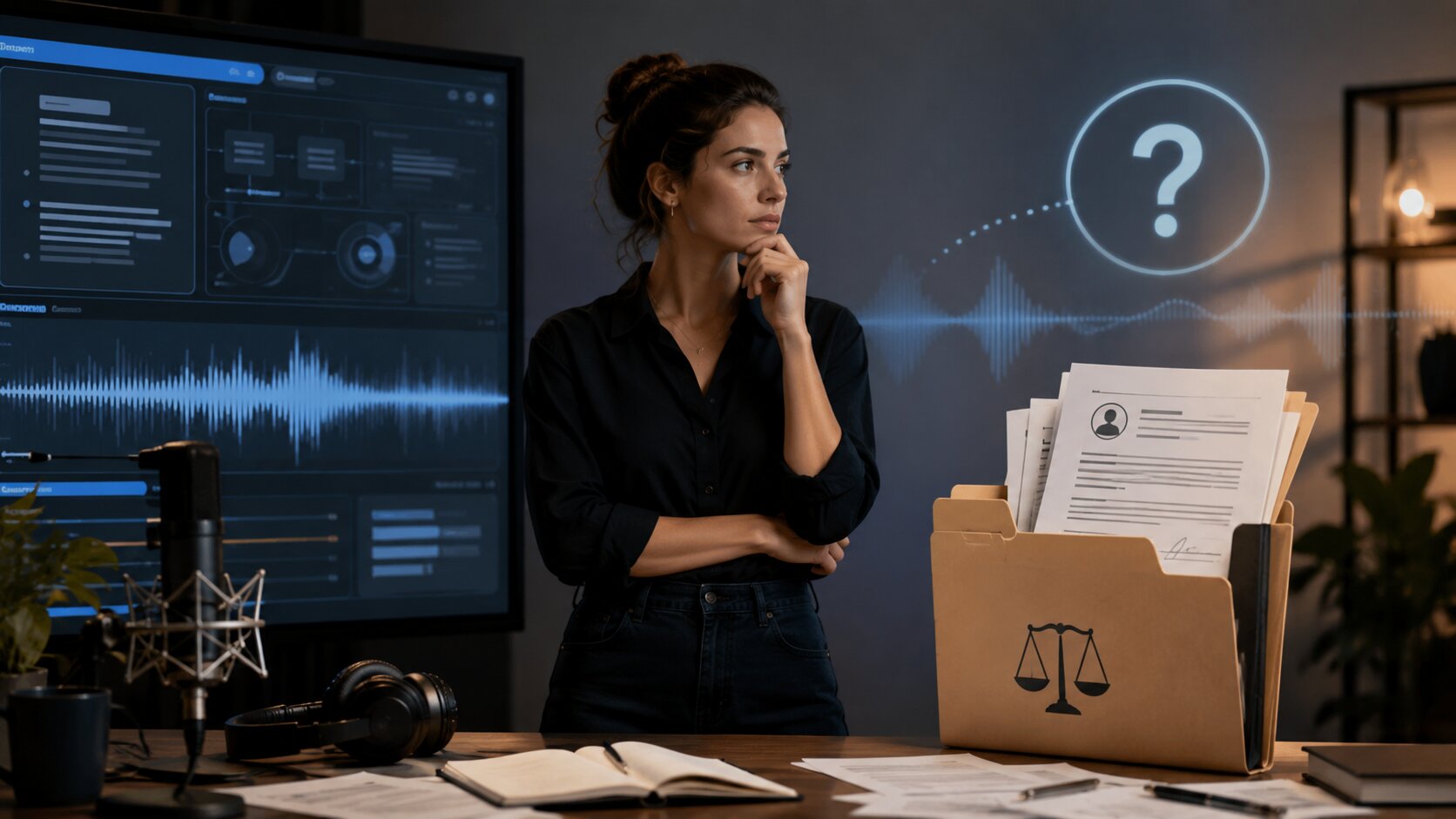
ElevenLabs documentation is useful, but it is not a substitute for legal clearance. The platform explains how cloning works, what users must confirm, what verification is required, and what uses are prohibited. It does not decide whether your voice talent agreement, employment contract, estate permission, influencer deal, or customer support workflow is legally sufficient.
This is the hidden trap in AI voice workflows. A tool can make production feel effortless while the rights trail remains incomplete. A client may approve a script, a manager may upload a sample, and a creator may generate beautiful audio, yet the speaker may never have approved synthetic reuse.
For responsible teams, the safest habit is to separate creative approval from voice rights approval. Creative approval asks whether the audio sounds good. Voice rights approval asks whether the person, license holder, employer, estate, or representative actually gave permission for this specific synthetic use.
A Safer Way to Read the ElevenLabs Voice Cloning Policy in 2026
The most useful way to read the ElevenLabs voice cloning consent policy 2026 is not as a barrier to creativity. It is a production framework. It tells serious creators to treat voice cloning like licensed media, talent performance, and identity management at the same time.
If you are cloning your own voice, the path is usually more straightforward, but you still need to follow platform rules and avoid deceptive use. If you are cloning someone else’s voice, permission should be explicit, documented, and matched to the real use case. If the output will be public, commercial, persuasive, automated, or legally sensitive, the project deserves a deeper review before the first sample is uploaded.
Voice cloning is powerful because it can preserve a familiar sound, speed up localization, improve accessibility, scale narration, and help creators work faster. It is risky for the same reason, the result can feel personal, human, and trustworthy. The line between smart production and harmful impersonation is not the quality of the clone, it is consent, context, disclosure, and proof. If you have used ElevenLabs voice cloning for creative, business, or client work, share your experience or questions in the comments so other readers can learn from real workflows, not just policy pages.
References
- ElevenLabs — Terms of Service, non EEA, Last Updated 31 March 2026
- ElevenLabs Documentation — Voice Cloning, How It Works
- ElevenLabs — Safety
- Tennessee Governor Bill Lee — Gov. Lee Signs ELVIS Act Into Law
- ElevenLabs Documentation — Instant Voice Cloning
- ElevenLabs Documentation — Professional Voice Cloning
- ElevenLabs Documentation — Professional Voice Cloning Quickstart
- ElevenLabs — Prohibited Use Policy
- ElevenLabs Help Center — Restrictions on Voice Uploads for Voice Cloning
- ElevenLabs — AI Speech Classifier
- Federal Trade Commission — Approaches to Address AI Enabled Voice Cloning
- Federal Communications Commission — Declaratory Ruling on AI Generated Voices and the TCPA
- European Commission — Code of Practice on Transparency of AI Generated Content
Frequently Asked Questions
Ready to apply this to your business?
Let's Talk Strategy →