
Meta Ads Updates in December 2025 changed how brands scale creators, target in the EU, and think about new signals from Meta AI.
- Partnership Ads AI expands creator content discovery and adds richer post level insights inside Ads Manager, so you can scale what already performs.
- EU targeting shifts introduce a clearer choice between fully personalised ads and a lower data option starting January 2026, which increases the value of broad targeting and strong creative.
- Meta AI signals start influencing content and ad recommendations on December 16, 2025 for people who use Meta AI, with sensitive topics excluded.
Best next step, build a repeatable workflow for UGC intake, permissions, and testing, then harden measurement and compliance so performance stays stable as signals change.
Meta Ads Updates in December 2025 landed with the kind of quiet force that changes budgets without announcing itself in your dashboard, creator partnerships got an AI powered fast lane, EU targeting moved closer to a low data future, and Meta AI conversations became an ad personalization signal on a fixed date. One number captures the mood, Meta says partnership ads drive 19 percent lower CPA and 13 percent higher click through rates on average, compared with regular campaigns, which is a performance promise big enough to reshape creative workflows. Another number explains why Meta keeps pulling new signals into the ad system, Meta AI is now described as having 1 billion monthly active users, which turns “chat” into a measurable input at scale. [1] [6]
Below is the practical read, what changed, why it matters, and what to do next if you run Meta ads as a business system, not a hobby.

Meta Ads Updates December 2025, the changes that actually move performance
December did not deliver one single shiny feature, it delivered three shifts in how Meta expects marketers to source creative, handle consent constrained audiences, and think about “signals” beyond clicks. If you zoom out, the month is Meta doubling down on automation while regulators push in the opposite direction, toward data minimization. The uncomfortable truth is that both forces are real, and the winning play is learning how to operate when they collide.
Before we go deep, here is a quick table you can use as a planning map for Q4 into January.
| December 2025 update | Effective timing | What changed | Why it matters | What to do next |
|---|---|---|---|---|
| Partnership Ads Hub expansion and AI driven creator discovery | Announced Dec 11, 2025 | Hub expands discovery to include more organic content types, plus richer performance insights, plus a new Partnership Ads API | Turns creator marketing into a scalable performance channel inside Ads Manager | Build an approval to scale workflow, define UGC intake rules, track winners by post level signals |
| EU targeting and ad personalization choice moves toward “less data” | Announced Dec 8, 2025, rollout starts Jan 2026 | EU users get a clearer choice, fully personalised ads with full consent, or limited personalised ads with less data | Expect weaker determinism in targeting, and more reliance on context and creative | Rebuild for broad targeting, tighten first party data, treat creative as the targeting |
| Meta AI chats become a personalization input | Effective Dec 16, 2025 | Interactions with Meta AI can inform content and ad recommendations, with sensitive topics excluded, and no opt out for users who use Meta AI | “Conversation intent” becomes a new signal class, outside the classic click path | Update privacy messaging, focus on intent aligned creative, monitor brand trust and feedback |

Meta Ads Updates December 2025, Partnership Ads AI turns creator content into a media buying pipeline
This is the December update that will feel small until it suddenly becomes your highest ROAS experiment. Meta’s direction is clear, they want creator content to be discoverable, evaluable, and deployable as ads without the traditional friction of spreadsheets, email threads, and file transfers. The immediate beneficiary is anyone who already has organic creator mentions and wants to scale them, the hidden beneficiary is anyone who learns how to manufacture those mentions intentionally.
Partnership Ads Hub “All” tab expands what brands can discover, and why that matters
Meta is expanding what advertisers can discover inside the Partnership Ads Hub, including more organic sources such as user generated and affiliate content, plus brand tags and mentions. This matters because it changes the default question from “which creator should we hire” to “which existing post already has signal.” It is a subtle shift, but it turns the ad account into a content intelligence surface, not just a spend console. [1]
What to do next in Ads Manager workflows
- Build a weekly “post triage” ritual, shortlist posts that already have native traction, then request partnership permissions to scale.
- Write a UGC brief that optimizes for save, share, and comment intent, because those are the signals the hub surfaces.
- Decide your red lines early, what content you will not scale even if it performs, to avoid brand safety surprises.
Check out this fascinating article: Holiday Season 2025 Ad Playbook: Meta, Google, and TikTok — What Actually Works
Built in performance insights, the metric upgrade most teams ignore
Meta says advertisers can review creator content performance signals directly in the hub, views, likes, comments, shares, and similar engagement signals, to judge what might succeed as an ad. That sounds basic, but it fixes a common failure mode, teams boosting the wrong creative because they only look at click through rates after spend. With hub level signals, you can pre qualify creative before media buying touches it. [1]
How to translate creator signals into ad decisions
- Use comments as a proxy for objection handling, if the comments ask price, sizing, availability, you are seeing buying intent.
- Use saves as a proxy for future action, especially for higher consideration products where people “bookmark” before buying.
- Use shares as a proxy for social proof potential, share heavy posts often scale well in cold audiences.
Partnership Ads API, the operational leap for agencies and platforms
Meta’s update includes a new Partnership Ads API, designed to scale partnership ad creation programmatically. That matters if you manage many creators, many brands, or many markets, because manual whitelisting workflows do not scale cleanly. The API framing is also a signal, Meta expects creator marketing to behave like performance marketing infrastructure. [2] [3]
Where the API changes the game
- If you run a creator marketplace, you can automate ad creation once permissions exist, reducing human bottlenecks.
- If you are an in house team, you can standardize naming, UTMs, and governance across markets with fewer mistakes.
- If you are an agency, you can productize creator scaling, not just “manage creators.”

Meta Ads Updates December 2025, EU targeting shifts force a low data operating model
Europe is where many ad systems go to learn humility. In December, the European Commission said Meta will give EU users a clearer choice between fully personalised ads with broader data sharing, or an experience with more limited personalised advertising that uses less personal data, starting in January 2026. This is not a theoretical debate, it is a calendar event that changes how much signal you can assume in EU delivery. And because EU policy trends often spread, it is also a preview of what “normal” could look like elsewhere over time. [5] [6]
What the EU decision means in practice, fewer deterministic levers
The EU framing is explicit, it is about meaningful choice, and reducing data sharing when users choose the limited route. Reuters reported the change follows DMA pressure and a prior fine, and the Commission says it will monitor adoption and impact after rollout. For advertisers, that usually translates into larger modeled segments, more contextual relevance, and less ability to micro target with confidence. [6] [7]
What to expect if you buy media in the EU
- Higher volatility in lookalike precision, because the underlying signal pool can shrink for a subset of users.
- More importance on creative variation, because creative becomes a key lever when targeting narrows.
- More pressure on measurement quality, because platform reported conversions can become more modeled.
Meta’s own description of “less personalised ads”, context and minimal data points
Meta previously described a less personalised option in the EU as relying on less data, using context and a minimal set of data points, including age, location, gender, and how a person engages with ads. Meta also warned this can reduce relevance, because less data means less precision. Even if details evolve, that description tells you what direction the system is designed to take, “session context” plus minimal demographics. [8]
How to adapt campaigns without guessing
- Treat EU campaigns like a creative and offer testing engine, not a targeting experiment.
- Strengthen first party data inputs where allowed, conversions API quality, CRM lists with appropriate consent, and clean event taxonomy.
- Use incrementality thinking for budget decisions, do not rely on one metric view of performance.
The compliance to performance bridge, trust becomes a growth lever
A lot of teams treat EU compliance as legal overhead, but in a low data environment, user trust can become a performance input. When users feel tricked, they opt out more, and signal quality drops. When users feel informed and respected, they stay engaged, and the system has more room to learn. That is not moralizing, it is operational reality in consent driven markets.
Simple trust moves that also help performance
- Use clear landing page explanations for how you use data, especially for lead gen.
- Avoid dark patterns in opt in flows, they backfire when regulators and users pay attention.
- Design creative that does not rely on hyper personal claims, keep it value led and transparent.

Meta Ads Updates December 2025, Meta AI conversations become ad personalization signals on Dec 16
The most misunderstood Meta update this quarter is not a new placement or a new bidding toggle, it is a new class of signal. Meta said it will start personalizing content and ad recommendations based on people’s interactions with its generative AI features, and that notifications begin October 7, 2025, with the change taking effect on December 16, 2025. Reuters also reported that for users who engage with Meta AI there is no opt out, and that the rollout excludes the UK, EU, and South Korea. If you advertise outside those regions, this is a material input shift, because “conversation intent” can sit upstream of search and clicks. [4] [6]
What Meta says it will and will not use, and why marketers should care
Reuters reported Meta said sensitive topics discussed with Meta AI, such as health, religion, sexual orientation, and political views, will not be used for advertising. That matters for brand risk and user trust, because it draws a boundary line around the most regulated intent categories. It also matters for performance teams because it clarifies, this is not unlimited personalization, it is signal expansion with constraints. [6]
Practical implications
- Intent signals can become fresher, because chat is often closer to “I am considering” than a like.
- Ad relevance may improve in categories where people ask practical questions, travel, hobbies, tools, learning.
- Brands must watch perception, users may not love the idea of chat influencing ads, even if it is disclosed.
Check out this fascinating article: 2025 Meta Ads Strategy Guide: How Andromeda + Lattice Redefine Creative & Data Signals
What marketers should do, align creative to intent, not identity
In a world where identity targeting becomes more constrained, intent alignment becomes the safer path. Instead of trying to guess who someone is, focus on what someone is trying to do, solve, or decide. This is not just philosophy, it affects how you write hooks, choose UGC scripts, and structure landing pages.
A creative playbook designed for intent signals
- Build creatives around “jobs to be done,” for example plan, learn, compare, fix, upgrade, gift.
- Use UGC that demonstrates a process, not just a result, it creates context that algorithms can match.
- Keep your offer language explicit, avoid bait hooks that win cheap clicks but lose trust.
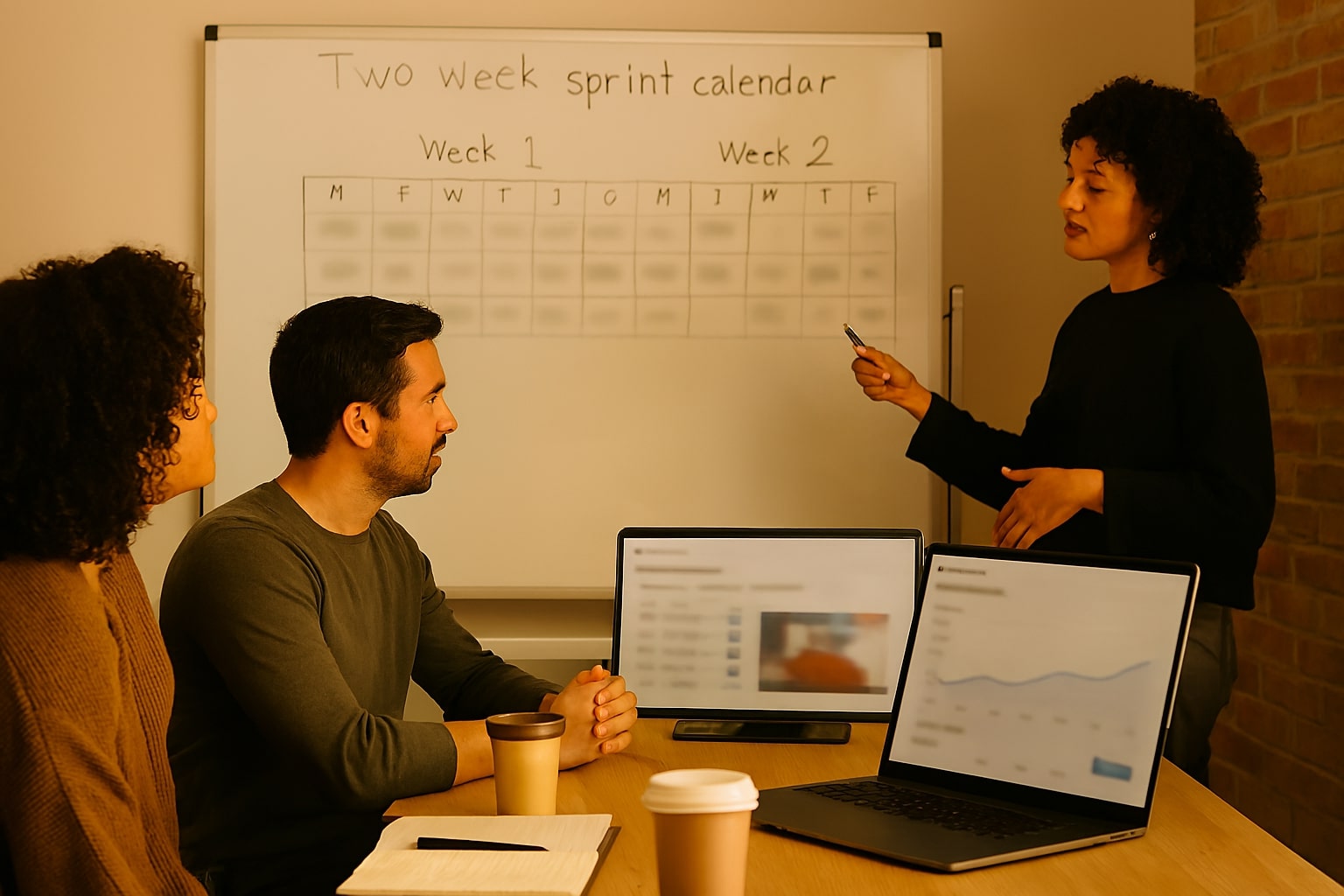
What marketers should do next, a two week plan that respects both AI and regulation
Meta’s December changes reward teams that treat ads as a system, creative supply, signal quality, measurement, and governance all connected. The fastest wins come from fixing operational friction, not from chasing every new feature. If you want a realistic next step, run a two week sprint that starts with creator content, then hardens your EU readiness, then updates your privacy and brand trust guardrails.
Days 1 to 4, build a Partnership Ads intake system
You do not need more creators first, you need a process that finds, approves, and scales what is already working. Inventory existing mentions, collabs, and affiliate style posts, then decide which are safe and on brand. Finally, standardize permissions requests so scaling does not stall.
Deliverables
- A shortlist of 20 posts with organic traction worth testing as partnership ads
- A permissions checklist, partner code, usage duration, whitelisted handles, creative do and do not rules
- A testing matrix, one cold audience, one retargeting audience, one broad audience, consistent creative variations
Days 5 to 9, redesign EU campaigns for the low data reality
Assume a percentage of EU users will choose limited personalization, and plan for that variance. Move budget to creative experimentation and offer clarity, because those are levers that survive data minimization. Tighten your event quality so modeled performance does not become a blind spot.
Deliverables
- A broad targeting campaign structure with clear learning goals
- A first party data roadmap, pixel and CAPI quality audit, consent and event mapping
- A measurement view that includes incrementality thinking, even if it is lightweight
Days 10 to 14, update trust, privacy, and brand safety habits
If Meta AI signals influence ads, perception matters more, and if EU policy pushes data minimization, credibility becomes strategy. Align legal, marketing, and product teams on what you say publicly about data use. Then train your creative team to avoid personal or creepy angles that trigger backlash.
Deliverables
- A plain language privacy snippet for lead forms and landing pages
- A brand safe creator scale policy, what content types you never boost
- A weekly review ritual, performance plus sentiment plus user feedback
The real takeaway, Meta is building an ads engine that runs on content, consent, and conversation
Meta’s December 2025 update story is not one feature, it is a new operating environment, creator content is treated like an asset class, EU audiences are steered toward clearer choice and lower data personalization, and Meta AI interactions become part of the recommendation input stream on December 16. If you treat these as disconnected headlines, you will miss the compounding advantage, but if you treat them as a blueprint, you can build a workflow that scales creative faster, survives data volatility, and stays credible with users. If you are testing any of these shifts right now, share what you are seeing in the comments, what improved, what broke, and what questions you want to debug together.
References
- Marketing Dive, Meta streamlines brands’ creator partnerships with AI powered updates, Dec 11 2025
- Meta for Business, New AI powered tools to scale creator and brand partnerships, Dec 2025
- Meta for Developers, Marketing API, Partnership Ads documentation
- Meta Newsroom, Improving your recommendations on our apps with AI at Meta, Oct 2025
- European Commission, Statement on Meta’s new advertising model in the EU, Dec 8 2025
- Reuters, Meta to offer choices on personal Facebook and Instagram ads, EU says, Dec 8 2025
- Reuters, Meta to use AI chats to personalize content and ads from December, Oct 1 2025
- Meta Newsroom, Subscription for no ads and less personalised ads option in Europe, Nov 12 2024
Ready to apply this to your business?
Let's Talk Strategy →