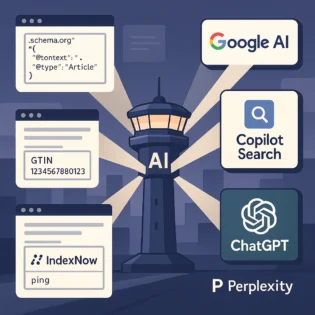
AI News Today Recency 3 Days shows how fast AI is shifting in products, regulation, and ad performance, and why you need a simple playbook to react.
- Google’s Gemini 3, Nano Banana Pro, and new video tools are moving advanced multimodal AI directly into everyday mobile workflows.
- Meta is testing Project Luna morning briefs while pouring tens of billions into AI infrastructure, signalling a long race with ChatGPT and Gemini.
- Governments and platforms are tightening rules, from a paused US AI executive order to G20 speeches and new requirements to label AI generated content.
- Meta’s Andromeda retrieval engine and fresh Andromeda guidance show how AI driven ad delivery is changing ROAS for big events like 11.11.
What Does “AI News Today Recency 3 Days” Actually Mean?
On this page, “AI News Today Recency 3 Days” means a focused 72-hour window of trustworthy AI updates – models, platforms, infrastructure, policy, and human impact – that you can turn into concrete moves for your team this week, instead of just scrolling headlines.
- Scan the Quick Summary to see the most important AI stories from the last 72 hours.
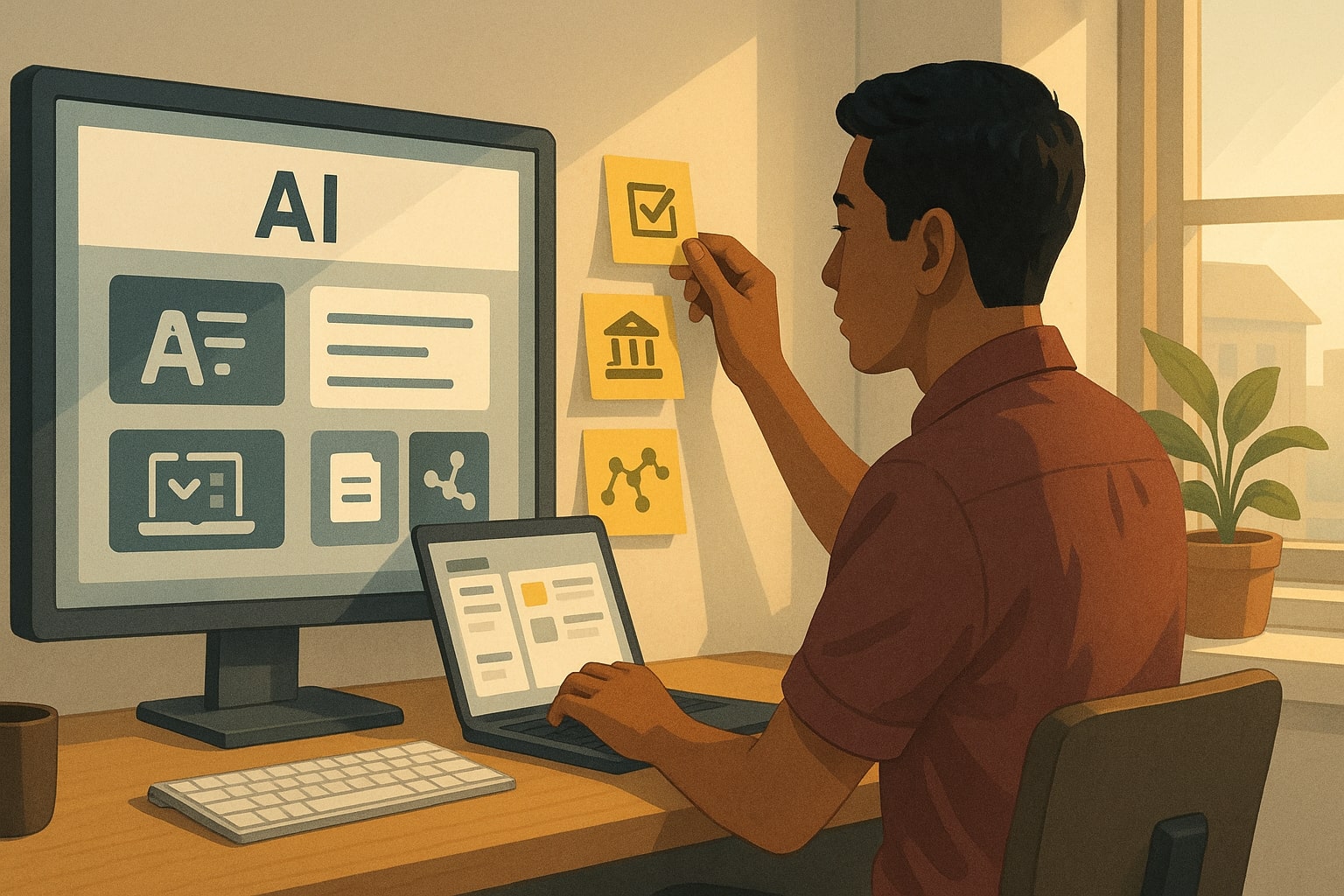
- Tag each story in your notes as Everyday AI, Infrastructure Power, or Accountable AI so you know where it fits.
- Pick one move for the next 3 days, 7 days, and 30 days – even if it’s small – and share it with your team.
AI News Today Recency 3 Days, why this window matters
In the last seventy two hours the phrase AI News Today Recency 3 Days is not just a keyword, it is a snapshot of how fast power, money, and rules around AI keep shifting. In a single long weekend you get a new flagship model in your phone, a social giant testing an AI powered morning brief, G20 leaders arguing over fairness, investors worrying about an AI bubble, and advertisers still trying to catch up with an ad engine that quietly rewrote their playbook.
Google has started rolling out Gemini 3, described as its most intelligent model so far, across the Gemini app, AI Studio and Vertex AI, with a Deep Think mode for Ultra subscribers under safety testing.[1] A fresh November update to the Gemini app adds a redesigned interface, the Nano Banana Pro image generator, and Veo 3.1 for video, all aimed at turning mobile devices into full creative workstations.[2]
Meta, on the other side, is quietly building Project Luna, an AI powered personalized morning brief for Facebook that pulls from your social graph and external sources, backed by plans to spend up to 72 billion dollars on AI infrastructure this year alone.[3] At the policy level, the White House has paused an executive order that would have tried to override state AI laws, while the European Union moves forward with the AI Act and its new guidance for general purpose models.[6][7][8][9]
This is the pattern that keeps repeating. Product launches promise magic, regulators try to define guardrails, infrastructure investors place trillion dollar decade bets, and ordinary workers and advertisers have to decide what, exactly, to do on Monday morning. The goal of this review is simple, turn AI News Today Recency 3 Days into a practical, honest briefing you can act on without needing another tab open.

AI News Today Recency 3 Days in consumer tools and daily workflows
The first cluster of stories this week lives closest to your daily work, the apps and assistants that sit in your pocket or browser.
Over the last days Google started shifting users of the Gemini app on Android and iOS toward Gemini 3 Pro, with a new mobile view and a My Stuff tab that organizes images, videos and Canvas content in one place.[2] Under the hood, the company positions Gemini 3 as a step up in reasoning and multimodal understanding, hinting at a future Deep Think variant for more complex tasks.[1] This does not sound dramatic until you realize that, for many people, this is the default AI they will actually use every day, not a lab demo.
At the same time Meta is preparing to test Project Luna, a personalized AI morning brief that assembles updates for you inside Facebook.[3] It is explicitly framed as a response to tools like OpenAI’s ChatGPT Pulse, which already sends users tailored summaries based on messages, documents and reminders. The direction of travel is clear, AI is being embedded into routines, not just chats.
Check out this fascinating article: How Gemini 3 Will Change SEO, AI Overviews, and Content Strategy on Google
Gemini 3, Nano Banana Pro and Veo 3.1 in your pocket
On mobile, the November Gemini update does three things that matter for practitioners.[2]
First, it raises the ceiling on text interactions. Gemini 3 Pro in the app means better long context conversations, more robust coding support and more reliable factual answers, all without leaving your phone.
Second, it changes the defaults for visual creativity. Nano Banana Pro, tied to Gemini 3 Pro Image, becomes the main image generator for many users before falling back to the older model for free plans after a quota. That means sharper images, better prompt following, and new expectations from clients who will start asking why your campaign visuals look flatter than what they can produce on their own.
Third, video generation shifts toward Veo 3.1 with an Ingredients to Video feature that turns three guiding images into motion, cutting prompt complexity down.[2] For social teams this makes storyboard tests and quick mood clips much easier, but it also increases the volume of AI content flowing onto platforms where labeling rules are tightening.
If you build content or campaigns, the immediate actions inside this slice of AI News Today Recency 3 Days are concrete, update your internal guidelines for AI images and videos, test Nano Banana Pro and Veo 3.1 on one live project, and measure how much faster you can move without sacrificing brand guardrails.
Meta’s Project Luna and the race to own your morning brief
Meta’s Project Luna is more than another feature experiment. The Washington Post reports that Luna will create a daily briefing for users, combining Facebook content with outside information, rolled out initially in selected cities.[3] The strategic goal is obvious, if your first contact with the news and your network each morning is mediated by Meta’s AI, it pushes you deeper into that ecosystem and away from stand alone assistants.
The timing coincides with Meta’s broader AI push, including a new large language model stack, generative tools in Instagram and WhatsApp, and heavier integration of AI into search and recommendations. Inside the company, this comes along with leadership changes and workforce reductions in parts of the AI division, a reminder that these pivots are happening under financial pressure as well as technological ambition.[3]
For you as a reader, this matters in two ways. It changes how audiences discover content, since AI summaries may compress or reinterpret your work before anyone clicks through. It also sets expectations for personalization, people will start to assume that any feed or product they use can give them a one page briefing, tailored to their context. Planning content for AI surfaces becomes as important as planning it for traditional search.

AI News Today Recency 3 Days on infrastructure, funding and market signals
Behind user facing announcements sits a quieter race, long term infrastructure commitments and the market narrative that supports them.
This week’s roundups highlight Anthropic’s plan to invest around fifty billion dollars in United States computing infrastructure, in partnership with Fluidstack, focused on custom data centers optimised for their Claude models.[4] In parallel, mid November updates confirmed a thirty eight billion dollar multi year partnership between OpenAI and Amazon Web Services, plus a three billion deal linking Meta and Nebius for AI infrastructure, all pointing in the same direction.[5]
At the same time Meta’s forecasted AI capital expenditure, which can reach seventy two billion dollars in a year, underlines how much the company is willing to spend to chase what Mark Zuckerberg calls superintelligence.[3] For investors, Reuters reports growing concern that AI stocks may be overvalued after pushing indices to record highs, combining rate cut uncertainty with worries about an AI driven bubble.[13]
Check out this fascinating article: AI News Today Recency 3, The Only Update You Need This Week
Big model builders lock in compute for the next wave
These numbers are not just vanity metrics. Locking in tens of billions in contracts and hardware means the leading AI labs are trying to secure scarce resources, such as high end GPUs and specialized accelerators, years in advance. It acts as both a moat and a signal to partners.
For builders and startups the immediate implication inside AI News Today Recency 3 Days is that dependence on a single cloud or model provider becomes risky. If you standardize everything on one stack and that provider reprices access, changes safety policies, or shifts geographic strategy, you have limited leverage. Diversifying between at least two major ecosystems, for example OpenAI and Gemini or Anthropic and an open model stack, becomes a strategic hedge instead of a luxury.
Markets ask whether the AI rally has gone too far
When Reuters says investors are worried about turbulence driven by AI valuations, it reflects a pattern seen in previous technology cycles.[13] A small number of AI companies drive index performance, their future growth gets priced in aggressively, and any disappointment or regulatory shock can trigger outsized corrections.
If you work in a business unit that depends on AI related budgets, this matters. Funding that feels generous during the hype phase can dry up if the market narrative flips. Reading AI News Today Recency 3 Days through a market lens helps you prepare arguments grounded in productivity gains and risk reduction, not buzzword compliance, so your projects survive sentiment swings.
AI News Today Recency 3 Days on policy, governance and global rules
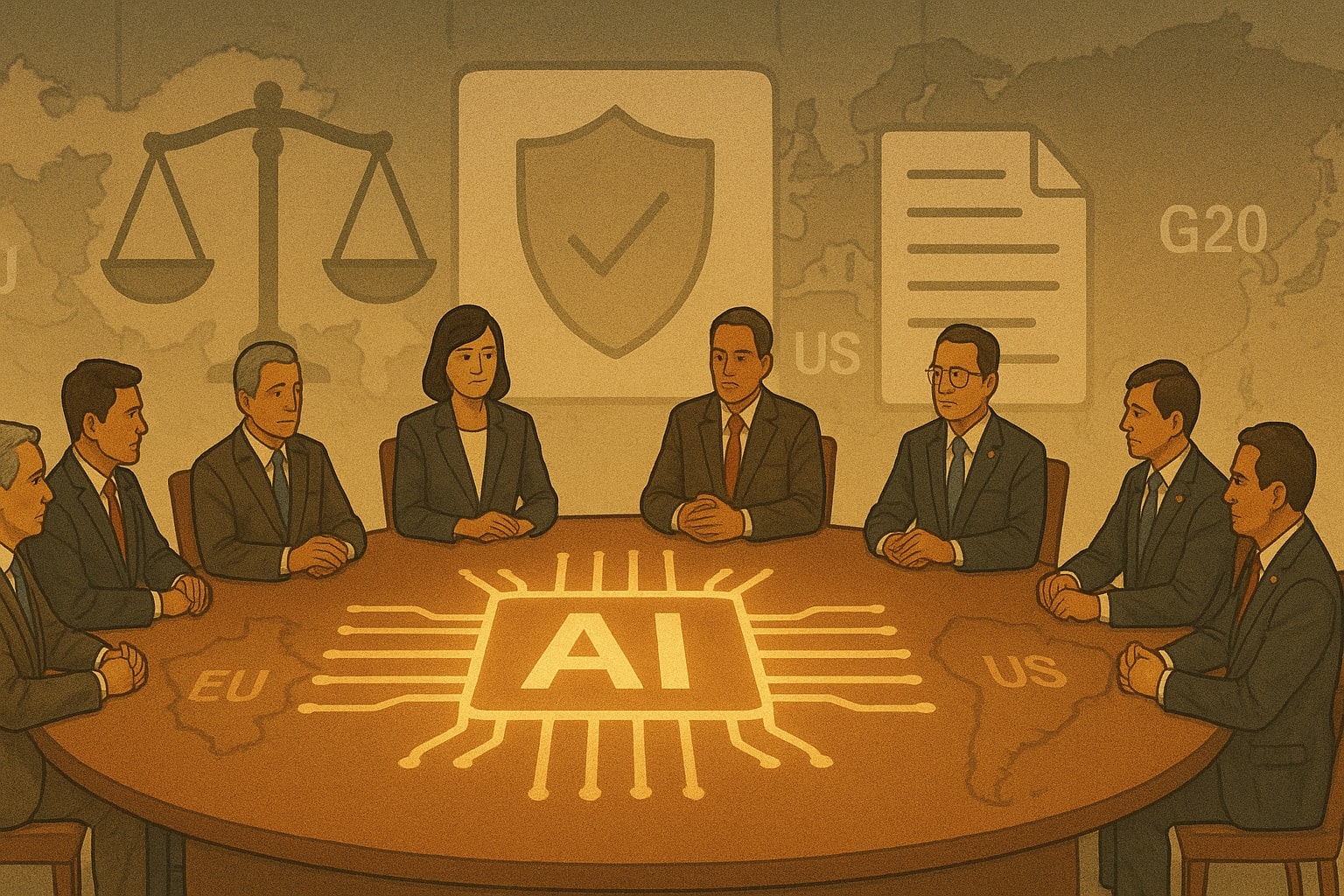
While companies sprint ahead, governments and regulators are still trying to define the rulebook, and this week provided several important signals.
In Washington, the White House has paused a draft executive order that would have tried to preempt state AI laws by encouraging lawsuits and linking federal funds to compliance, according to reporting from Reuters and legal analysis by Mintz.[6][7] The draft framed over one thousand state level AI bills as a threat to competitiveness and argued for a uniform national policy that keeps regulation as light as possible.[7]
In Europe, the AI Act is already in force with a phased application timeline, and the Commission has published draft Guidelines for General Purpose AI models that clarify how obligations apply to large foundation models.[8][9] The rules on prohibited practices and AI literacy started applying in early 2025, while governance structures and GPAI obligations kicked in during August 2025, setting the baseline for compliance work over the next two years.[8]
At the G20 summit in Johannesburg, Chinese Premier Li Qiang called on members to promote widespread AI adoption paired with effective governance that keeps development beneficial, safe and fair.[9] Indonesian Vice President Gibran Rakabuming Raka emphasized that AI driven industrial shifts must deliver tangible benefits back to citizens, especially in resource rich economies.[10]
The White House pause and the tug of war over AI laws
The paused United States executive order tells you two things. First, there is a real tension between federal preemption and state experimentation. National level policymakers argue that a patchwork of state rules will slow innovation and distort competition. State legislators counter that they are closer to the harms, from algorithmic bias to deepfake fraud, and should be free to set higher standards.
Second, even within a single administration there is no consensus on how aggressively to shield AI companies from local regulation. For global teams this means compliance strategies must treat United States states almost like separate jurisdictions. Reading AI News Today Recency 3 Days with this in mind can prevent you from assuming that one federal rule will cleanly solve your risk exposure.
Europe’s AI Act and GPAI guidance quietly shape global practice
The European Union’s AI Act often sounds distant, yet its timeline and GPAI guidance have a gravitational pull far beyond Europe.[8][9] Vendors that want to sell foundation model access into the European market need to implement transparency, risk management and documentation obligations that quickly become global defaults. Enterprise buyers outside the EU may start asking for the same documentation because it already exists.
For product teams this week’s AI news is a reminder to treat the AI Act like you once treated the GDPR. Even if your core users are not in the EU, aligning your internal documentation and model evaluations with those expectations early can save you costly retrofits later.
G20 leaders and India’s labeling rules push for fairness and transparency
At G20, Li Qiang’s call for safe and fair development, combined with Gibran’s demand that AI driven industrial growth returns value to citizens, suggests that fairness language is moving from think tank reports into summit talking points.[9][10] In practice, fairness will be operationalized through regulations and platform rules.
One visible example this week comes from India, where economic reporting notes that YouTube, Facebook and Instagram now require users to label AI generated or modified content in line with new government regulations designed to combat deepfakes and misinformation.[11] Platforms are also building internal systems to detect unlabeled AI content, which means you can no longer assume that synthetic media will quietly blend into the feed.
If your organization publishes AI assisted content, AI News Today Recency 3 Days tells you to update disclosure policies, train teams on labeling requirements, and review how you store provenance metadata so you can prove what is real if your content is flagged.

AI News Today Recency 3 Days on human risk, safety and work
Beyond code and policy, the last days also delivered a set of stories focused on people, incentives and risk perception.
The Guardian profiled AI workers who advise their friends and family to stay away from AI, arguing that speed and competition incentives inside companies are overpowering safety instincts.[12] When builders who understand the systems best are the ones expressing the deepest caution, it is a signal that safety processes are still catching up with deployment pressure.
In GovTech, Dan Lohrmann used the release of Tron, Ares to discuss what happens when AI systems do not behave as intended, drawing parallels between science fiction scenarios and real world vulnerabilities in critical infrastructure, public sector systems and cyber defense.[15] Other commentary frames AI as an exponential national security threat, urging governments to update laws and standards before cascading failures occur in areas like disinformation campaigns, autonomous weapons and cyber attacks.[14]
Taken together, these narratives remind you that AI News Today Recency 3 Days is not only about new features. It is also about how societies decide which risks are acceptable. For teams deploying AI internally, the actionable move is to make safety reviews and red teaming a visible part of the process, not a one time hurdle before launch.
Three simple frameworks to read AI News Today Recency 3 Days
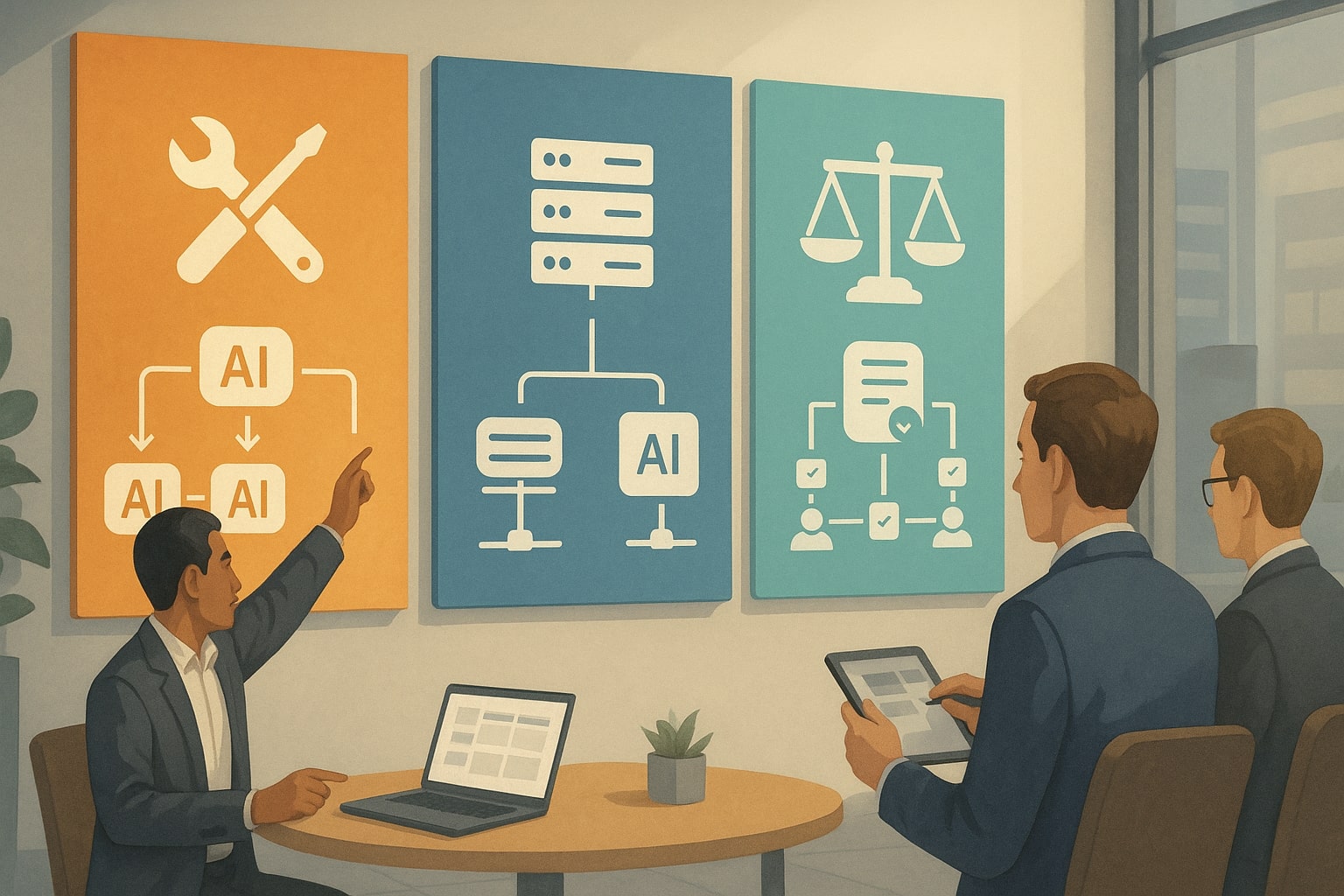
With this much noise it helps to have a simple set of frameworks that you can apply each time you scan AI headlines. This week’s stories naturally fall into three lenses.
- The Everyday AI Framework, how AI shows up in daily tools, such as Gemini 3 on mobile and Project Luna.
- The Infrastructure Power Framework, how capital, compute and partnerships shape who can build what.
- The Accountable AI Framework, how laws, labeling rules and safety debates define the guardrails.
The table below compares these three frameworks and the features you should track.
| Framework name | Main focus | Fresh example in AI News Today Recency 3 Days | Key features to watch | First action you should take this week |
|---|---|---|---|---|
| Everyday AI Framework | User facing tools and assistants | Gemini 3 in the Gemini app, Meta Project Luna morning briefs[1][2][3] | Model quality, context length, multimodal features, default integrations | Test Gemini 3 or an equivalent model in a real workflow and update your content guidelines |
| Infrastructure Power Framework | Compute, data centers, long term spend | Anthropic Fluidstack plans, OpenAI AWS deal, Meta seventy two billion AI capex[3][4][5] | GPU supply, custom accelerators, multi year spend, cloud dependencies | Map which clouds and models you rely on and design one diversification step |
| Accountable AI Framework | Regulation, transparency and safety | Paused US executive order, EU AI Act GPAI guidance, G20 fairness speeches, India labeling rules[6][8][9][10][11] | Risk classifications, disclosure obligations, red teaming norms | Start an internal checklist for AI use, including labeling and documentation expectations |
Using these frameworks turns AI News Today Recency 3 Days from a firehose into a structured briefing. Each new headline is tagged, either as a change in everyday tools, a shift in infrastructure power, or a move in accountable AI rules.
What this three day AI news window means for marketers and 11.11 style events
For performance marketers, one of the most practical parts of AI News Today Recency 3 Days is not in the product launches, it is in the way AI now decides which ads people even see.
Meta’s Andromeda system, described by Meta engineering as a next generation ads retrieval engine, upgrades the first stage of ad delivery where millions of candidate ads are narrowed down to a few thousand that can enter the auction.[16] Third party analyses note that after Andromeda rolled out across Facebook and Instagram, Meta reported plus six percent retrieval recall and plus eight percent ad quality on selected segments, enabled by a ten thousand times increase in model capacity compared with older systems.[17]
Segwise and other analytics providers report that advertisers who leaned into Advantage Plus style creative diversification saw around twenty two percent lift in return on ad spend and seven percent more conversions when they paired Andromeda with AI image generation to increase creative variety.[18] A recent analysis on this very site used the 11.11 shopping festival as a case study, arguing that during peak events Andromeda becomes the gatekeeper between your creative pipeline and real customers because it decides which ads earn a chance to be ranked at all.[19]
In other words, the AI that filters ads now cares less about micro targeting and more about rich, diverse creative paired with clean conversion signals. When you read AI News Today Recency 3 Days and see mentions of Andromeda, Advantage Plus or new Meta AI tools, these are not abstract upgrades, they tell you to change what you test and what you measure.
Andromeda, retrieval and why ROAS now depends on creative volume
Most advertisers used to focus on ranking metrics, click through rate, cost per acquisition and headline return on ad spend. In an Andromeda world those are still important, but they arrive too late. Retrieval engines operate upstream, they decide whether an ad variation is even considered.
Analyses of Andromeda’s impact emphasize three levers that you control. First, creative variety, because the engine rewards accounts that give it a broad menu of high quality options. Second, signal quality, since noisy or fragmented conversion events confuse the system. Third, campaign simplification, where fewer, broader ad sets allow the retrieval model to learn from more data instead of slicing it into narrow segments.[17][18]
If you run campaigns for events like 11.11, this week’s AI news tells you to audit your creative library against Andromeda’s preferences, clean up tracking, and reframe ROAS as the outcome of a retrieval informed funnel, not just a bidding strategy.
A quick checklist you can apply before the next big sale
Turning these insights into a Monday morning action list, you can walk through a short checklist.
First, align your measurement stack with Andromeda by prioritising events and signals that actually predict profit, not vanity metrics. Second, map which campaigns still rely on heavy manual targeting and fragmented ad sets, then schedule consolidation tests. Third, create a modest but steady pipeline of fresh creative that stays on brand while giving the retrieval model something new to explore each week.
Combined with what you learned from Gemini 3, Project Luna and the labeling rules, this makes AI News Today Recency 3 Days a practical guide rather than a rolling source of anxiety.
From headlines to next moves, turning AI news into an advantage
After three dense days of AI headlines one temptation is to tune everything out and wait for the next big launch. The healthier response is to accept that the pace will not slow down and build a routine that turns each wave into a small advantage.
From consumer tools, the key move is to deliberately test at least one new capability in your workflow, whether that is Gemini 3 for research and drafts or Veo 3.1 for quick concept videos. From infrastructure stories, the lesson is to avoid over dependence on a single provider and to document where your critical processes rely on external AI. From governance and safety news, the task is to update your internal AI policy so it talks about labeling, documentation and review cycles in plain language.
Most importantly, the human stories in AI News Today Recency 3 Days, from workers who feel pressured by incentives to experts warning about national security risks, are a reminder that you are allowed to move carefully. Respecting uncertainty is not the same as resisting progress.
If you have your own take on these updates, if you are already experimenting with Gemini 3, if you feel Andromeda has helped or hurt your 11.11 results, or if local regulations in your country are changing how you work, share your experience in the comments and ask your questions there. The more practitioners compare notes in public, the less mysterious the next wave of AI news will feel.
References
- Google — Gemini 3, introducing the latest Gemini AI model
- Android Central — November Gemini Drop adds Gemini 3, Nano Banana Pro, and more
- The Washington Post — Meta is building an AI powered morning brief in push to compete with ChatGPT
- This Week in AI — November 23, 2025, Anthropic and infrastructure investments
- TST Technology — Latest AI Tech News, mid November 2025, including AWS and OpenAI partnership
- Reuters — White House pauses executive order that would seek to preempt state laws on AI
- Mintz — Federal preemption in AI governance, what the expected executive order means
- European Commission — AI Act, regulatory framework for AI in the EU
- EU AI Act — Overview of Guidelines for GPAI models
- Xinhua / State Council — Chinese premier urges AI adoption and effective governance at G20
- ANTARA — Indonesian VP Gibran urges G20 to ensure fairness in AI driven industrial shift
- The Economic Times — Social media platforms roll out features to label AI content
- The Guardian — Meet the AI workers who tell their friends and family to stay away from AI
- Reuters — Investors eye holiday season turbulence amid AI and rate cut doubts
- GovTech — When AI goes rogue, science fiction meets reality
- Engineering at Meta — Meta Andromeda, next gen personalized ads retrieval engine
- AdAmigo — Facebook Ads Andromeda audit and performance metrics
- Segwise — Understanding Meta Andromeda for next gen ad strategies
- Margabagus — Andromeda for 11.11, retrieval to ranking strategies that scale
Ready to apply this to your business?
Let's Talk Strategy →