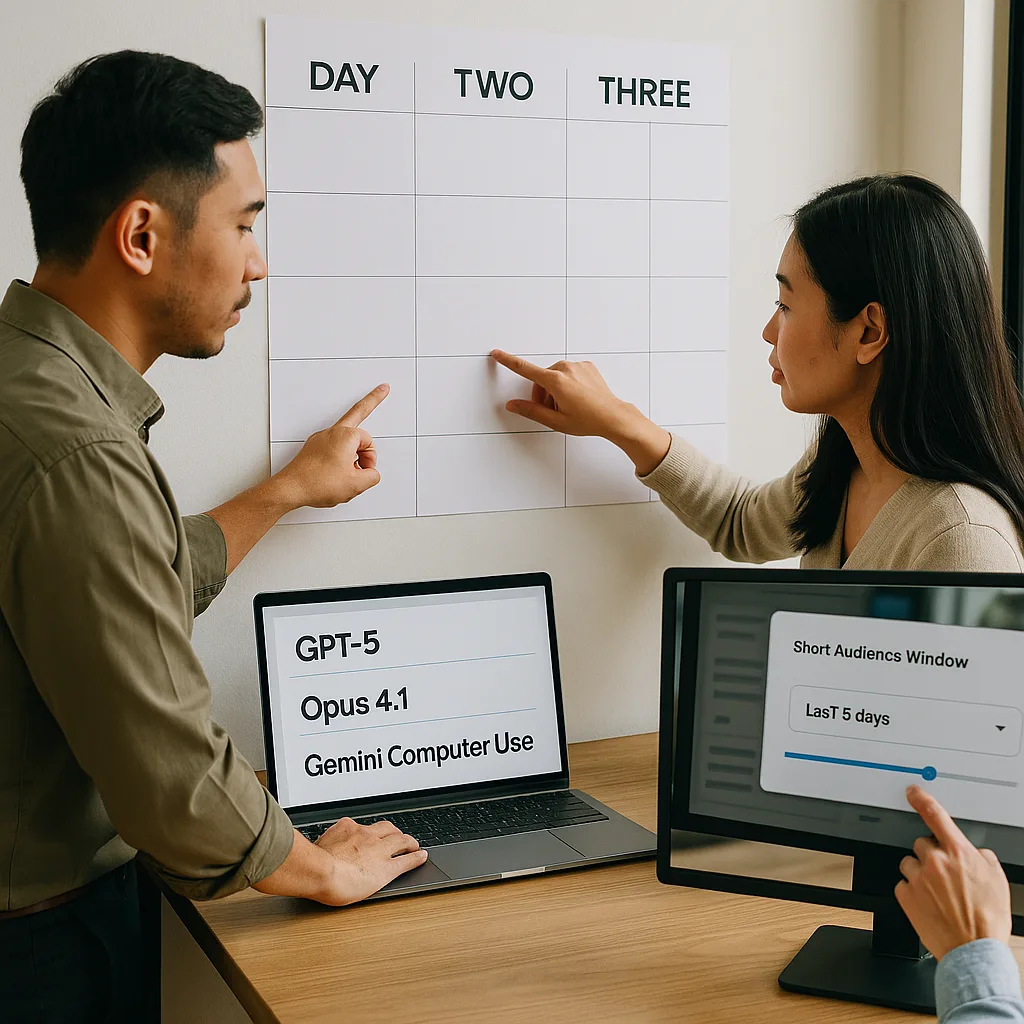
AI News Today Recency 3 turns trustworthy model, platform, compute, and policy updates into weekly actions for builders, marketers, and owners.
- Models, GPT-5 and Claude Opus 4.1 raise coding and reasoning quality
- Enterprise, Gemini 2.5 Computer Use enables reliable UI agents for back office tasks
- Compute, DOE plans a 100,000 Blackwell GPU system that will ripple into pricing and features
- Policy, EU AI Act timelines and the FTC’s 6(b) inquiry set compliance expectations
- Growth, Meta’s Andromeda and GEM reward creative diversification plus short retention audiences
Plan in 3, 7, and 30 day cycles, ship small wins each week, measure, then roll forward.
The pace of AI this quarter has been relentless, product teams tune roadmaps weekly, performance marketers chase new signals, and policy makers tighten safety rules that will shape what ships and when. AI News Today Recency 3 is the practical way to keep up, you narrow the spotlight to what genuinely changed in the freshest window, then convert that signal into steps you can act on now. OpenAI’s GPT-5 brought benchmark jumps in math and real world coding, Anthropic’s Claude Opus 4.1 raised the bar for careful agentic work, Google’s Gemini 2.5 Computer Use turned agents into reliable UI operators, Nvidia and the US Department of Energy planned a national lab system with one hundred thousand Blackwell GPUs, while the EU and the FTC clarified timelines and scrutiny that every builder and marketer should note.[1][4][6][9][11][14]

What “Recency 3” Means for AI News and Why It Works
Recency 3 is a focus lens, you prioritize the last three days as a tactical window, then zoom out to seven and thirty days for stability and strategy. In marketing, short retention audiences are native in Meta Ads, you can set website and engagement Custom Audiences by retention in days, including very short windows, which is perfect for hot intent recapture and after-action remarketing.[17][18]
For editorial and product ops, the method acts like a metronome, three days for shipping small fixes and creative iterations, seven days for reliable measurement across a weekly cycle, thirty days for deeper content and platform moves. This rhythm avoids fatigue, it favors clarity, and it works because it reflects how attention and platform algorithms behave.
Latest AI Model Releases, This Week at a Glance
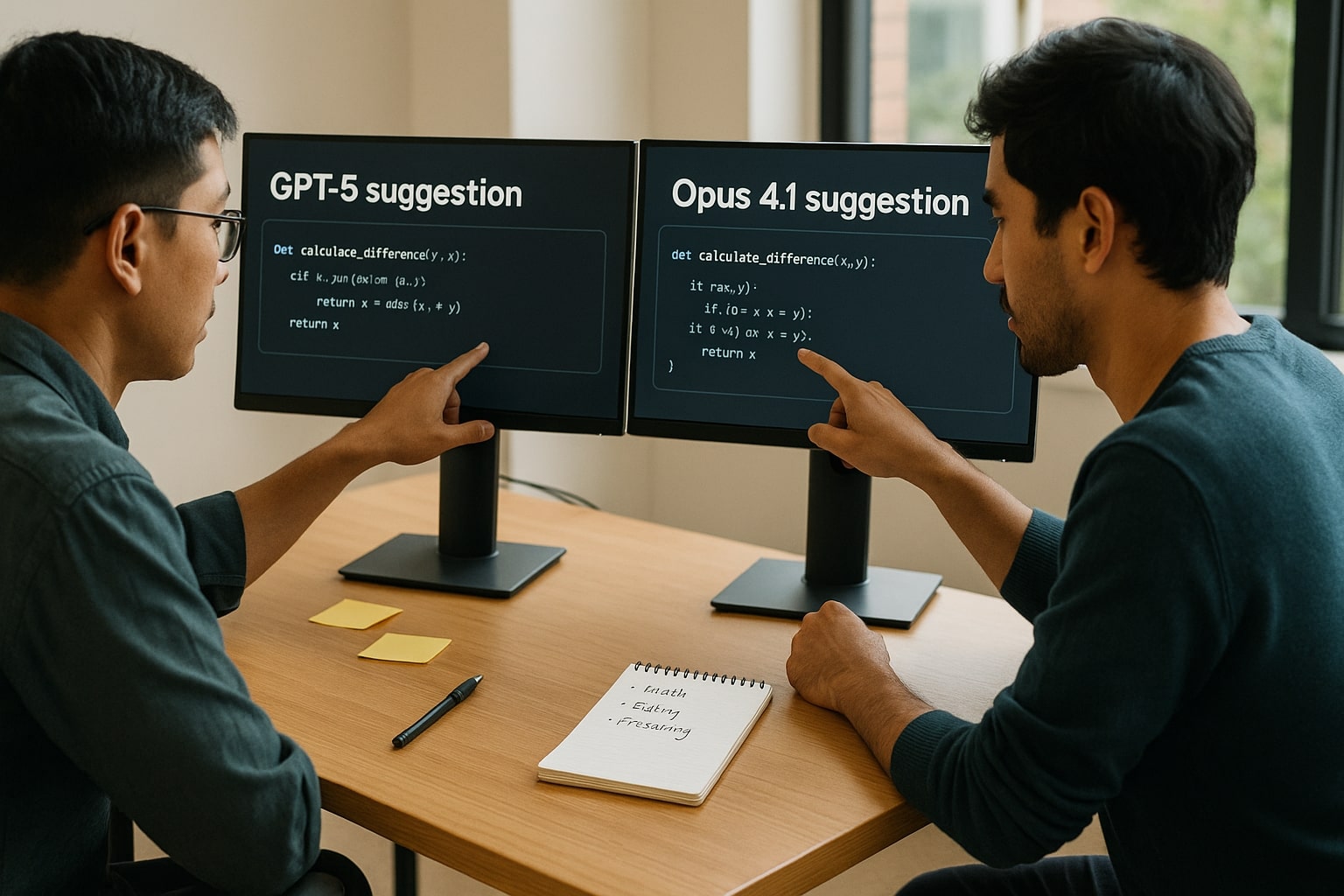
OpenAI positions GPT-5 as its most advanced model with strong results on AIME 2025 math, SWE-bench Verified coding, and multimodal understanding, which are not just leaderboard wins, they show up in everyday usage for teams that ship software and content, [1][2][3]
Anthropic’s Claude Opus 4.1 arrived as a drop in upgrade for real world coding and agentic reasoning, it is available in the API, on Bedrock, and on Vertex AI, which gives procurement and governance teams real multi cloud choice without rewriting pipelines. [4][5]
Check out this fascinating article: Claude Opus 4.1 vs GPT-5 in 2025: Reasoning, Speed, and Cost, The Winner Builders and Marketers Actually Feel
How to use this in a Recency 3 cadence, run a small evaluation set that mirrors your workload, code assistants for your stack, research briefs for your market, design prompts for your creative system, then lock a model per workflow rather than chasing a single winner across everything.

Enterprise AI at Work, Gemini and Friends This Week
Google’s Gemini 2.5 Computer Use model is purpose built for agents that click and type inside user interfaces, it outperforms alternatives on web and mobile control benchmarks and is available through the Gemini API. This matters if your back office relies on many web tools where brittle scripts used to break, now an agent can operate forms, dashboards, and trackers more like a teammate would. [6][7]
Check out this fascinating article: Gemini 2.5 Computer Use, Hands-On Review: Can It Really “Use” a Computer?
As Gemini 2.5 Pro and Flash continue to evolve, developer notes point to better coding support and an experimental enhanced reasoning mode, which is especially helpful for teams that want quick drafts with control and traceable steps for review. [8]
What to do this week, pilot a computer use agent for one annoying process, ticket triage, order reconciliation, or data pulls from partner portals. Wrap the pilot with least privilege access, logging, and a rollback plan so security teams are comfortable from day one.
Compute and Infrastructure Signals to Watch
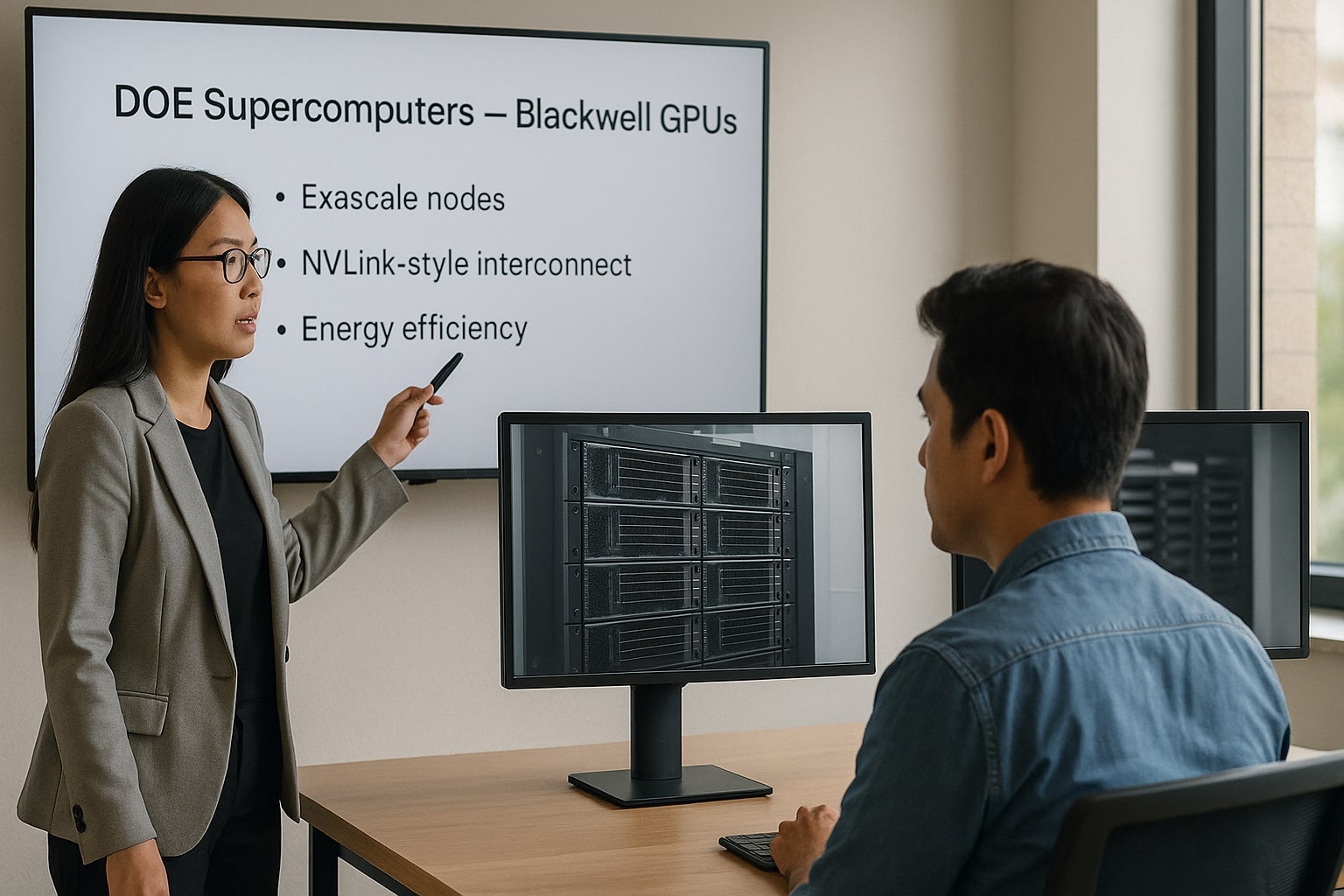
Nvidia, Oracle, and the US Department of Energy announced Solstice, a DOE supercomputer plan with 100,000 Blackwell GPUs for public research, plus another system called Equinox slated for delivery in 2026. Press notes emphasize capacity for agentic AI at national lab scale, which tends to flow outward into commercial offerings, developer SDKs, and better inference pricing once supply improves. [9][10]
For Recency 3 planning, watch how this affects reservation deals at your cloud vendor, monitor inference price updates in release notes, and time evaluation runs when capacity loosens so your results are representative.

Policy and Safety Watch, EU AI Act and US Guidance
The EU AI Act entered into force on 1 August 2024, with application staged across February 2025, August 2025, and extended transitions for certain high risk systems up to August 2027. The Commission’s timeline clarifies when general purpose model obligations apply, when governance must be in place, and when high risk rules are fully enforced.[11][12]
A separate update reported that the voluntary Code of Practice to help companies comply may slip to late 2025, which explains why some firms requested grace periods, even as the core direction of the law remains intact. [13]
In the US, the Federal Trade Commission opened a 6(b) inquiry into chatbots that act as companions, sending orders to seven companies for documentation on safety, teen protections, and disclosures. Whatever product you ship, if it simulates company or personal companionship, expect higher expectations for transparency and youth safeguards. [14][15]
Action for this week, align your policy and marketing copy with the EU timeline and the FTC inquiry themes, add explicit disclosures for simulated companionship, and ensure you can show evaluation and mitigation steps if asked.

Retrieval Engines and ROAS, How Andromeda Changes Ads
Meta’s Andromeda overhauled the retrieval stage in Ads, using deep neural networks and hardware co design to consider a larger pool of candidates per impression, which in plain terms rewards creative diversification and better structure in your asset library. The more distinct angles you provide, the more chances the system has to match intent at the right moment.[16]
New this week, Meta described GEM, a generative ads recommendation model that improves ad conversions across Instagram and Facebook by enhancing the existing fleet of recommendation models. For growth teams, this is a signal to keep creative pipelines varied and fresh since retrieval and ranking engines are both getting smarter.[20]
Check out this fascinating article: Meta Ads Updates November 2025: The 3 Key Changes Small Businesses Must Implement Now to Save Spend
Recency 3 move, pair a short audience window with three to five creative angles per offer, each angle speaks to a distinct motivation such as speed, safety, price, community, then rotate hooks every few days to stay eligible as the pool and the ranking logic shift.
Your 3 Day, 7 Day, 30 Day Operating Playbook, One Table
Below is a compact operating table that aligns typical goals across builders, marketers, and owners with the most useful time windows. Use it as a weekly ritual, review on Monday, ship by Wednesday, measure over the weekend, then roll forward.
| Cycle window | Primary goal | Best for builders | Best for marketers | Best for owners | Metrics that matter |
|---|---|---|---|---|---|
| 3 days | Capture fresh intent and ship fixes | Patch notes, quick eval on model or API, remove paper cuts | Custom Audiences with short retention, new hooks that mirror last action | Small price or bundle tests, fast support fixes to prevent churn | Time to action in hours, conversion from last touch, assisted conversations |
| 7 days | Validate ideas across a weekly pattern | Refactor small modules, expand tests on new behavior | Creative diversification pack, cross format variants, weekly incrementality | Weekly cohort profit, voucher redemption, return visitor lift | Holdout tests, weekly ROAS, cost per assisted chat |
| 30 days | Strategic moves with depth | Agent workflows for back office tasks, governance review | Evergreen guides, landing pages refreshed for AI search | Margin by product line, inventory turns, retention and payback | Contribution margin, payback time, net revenue retention |
Short retention audiences are supported natively in Meta, you can explicitly set retention days for website and engagement audiences, which makes three day and seven day slices straightforward to deploy. [17][18][19]

Field Tested Workflows You Can Ship This Week
Source validation, grab the vendor post and one trusted secondary source, document what changed, expected impact, owner, timeline. Sandbox and eval, run a task that mirrors user value rather than synthetic prompts, for example your codebase for assistants, your brief template for research, your actual form flows for UI agents. Ship and tell, when a change moves the needle, release it where users see it, release notes, email, short video, and sales collateral for the commercial side.
For model choice, do not chase a single winner, assign GPT-5 or Opus 4.1 per workflow based on your evaluation set, coding or analysis that benefits from GPT-5’s strengths, multi step plans that favor Opus 4.1’s careful reasoning. [1][4]
For enterprise agents, use Gemini Computer Use where RPA scripts used to break, start with read only and least privilege, add logging from day one so audit is simple. [6]
For growth, combine a three day engagement slice with diversified creative and a contingency plan for fast approvals during events like 11.11, keep a bench of pre approved variants so retrieval engines always have fresh candidates. [16]
What to Watch Next, A 30 Day Outlook
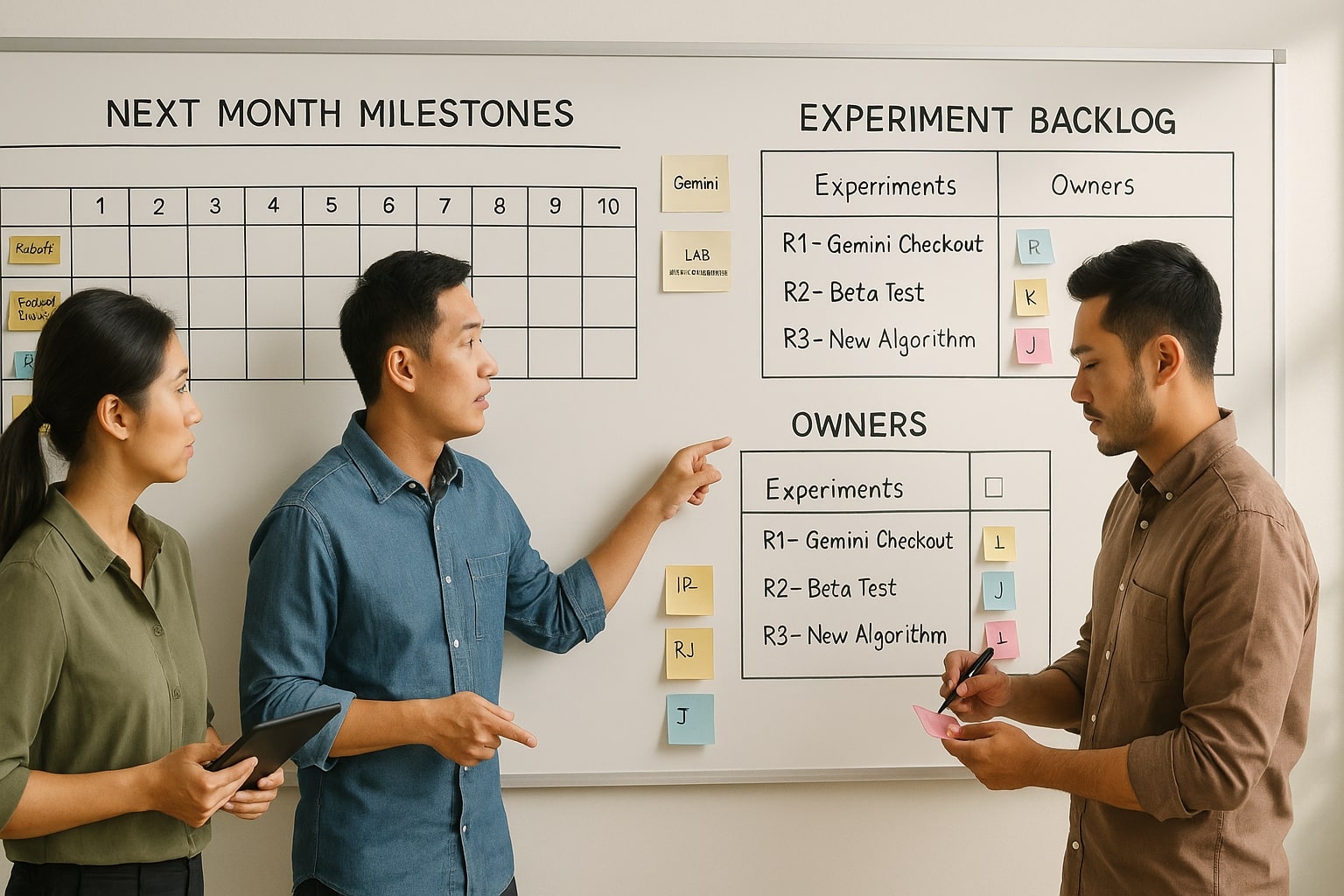
Expect continued rollouts around Gemini inside the Google ecosystem, which typically show up as new integrations in documents, sheets, and calendar. Watch Nvidia and DOE milestones, vendor partner programs, and any downstream cloud announcements that change reservation terms or inference prices. On policy, watch for the EU’s Code of Practice status and national level guidance, plus follow through from the FTC inquiry, these items often translate into procurement checklists and updated disclosures within a few weeks. [7][9][10][13][14]
A final word for readers who build and grow every week
You cannot read everything, you do not need to, the Recency 3 cadence keeps your attention on small wins that compound, one change for product, one experiment for growth, one protection for policy and safety. If you have a workflow we did not cover, drop it in the comments, tell us your context and the decision you need to make this week, and we will pressure test it together.
References
- OpenAI — Introducing GPT-5
- OpenAI — GPT-5 and the new era of work
- OpenAI — GPT-5 product page
- Anthropic — Claude Opus 4.1 announcement
- Anthropic — Claude Opus 4.1 availability
- Google DeepMind — Gemini 2.5 Computer Use model
- Google — October 2025 AI updates
- Google — Gemini 2.5 updates at I O 2025
- Nvidia — DOE largest AI supercomputer press release
- US DOE — Solstice and Equinox systems announcement
- European Commission — EU AI Act application timeline
- EU AI Act Service Desk — Implementation timeline
- Reuters — Code of Practice may slip to end of 2025
- FTC — 6 b inquiry into AI companion chatbots
- FTC — 6 b orders, model order and cover letter
- Meta Engineering — Andromeda retrieval engine
- Meta Business Help — Website Custom Audience retention days
- Meta Developers — Website Custom Audiences
- Meta Developers — Audience rules and retention
- Meta Engineering — GEM ads recommendation model
Ready to apply this to your business?
Let's Talk Strategy →