
AI News Today Recency 3 Days (Dec 2025) is a 72-hour AI briefing that turns fast-moving launches and policy moves into clear next steps.
- OpenAI rolls out GPT-5.2 for faster, safer knowledge work, while markets question how far the AI trade can stretch.
- Instagram’s new “Your Algorithm” control for Reels, YouTube Shorts ad upgrades, and WhatsApp’s holiday features quietly reshape feeds and chats.
- The EU AI Act GPAI guidelines and Meta’s plan to use AI chat data for personalisation raise the bar for documentation and privacy.
- Use this article to tag each story as Everyday AI, Infrastructure Power, or Accountable AI, then pick one move for the next 3, 7, and 30 days.
In the last seventy-two hours, “AI News Today Recency 3 Days” has stopped being just a weird search phrase and started to look more like a survival skill. December 2025 is closing with another burst of releases and policy moves: OpenAI’s GPT-5.2, Instagram’s new “Your Algorithm” control for Reels, fresh ad formats on YouTube Shorts, a holiday feature bundle in WhatsApp, and a quiet but important change in how Meta will use your AI chats to personalise ads from December 16.[1][2][4][5][6][9][11][18]
Markets are still nervous about whether the AI trade has gone too far, regulators are tightening rules for general-purpose AI, and marketers are trying to work out what any of this means before the next campaign deadline hits.[15][16][17]
This December edition of AI News Today Recency 3 Days is built to do one thing: turn a noisy three-day AI window into a practical, honest briefing you can actually act on this week.
Check out this related deep dive:
How Gemini 3 Will Change SEO, AI Overviews, and Content Strategy on Google

AI News Today Recency 3 Days, December edition – why this 72-hour window matters
The December news burst lands at an awkward moment. Investors are already on edge about a possible AI-driven bubble as year-end volatility hits global markets.[15] Regulators in Europe have moved from theory to practice with GPAI guidelines under the AI Act, meaning large model providers now face concrete compliance timelines rather than distant threats.[16][17]
At the same time, product teams are not slowing down. OpenAI calls GPT-5.2 its most capable model yet for professional knowledge work, reporting huge productivity gains on benchmarks that simulate white-collar jobs.[2][3] Instagram is giving users a literal dial for what shows up in Reels via “Your Algorithm”, while YouTube turns Shorts ads into a more interactive, comment-driven surface for holiday budgets.[4][5][6][7][8]
In other words, this 72-hour slice shows all three layers of AI moving at once: everyday tools, infrastructure and money, and rules and guardrails. We’ll use those three lenses throughout this briefing.
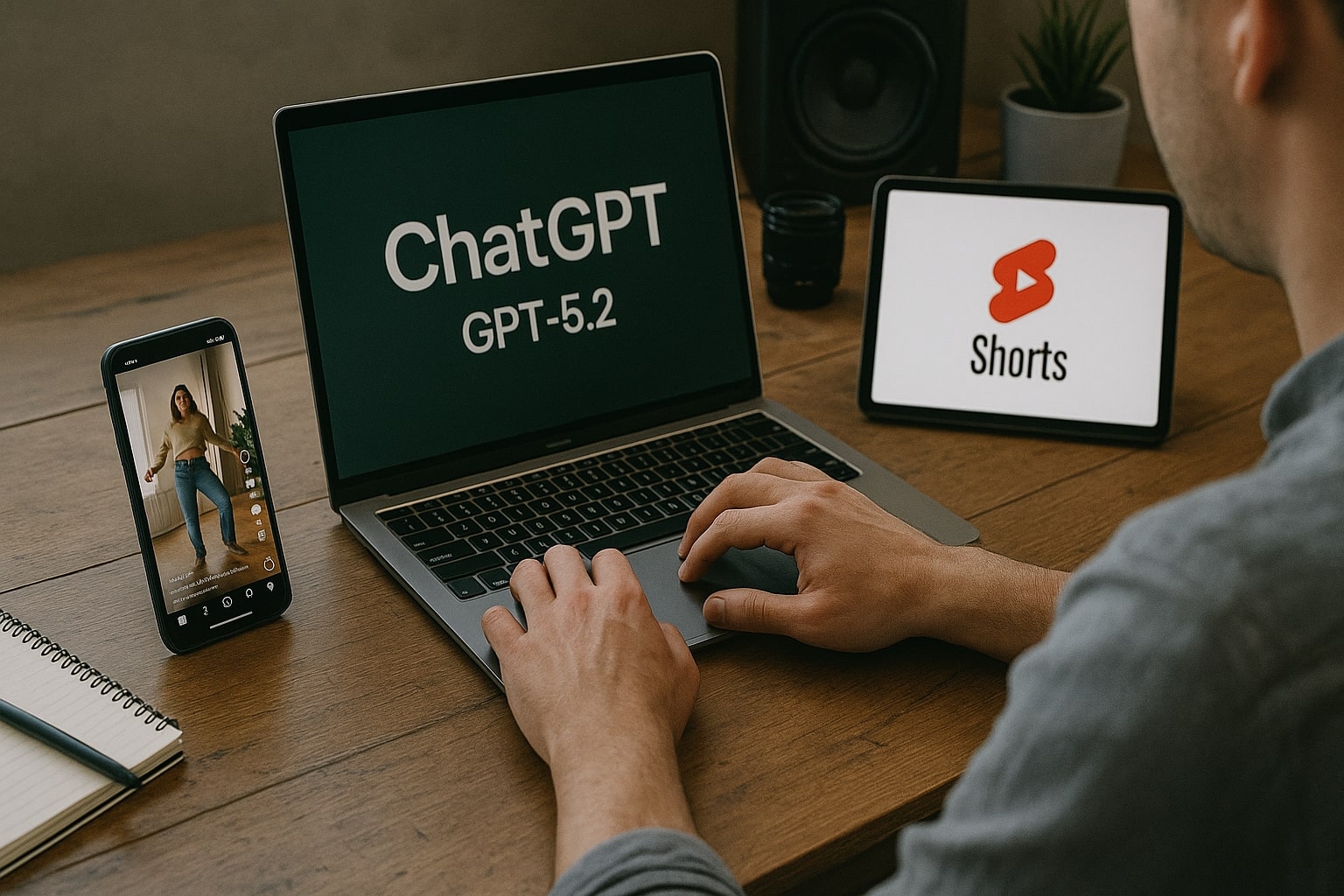
Everyday AI – GPT-5.2, Reels, Shorts, and WhatsApp in your daily workflow
GPT-5.2 moves from demo to “default colleague”
OpenAI’s GPT-5.2 is now rolling out across ChatGPT and the API, with Instant, Thinking, and Pro variants.[1] Early coverage highlights some big jumps: better long-context reasoning, stronger tool use, improved coding, and performance on a GDP-style professional benchmark where it beat human workers on speed and cost while closing the quality gap further.[2][3]
The important bit inside this AI News Today Recency 3 Days window is not that GPT-5.2 is “smarter” in abstract. It’s that:
- It handles multi-step, multi-tool tasks more reliably, including spreadsheets, light analytics, and document workflows.[1][3]
- Safety work has specifically targeted mental-health-sensitive conversations, reducing harmful or unhelpful responses compared with GPT-5.1.[1]
What you should do this week
- Treat GPT-5.2 like a junior analyst or associate, not a toy. Give it full briefings and let it propose structured outputs: tables, checklists, and draft decks.
- For sensitive topics (internal HR, customer complaints touching mental health), document clearly which tasks must still involve a human even if GPT-5.2 looks confident. Add that note to your internal AI policy.[1]
If you care about AI search and content, pair this with your existing Gemini 3 playbook so you’re not betting everything on a single model stack.[19]
If you want a hands-on guide to how these modes actually feel in real work, from writing and analysis to coding and decision-making, read my dedicated breakdown here:
ChatGPT Thinking vs Instant: What’s the Difference, and When Should You Use Each?
Instagram Reels “Your Algorithm” turns interest data into a dial
Instagram is rolling out “Your Algorithm”, a Reels feature that shows you the topics its AI thinks you care about, and lets you add or remove interests directly.[4][5] Instead of a black-box feed, users in the U.S. now see an editable list of themes generated from past behaviour, with a global English rollout on the way.[5]
For Meta, this neatly serves two goals: respond to criticism that feeds feel too opaque, and collect even cleaner signals about what people want to see. For creators and brands, it quietly raises the bar: if a user can manually prune topics, half-baked content is more likely to be hidden.
What you should do this week
- Audit your Reels topics. If you publish on AI, decide whether you lean into “AI tools at work”, “creator monetisation”, or “policy and ethics” – not all three in one account.
- In your captions and hooks, speak to one clear interest that a user might keep in their “Your Algorithm” list, for example: “marketing with AI” rather than generic “AI news”.[4][5]
This is also a good moment to connect Reels strategy with your Meta Ads structure and your wider AI content cluster on the site.[21]
WhatsApp holiday features show where AI chat is heading
WhatsApp has shipped a December feature bundle just in time for the holidays: missed call messages that make it easier to respond later, new Status stickers, upgraded Meta AI image generation, and improved media search, among other tweaks.[9][10]
On the surface, this looks like quality-of-life polish. Underneath, it’s Meta’s long-term strategy: making WhatsApp a more visual, AI-assisted space where conversations, images, and group dynamics feed back into Meta’s broader understanding of what people care about.[11][12]
What you should do this week
- If you use WhatsApp for support or sales, design a simple standard for when agents should follow up via missed-call messages versus broadcast lists.
- Test a small number of Meta AI-generated images in Status or broadcast flows, but document clearly that they are AI-assisted and keep human review in the loop.
Infrastructure Power – the money, compute, and risk behind December’s headlines
The release of GPT-5.2 is not just a product story, it’s an infrastructure story. OpenAI points to ongoing work with NVIDIA GPUs (H100, H200, GB200) and Azure data centers as the backbone for training and serving the new models.[1] These are the same building blocks that other labs are scrambling to secure, and they are not cheap.
At the market level, Reuters reports that investors are heading into the holiday season worried: AI companies have driven indices to records, but there is growing concern that valuations are stretched and that any shock in rates or earnings could trigger sharp corrections.[15]
For you, reading AI News Today Recency 3 Days through this lens, there are a few implications:
- Vendor concentration risk is real. If you standardise everything on one foundation model and one cloud provider, pricing, rate limits, or policy changes can hit you hard in 2026 and beyond.
- High-end models like GPT-5.2 will remain premium surfaces. The cost per token is higher, even if efficiency makes it cheaper at task level, so you’ll want to choose carefully which workflows truly need top-tier reasoning.[1][2][3]
A simple move this week: map your critical AI dependencies (OpenAI, Gemini, Anthropic, internal models), label which ones are “must run” for your business, and identify at least one backup per category.
Accountable AI – from EU GPAI rules to Meta’s AI chat data switch
EU AI Act GPAI guidance quietly becomes a global reference
The EU’s AI Act is now backed by published Guidelines for General-Purpose AI (GPAI) models, with obligations for providers starting August 2025 and enforcement powers kicking in from 2026.[16][17] Providers of the most advanced models must document capabilities, risks, training data summaries, and safety mitigations, and they are expected to engage with the EU’s AI Office.[16][17]
Even if you are not in Europe, this matters. Once a big vendor has to create a GPAI compliance pack, that documentation tends to become the default standard enterprise buyers ask for everywhere.
This week’s move:
- Ask your AI vendors (or internal teams) what their GPAI-style documentation looks like today – logs, evals, red-teaming notes – and whether it will be ready for procurement teams in 2026.
Meta will start using AI chat data for ads from December 16
From December 16, 2025, Meta will start using conversations with Meta AI across Facebook, Instagram, and WhatsApp as one more signal for personalising content and ads.[11][12][18] Meta’s own documentation says that what you discuss with Meta AI – for example shoes, travel, or hobbies – can influence which ads and posts you later see in feeds and Reels.[11][12]
Analysis from independent marketers highlights three key points:
- This does not give advertisers a raw log of user chats.
- It does, however, tighten the feedback loop between what people talk about with the assistant and what the ad system thinks they want.
- Users will see new disclosures and controls, but adoption of those controls will vary widely.[12][18]
What you should do this week
- Update your privacy notes and client decks: explain that Meta AI chats become part of the targeting signal mix, and what that means for consent-driven strategies.
- Decide internally whether you treat AI chats as a “high-sensitivity” signal when planning creative and messaging, especially in regulated niches.
If you’re already running Meta campaigns, cross-reference this with your Meta Ads Updates (December 2025) checklist so your targeting, exclusions, and measurement reflect the new reality.[21]
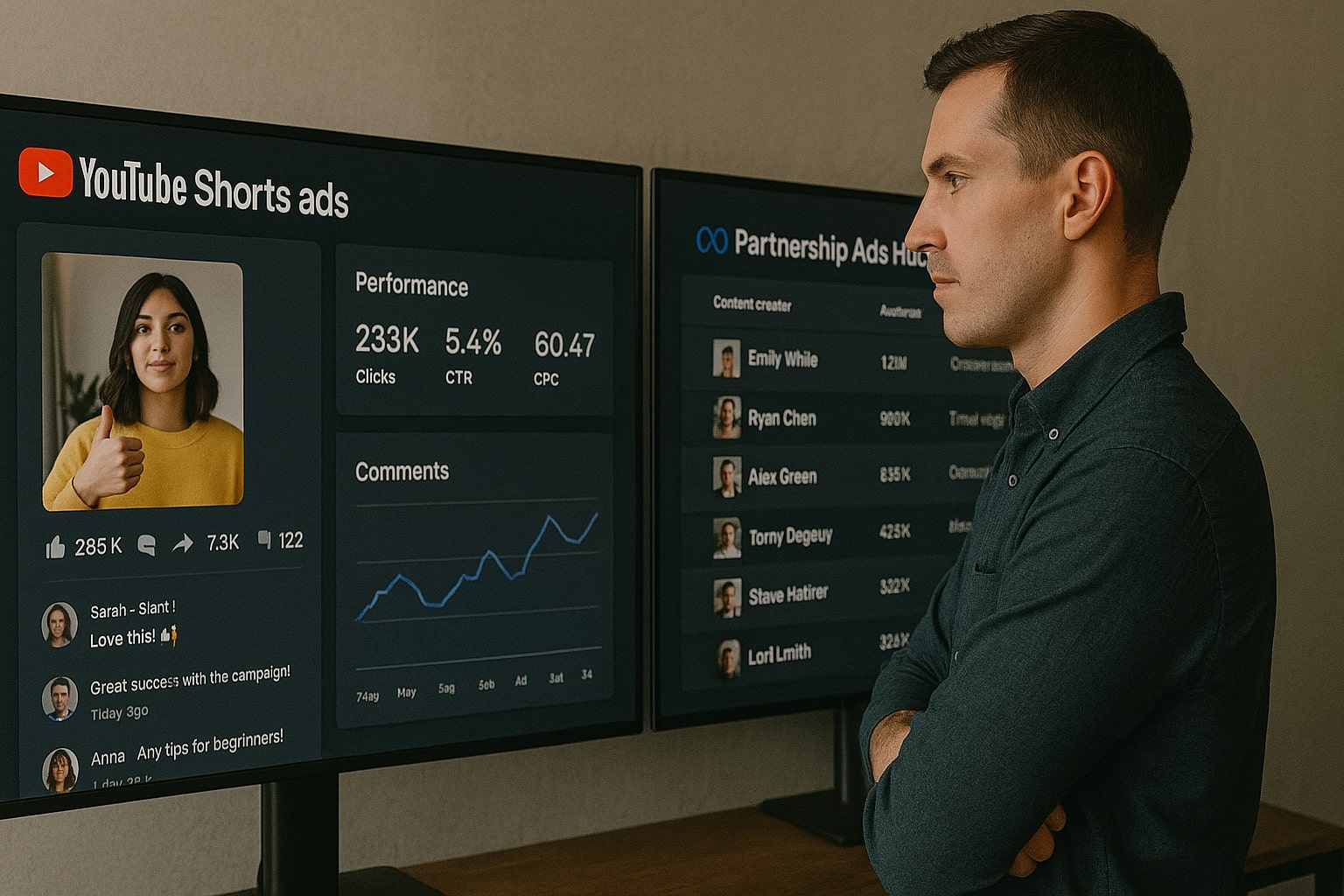
Ads, creators, and short-form video – why this 3-day slice matters for marketers
YouTube Shorts turns ads into a more social surface
Google’s Ads & Commerce team has rolled out a batch of YouTube Shorts updates for the holiday period. Shorts ads now support comment sections, creator links that jump directly to brand sites, and expanded delivery to mobile web and even TV screens.[6][7][8][2][7][16]
The logic is straightforward: if Shorts is going to compete for brand budgets, ads have to feel less like interruptions and more like native social content – with comments, creator collaboration, and smooth click-through paths.
What you should do this week
- Treat Shorts ads as collaboration slots, not just repurposed 9:16 videos. Encourage creators to drive real comments and questions you can later reuse in email or landing page copy.
- Run at least one A/B test comparing Shorts with traditional in-feed formats on the same audience so you can justify 2026 budget shifts with data.[6][7][8]
Meta’s AI-powered partnership ads change how UGC is found and scaled
Meta has also launched new AI-powered tools for partnership ads, designed to help brands find high-performing creator and UGC content on Facebook and Instagram and turn it into paid campaigns more easily.[13][14] In the updated Partnership Ads Hub, brands can search, evaluate, and scale creator posts, while AI helps surface the organic content most likely to perform.
For performance marketers, this meshes tightly with Meta’s retrieval-heavy ad delivery stack – including systems like Andromeda that reward diverse, high-quality creative libraries.[21]
What you should do this week
- Audit which creators already post about your brand organically, and check if partnership ads can amplify that content instead of starting from scratch.[13][14]
- Align your Andromeda-style retrieval strategy – large, varied creative sets plus clean conversion signals – with your creator pipeline so that UGC is not an afterthought but a core feed into the ad system.[21]
For a deeper breakdown of retrieval and ROAS, see:
Andromeda for 11.11, Retrieval to Ranking Strategies that Scale
Three lenses to read every “AI News Today Recency 3 Days”
The December 2025 window reinforces a simple way to read any future burst of AI headlines:
- Everyday AI Framework – tools that show up in daily workflows
- Infrastructure Power Framework – compute, spend, and investor mood
- Accountable AI Framework – rules, disclosures, and safety debates
You used the same three lenses in the earlier November edition of AI News Today Recency 3 Days, and they still hold up.[21] The headlines change; the categories don’t.
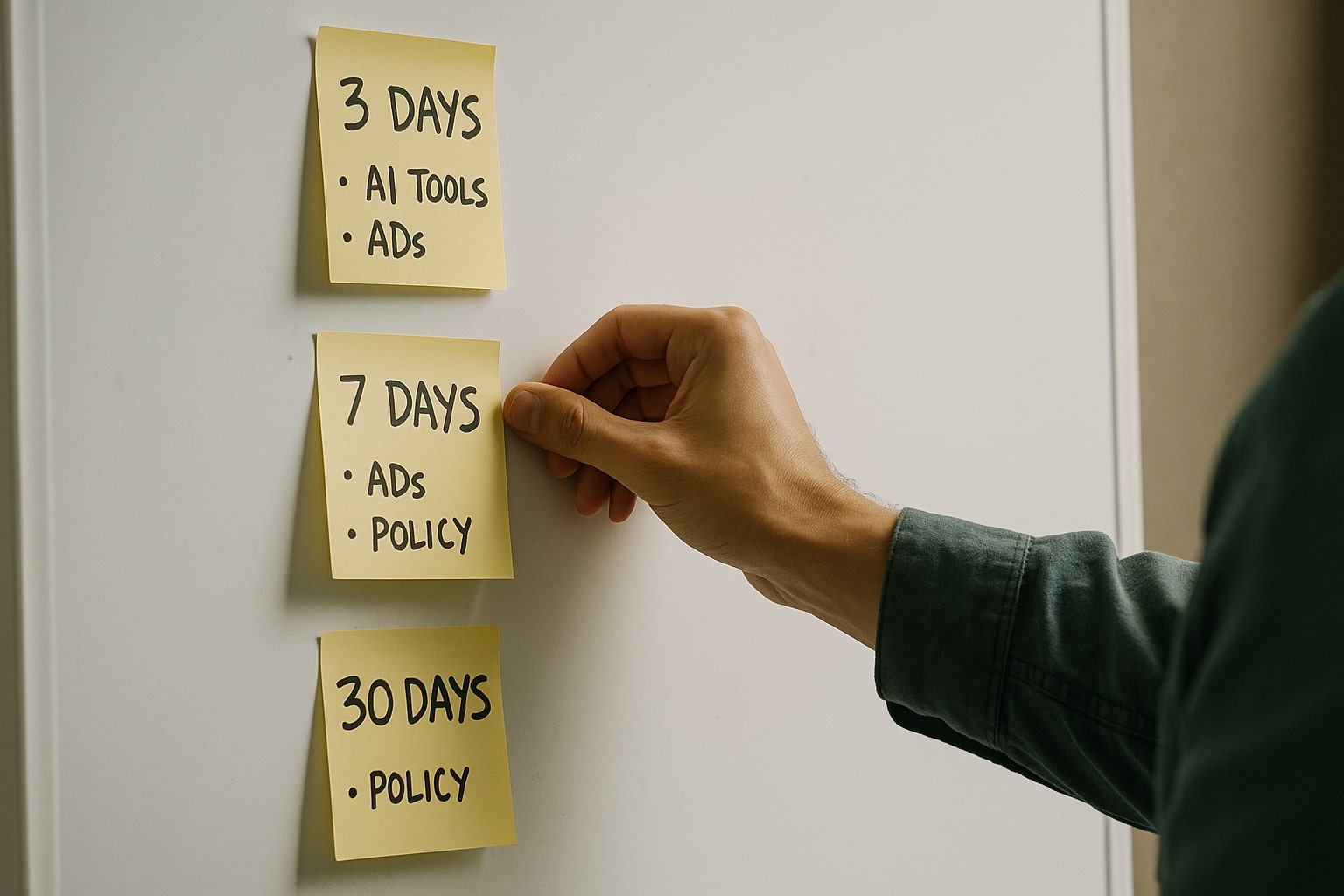
From headlines to next moves – a 3 / 7 / 30-day checklist
To close this AI News Today Recency 3 Days (Dec 2025) briefing, here’s a short runbook you can actually ship.
Within 3 days
- Switch one or two core workflows (reporting, briefing, or light analysis) to GPT-5.2 and compare quality + speed against your existing stack.[1][2][3]
- Document internally what Meta’s AI chat data change means for your accounts, and make sure at least one person is responsible for watching the December 16 rollout.[11][12][18]
Within 7 days
- Map your current content and ads against Reels Your Algorithm and YouTube Shorts changes: which interests do you want to own, and which creators or UGC pieces are worth turning into partnership ads?[4][5][6][7][8][13][14]
- Start a simple internal GPAI checklist so you know which AI vendors are already aligned with EU-style documentation and which ones aren’t.[16][17]
Within 30 days
- Decide where GPT-5.2 sits in your 2026 stack: primary model, specialist copilot, or one of several options in a multi-provider strategy, and align that choice with how you use ChatGPT Instant versus Thinking in day-to-day work.
- Update your broader AI content and SEO strategy using insights from your existing Gemini 3 and Meta Ads playbooks, so AI news headlines become inputs to a system rather than a constant source of panic.[19][21]
References
- OpenAI — Introducing GPT-5.2
- Business Insider — OpenAI says GPT-5.2 sets a new state-of-the-art for professional knowledge work
- DataCamp — GPT-5.2: Benchmarks, Model Breakdown, and Real-World Performance
- Instagram — New way to control your Reels algorithm
- Wired — Instagram will start letting you pick what shows up in your Reels
- Google Ads & Commerce — New updates to YouTube Shorts will help brands maximize their holiday budgets
- Search Engine Land — YouTube Shorts adds comments and creator links to ads
- Social Media Today — YouTube expands Shorts ad options and mobile web availability
- WhatsApp — New feature roundup: missed call messages, new Status stickers and more
- The Economic Times — WhatsApp new features: missed call messages, AI image upgrades and more in holiday update
- Meta — Improving your recommendations on our apps with AI
- MediaMint — Meta’s AI chat data for ads: a critical analysis for marketers
- Marketing Dive — Meta streamlines brands’ creator partnerships with AI-powered updates
- Insider Intelligence / eMarketer — Meta expands partnership ads to turn creator content into performance
- Reuters — Investors eye holiday season turbulence amid AI and rate-cut doubts
- European Commission — Guidelines for providers of general-purpose AI models (GPAI)
- EU AI Act — Overview of GPAI model guidelines and timelines
- MemoryKPR — What the Meta AI December 16 update means for everyday users
Ready to apply this to your business?
Let's Talk Strategy →