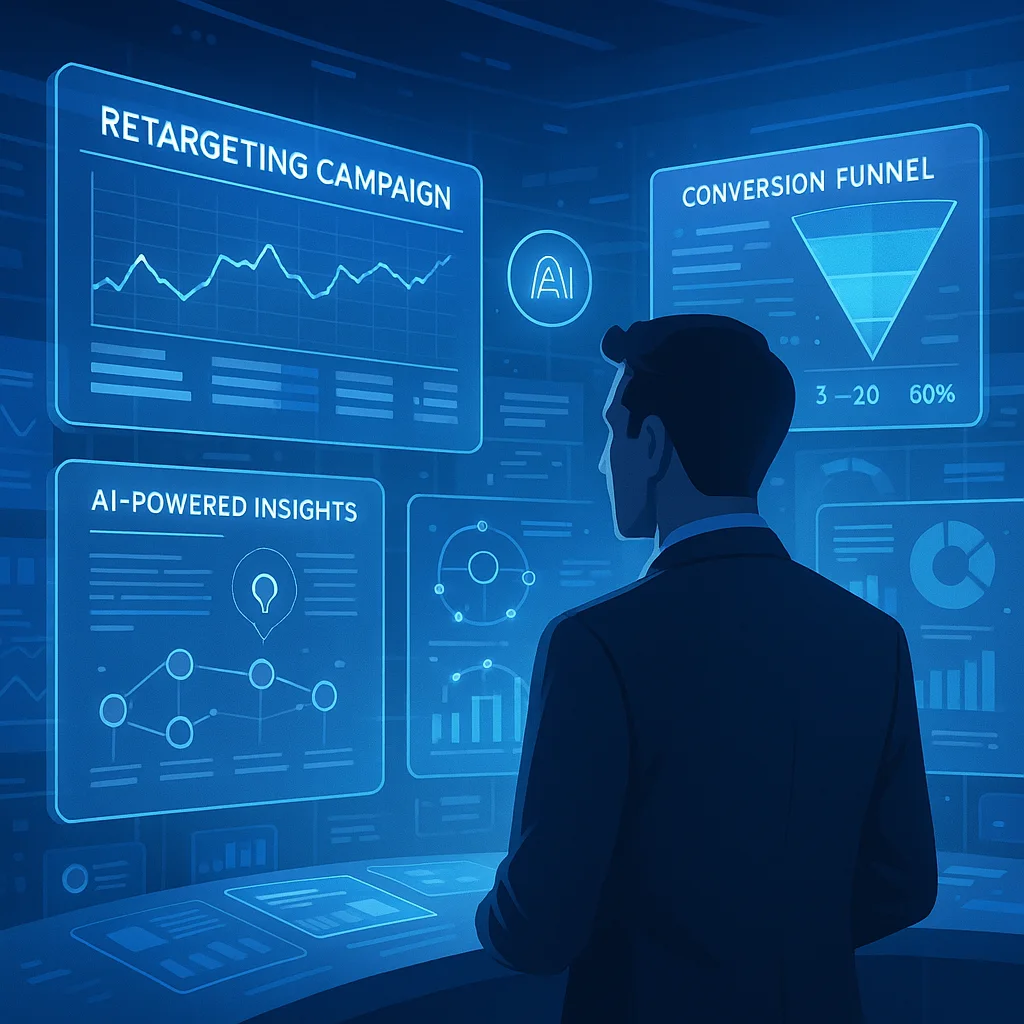
In 2025, retargeting is no longer about chasing users with the same ad—it's about intelligent, omnichannel engagement powered by AI and first-party data. With Google Ads dominating 69% of the PPC market, mastering retargeting isn't optional—it's essential for survival.
- Retargeted users are 70% more likely to convert than cold traffic, with cart abandonment campaigns recovering up to 30% of lost sales.
- Dynamic retargeting boosts average order value by 15% by showing viewed products + smart recommendations.
- Customer Match & RLSA enable hyper-targeted campaigns on Search, YouTube, and Gmail using your email lists and site visitors.
- Video retargeting on YouTube delivers 82% higher conversion rates than static display ads.
- With third-party cookies gone, first-party data collection, server-side tracking, and Unified ID solutions are now critical for future-proofing.
- Sequential storytelling increases conversions by 45% vs. static ads by guiding users through a narrative journey.
- Top brands like Nike and Sephora use retargeting not just for sales, but to build loyalty and drive repeat purchases.
Success in 2025 isn’t about more ads—it’s about smarter, more personalized, and privacy-compliant retargeting. Read the full guide here.
Margabagus.com – Remember that haunting scene from Minority Report where Tom Cruise walks through a mall while personalized ads scan his retinas and call out his name? Well, in 2025, we’re living that reality minus the invasive eye-scanning, thankfully. Today’s retargeting campaigns deliver a staggering 150% increase in conversions, with 77% of businesses using this technology to capture leads. Picture this: people who click on retargeted ads are 50% more likely to purchase than organic visitors, and with Google Ads commanding a 69.04% market share in the PPC world, ignoring retargeting in your digital strategy would be like trying to win a Formula 1 race with a bicycle. The numbers don’t lie users who click retargeting ads are 70% more likely to convert, and I’m about to show you exactly how to harness this power for your business.
Understanding the Evolution of Retargeting in 2025
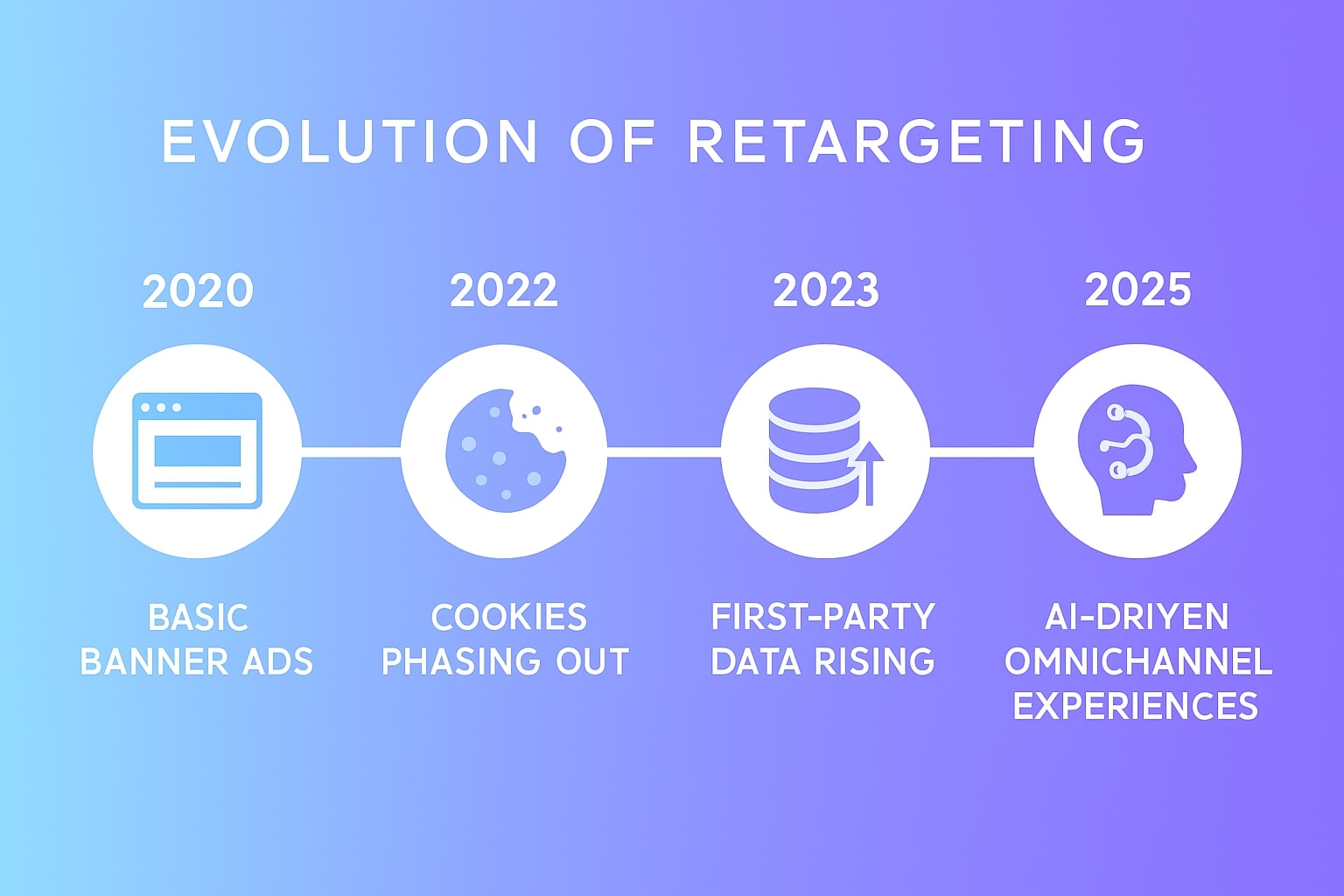
Gone are the days when retargeting meant simply following someone around the internet with the same banner ad. The landscape has shifted dramatically. If you’re new to retargeting fundamentals, I recommend starting with my Complete Beginner’s Guide to Google Ads Retargeting before diving into these advanced strategies.
In 2025, retargeting has become a sophisticated orchestra of AI-driven precision and human psychology. Omnichannel retargeting now uses multiple platforms and devices to reach people wherever they are, ensuring consistent messaging across all touchpoints. You’re no longer just placing ads; you’re creating synchronized experiences that flow seamlessly from desktop to mobile, from Google Search to YouTube, from Gmail to the Display Network.
What’s truly revolutionary? As consumers become increasingly concerned with their privacy, Google, Apple, and Mozilla have announced plans to phase out third-party cookies. This seismic shift has forced marketers to innovate. We’re now witnessing the rise of first-party data strategies, unified ID solutions, and privacy-first retargeting methods that respect user preferences while still delivering results.
The Financial Reality: Why Retargeting Dominates ROI Metrics
Let me share something that might surprise you. Businesses make $2 for every $1 spent on Google Ads, that’s a 200% ROI. But here’s where it gets interesting.
When you layer retargeting into your strategy, the numbers become even more compelling. The average CTR of retargeted ads is 0.7%, while display ads hover at just 0.07%, that’s ten times more effective. Think about that for a moment. Ten times. In a world where every marketing dollar counts, this isn’t just an improvement; it’s a game-changer.
Nike achieved a 35% increase in completed purchases from cart abandoners through strategic retargeting campaigns. They didn’t just recover lost sales; they transformed abandonment into opportunity. Sephora saw a 40% increase in repeat purchases from retargeted customers, proving that retargeting isn’t just about immediate conversions, it’s about building lasting customer relationships.
Dynamic Retargeting: The Art of Hyper-Personalization
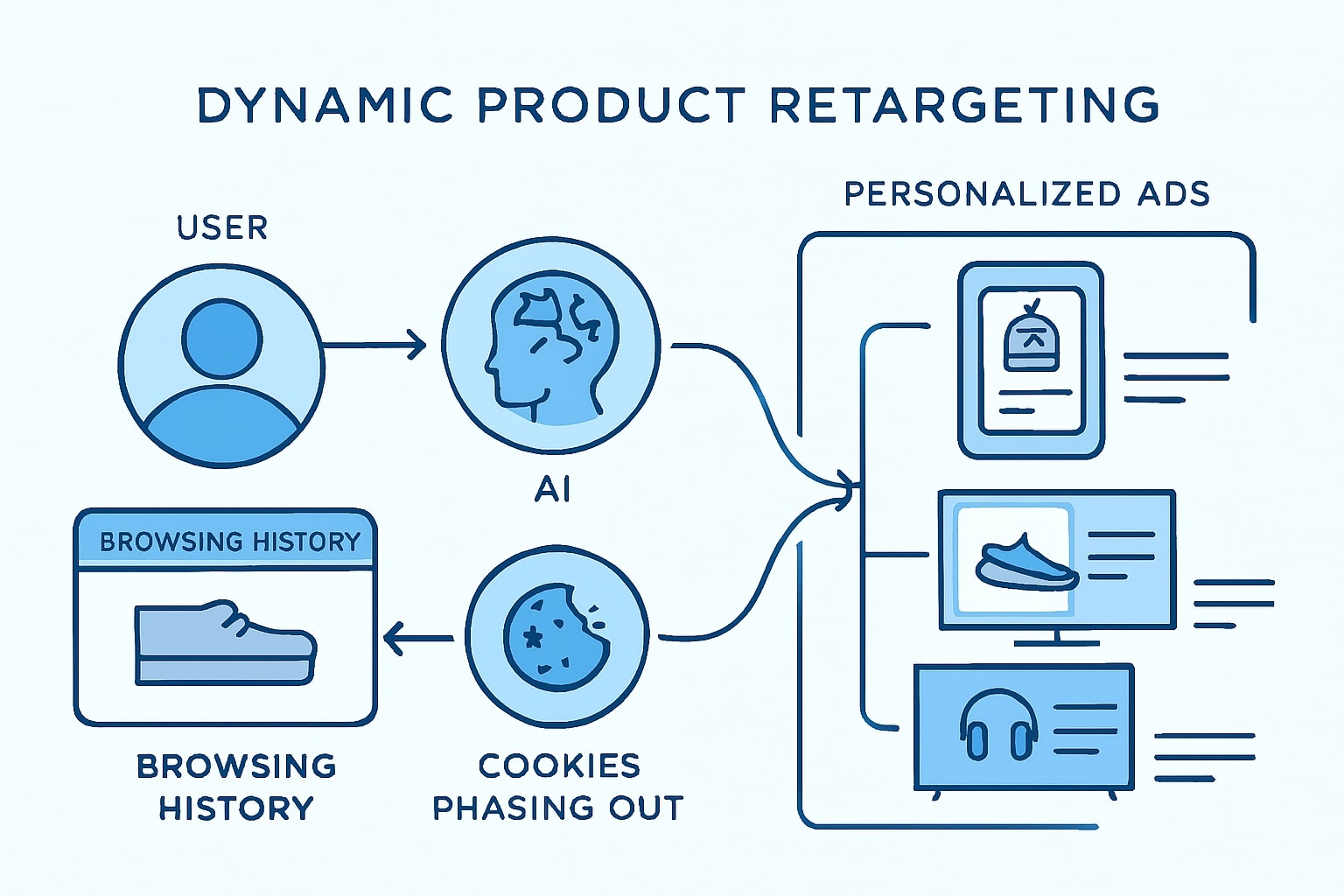
Remember the last time you browsed for running shoes, only to see those exact shoes following you across the web? That’s dynamic retargeting in action, but in 2025, it’s evolved into something far more sophisticated.
Dynamic retargeting automatically shows ads for the specific products or services a user viewed on your site. But here’s what makes today’s approach different: AI now predicts not just what products to show, but when, where, and how to present them. The system analyzes browsing patterns, time spent on pages, scroll depth, and even mouse movements to understand intent at a granular level.
I’ve seen campaigns where dynamic retargeting increased average order values by 15% simply by showing complementary products alongside the originally viewed items. It’s not magic—it’s data science meeting consumer psychology.
Customer Match and RLSA: Precision Targeting at Scale
With Customer Match, you can upload your customer email lists to Google Ads and target known users across various Google platforms, including YouTube, Gmail, and Google Search. This isn’t just another targeting option; it’s your secret weapon for re-engaging high-value customers.
Imagine this scenario: You have a list of customers who purchased from you six months ago. Traditional advertising would blast generic messages hoping something sticks. But with Customer Match, you can serve them personalized ads featuring new products in the exact category they previously purchased. The precision is surgical.
Remarketing Lists for Search Ads (RLSA) allows you to bid higher or adjust your targeting for users who have previously visited your website and are now searching for related terms on Google. When someone who visited your pricing page searches for “best [your product category] 2025,” you can bid aggressively, knowing they’re already familiar with your brand. This strategy alone can reduce cost-per-acquisition by 20-30%.
Audience Segmentation: The Foundation of Effective Retargeting
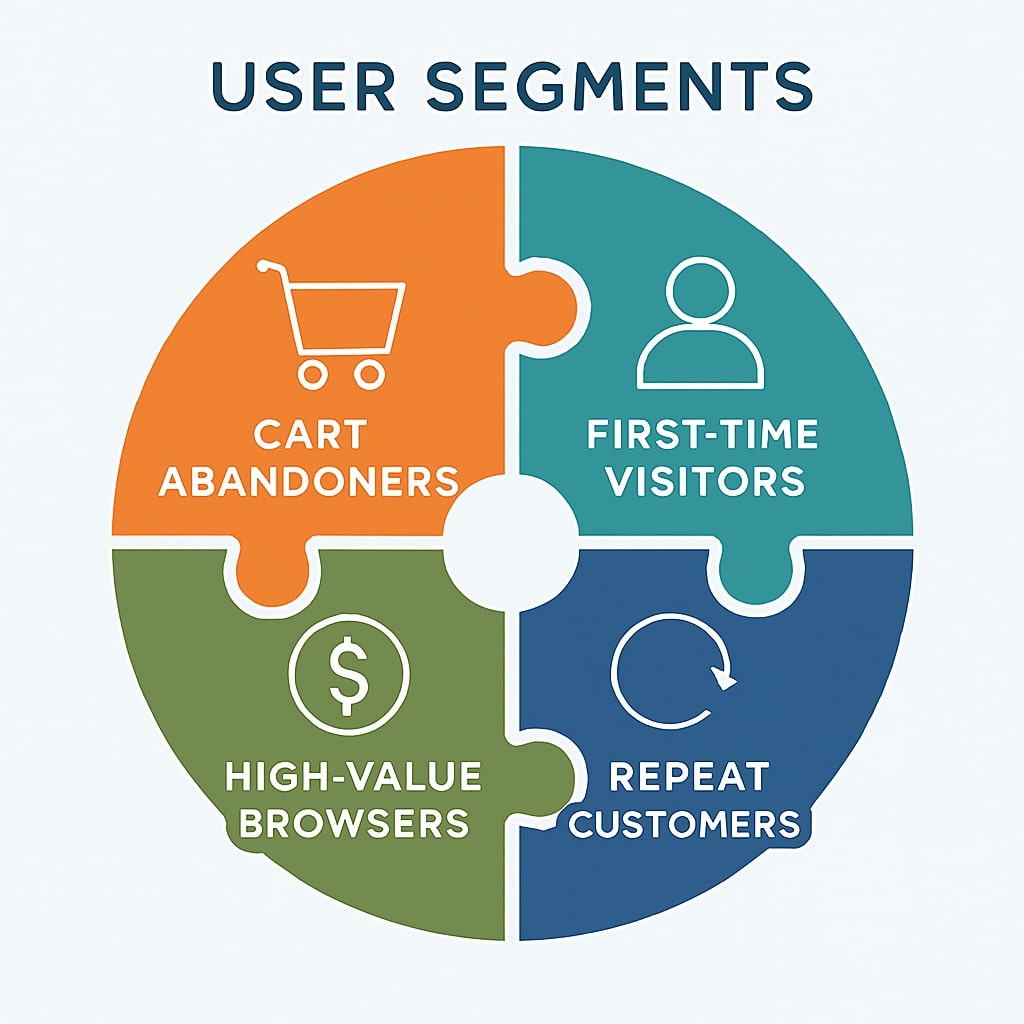
Not all website visitors are created equal. A first-time visitor who spent 30 seconds on your homepage requires a fundamentally different approach than someone who added items to their cart but didn’t purchase. This is where understanding the basics becomes crucial, if you need a refresher on fundamental segmentation principles, refer to my Beginner’s Guide.
Research shows that 66% of customers expect businesses to understand their needs and 71% get frustrated when their shopping experience isn’t personalized. This expectation has reshaped how we approach segmentation.
Here’s my proven segmentation framework for 2025:
Time-based segments: Create different campaigns for visitors from the last 24 hours, 7 days, 30 days, and 90 days. Fresh visitors need brand reinforcement; older ones need compelling reasons to return.
Behavior-based segments: Companies can target users based on URLs visited, like people who visited the checkout page for B2C, contact us page for B2B services, or pricing page for B2B SaaS. Each action signals different intent levels.
Value-based segments: High-value cart abandoners deserve premium treatment, exclusive discounts, free shipping, personalized customer service offers. Low-value browsers might receive educational content or entry-level product recommendations.
Cross-Platform and Omnichannel Strategies
The modern consumer doesn’t live in a single-channel world. Cross-platform retargeting ensures users see the same message across all their devices and platforms. But consistency doesn’t mean identical, it means coherent.
Your YouTube video ad should complement, not duplicate, your display banner. Your Gmail promotion should build upon the Search ad they clicked yesterday. Think of it as chapters in a story, each advancing the narrative toward conversion.
Connected TV retargeting on platforms like Hulu, Roku, or YouTube TV represents the frontier of omnichannel strategies. Picture this: A user browses your website on their phone during lunch, then sees your beautifully crafted video ad that evening while streaming their favorite show. The large-screen format allows for storytelling that mobile ads can’t match, creating emotional connections that drive action.
Performance Metrics and Optimization Strategies
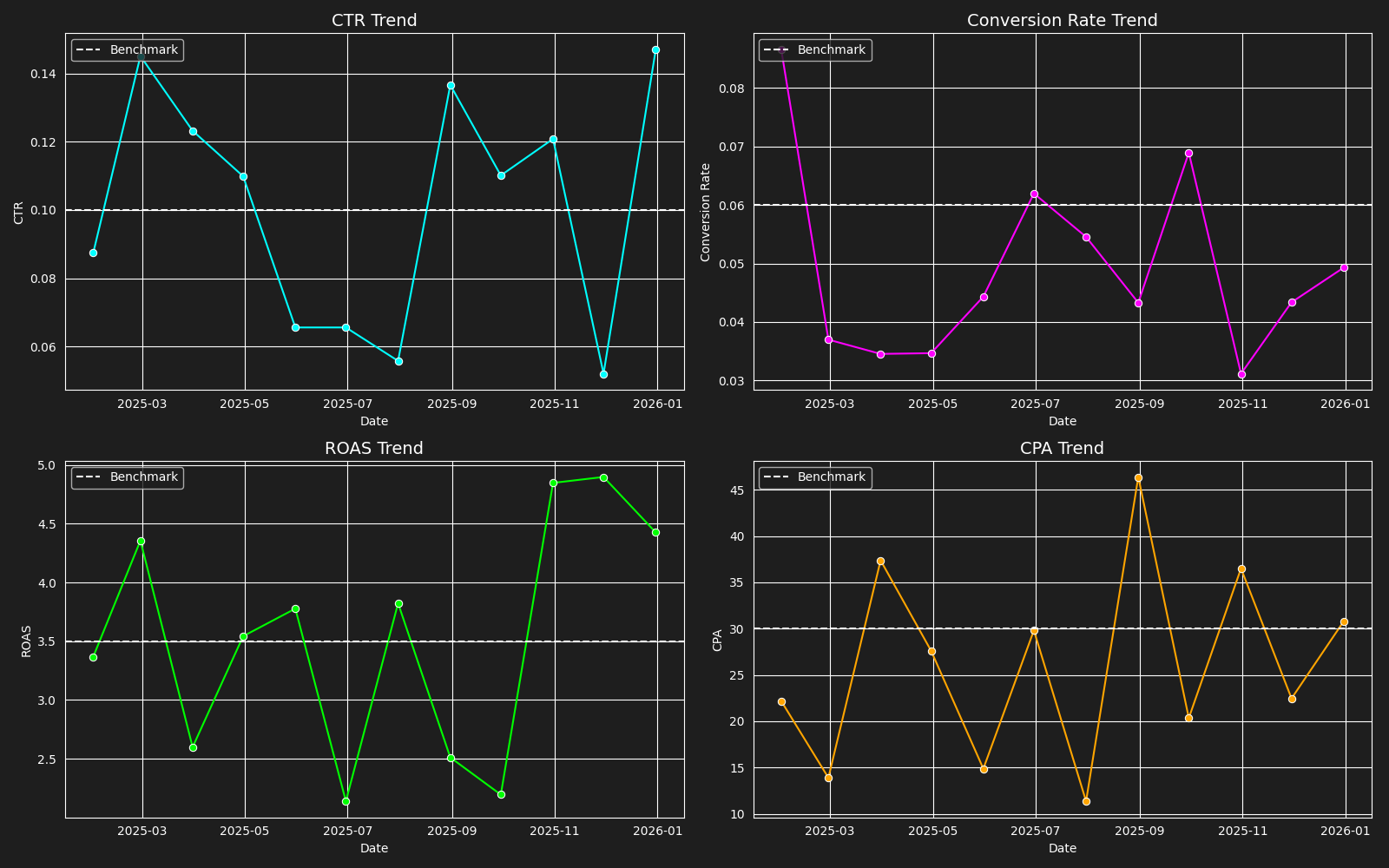
Data without action is just expensive storage. In 2025, successful retargeting demands constant optimization based on real-time performance metrics.
The average conversion rate for Google Ads in 2024 is 6.96%, but retargeting campaigns consistently outperform this benchmark. Some campaigns see a return on investment of 400%. But here’s the crucial insight: these results don’t happen by accident.
I monitor these key metrics religiously:
- View-through conversions (not just click-through)
- Time lag between exposure and conversion
- Frequency caps to prevent ad fatigue
- Cross-device attribution patterns
- Incrementality testing to prove true impact
Despite a 12.88% increase in CPC, the 6.84% rise in average conversion rate helps balance out cost increases. This tells us that while costs are rising, performance improvements are keeping pace, but only for those who optimize aggressively.
AI-Powered Retargeting and Predictive Analytics
Artificial intelligence has transformed retargeting from reactive to predictive. Instead of waiting for someone to abandon their cart, AI now identifies users likely to abandon before they do, triggering preemptive interventions.
Google’s machine learning algorithms analyze millions of signals, device type, time of day, browsing speed, geographic location, weather patterns, and countless others—to predict conversion probability in real-time. Your bids adjust automatically, your ad creative switches dynamically, and your landing pages personalize instantly.
The result? I’ve seen campaigns where AI-driven optimization reduced cost-per-acquisition by 40% while increasing conversion volume by 25%. The machines aren’t replacing marketers; they’re amplifying our capabilities.
Overcoming Common Retargeting Challenges
Let’s address the elephant in the room: ad fatigue. Show someone the same ad 50 times, and you’ve transformed from helpful reminder to digital stalker.
B2C marketers cited ad fraud (43%) and attribution (37%) as their top two retargeting challenges. These aren’t minor inconveniences; they’re fundamental obstacles that can derail entire campaigns.
Here’s how I combat these challenges:
Ad fatigue: Rotate creative every 7-14 days. Use frequency caps (I recommend 20 impressions per user per month as a starting point). Implement sequential messaging that tells a story rather than repeating the same message.
Attribution complexity: Use data-driven attribution models, not last-click. Implement proper view-through conversion windows. Test incrementality through holdout groups.
Privacy concerns: Be transparent about data usage. Provide clear opt-out mechanisms. Focus on first-party data collection through value exchanges.
Check out this fascinating article: How to Write Google & Meta Ads 10x Faster with AI Copywriting Tools
Video and YouTube Retargeting Excellence
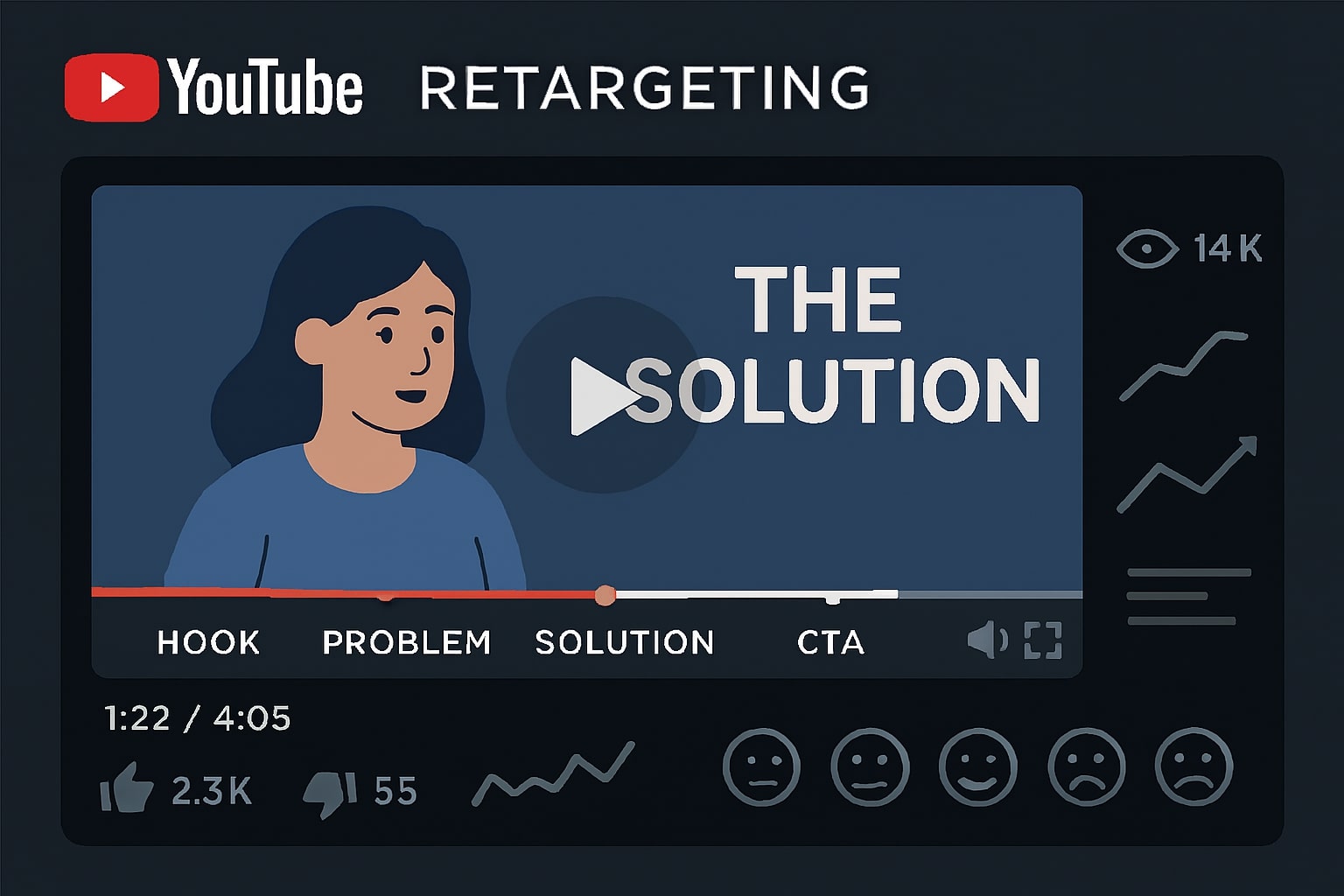
Video ads on YouTube have an 82% higher conversion rate than other types of ads. That’s not a marginal improvement, it’s a fundamental shift in effectiveness.
Video retargeting works because it combines the power of sight, sound, and storytelling. You’re not just reminding someone about a product; you’re creating an emotional experience. Airbnb launched remarketing campaigns that targeted users based on specific search criteria, location, dates, and property types, using video to transport viewers to their dream destinations.
My video retargeting formula:
- First 5 seconds: Hook with the problem they’re trying to solve
- Next 10 seconds: Show your solution in action
- Final 5 seconds: Clear, compelling call-to-action
Keep videos under 20 seconds for retargeting. You’re talking to warm audiences—they don’t need the full pitch, just a persuasive nudge.
Shopping Ads and E-commerce Retargeting
Shopping Ads generate 60% of clicks for retail businesses. For e-commerce, they’re not optional, they’re essential.
Google Shopping Ads drive 85.3% of all clicks on Google Ads and Google Shopping campaigns. These visual, product-specific ads deliver exactly what shoppers want: clear imagery, pricing, and availability at a glance. When combined with retargeting, they become virtually irresistible.
Dynamic remarketing for e-commerce should showcase not just the viewed product but intelligent recommendations. If someone viewed a camera, show them the camera plus essential accessories. If they browsed winter coats, display complementary scarves and gloves. The goal isn’t just recovering the abandoned cart—it’s maximizing cart value.
Budget Allocation and Bidding Strategies
Money talks, but in retargeting, it whispers strategically. The average cost per lead in Google Ads in 2024 is $66.69, but retargeting typically delivers leads at 30-50% lower costs.
Here’s my budget allocation framework:
70% to proven performers: Your highest-converting segments deserve the lion’s share. These are typically cart abandoners and high-intent browsers from the last 7 days.
20% to testing: Always be experimenting. Test new audiences, creative formats, bidding strategies. What works today might not work tomorrow.
10% to brand building: Not every retargeting campaign needs immediate ROI. Some should nurture long-term relationships, especially for high-consideration purchases.
For bidding, I’ve found Target ROAS (Return on Ad Spend) most effective for retargeting. You know these audiences convert—now optimize for value, not just volume.
Future-Proofing Your Retargeting Strategy
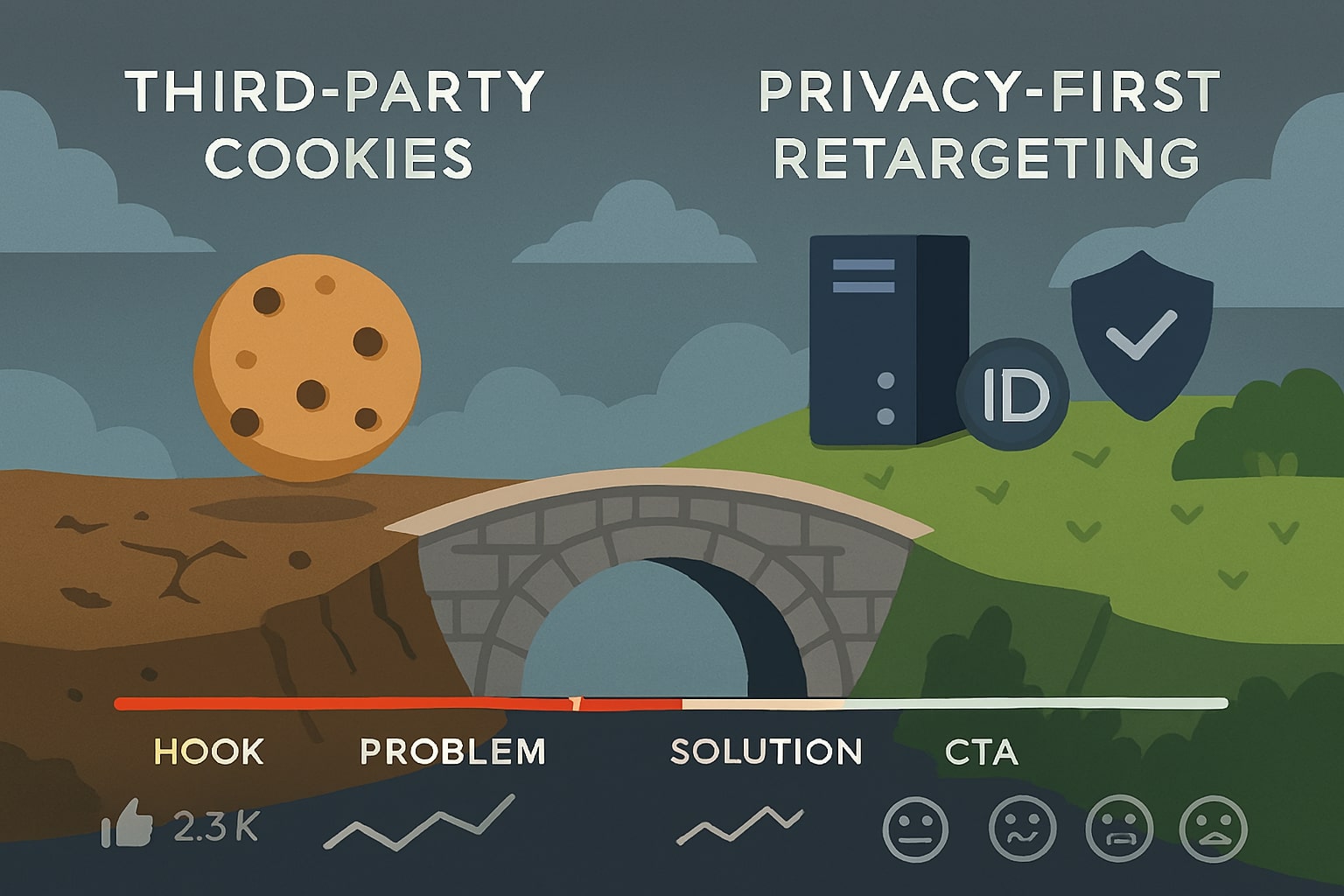
Google plans to phase out third-party cookies by Q3 2024, requiring advertisers to rely on first-party data. This isn’t a distant threat—it’s an immediate reality requiring action today.
Future-proof strategies I’m implementing:
First-party data collection: Every touchpoint should capture data, email signups, account creation, loyalty programs. Offer genuine value in exchange for information.
Server-side tracking: Move beyond pixel-based tracking to server-side solutions that provide better data quality and privacy compliance.
Unified ID solutions: Unified ID solutions allow tracking across different environments without third-party cookies. These privacy-compliant alternatives maintain retargeting effectiveness while respecting user preferences.
Contextual targeting hybrid: Combine retargeting with contextual signals. If someone visited your fitness equipment site, target them on health and wellness content, even without cookies.
The Power of Sequential Storytelling in Retargeting
Traditional retargeting hammers the same message repeatedly. Sequential retargeting tells a story that unfolds over time, building desire and addressing objections systematically.
Chapter 1 (Days 1-3): Remind them why they were interested. Show the product in action, highlight key benefits.
Chapter 2 (Days 4-7): Address common objections. Share testimonials, demonstrate value, offer guarantees.
Chapter 3 (Days 8-14): Create urgency. Limited-time offers, stock warnings, exclusive bonuses.
Chapter 4 (Days 15+): Final attempt with maximum incentive. Your best offer, clearest value proposition.
Each chapter builds upon the last, creating narrative momentum toward conversion. I’ve seen this approach increase conversion rates by 45% compared to static retargeting.
Check out this fascinating article: How to Optimize Your Landing Page for Better Ad Performance in 2025
Retargeting That Builds Brands, Not Just Sales
In 2025, the most successful retargeting strategies recognize that not every interaction should push for immediate conversion. Sometimes, the goal is deepening engagement, building trust, or educating prospects.
42% of businesses use retargeting to drive brand awareness. These campaigns might share customer success stories, behind-the-scenes content, or educational resources. They’re playing the long game, understanding that today’s engaged viewer becomes tomorrow’s loyal customer.
I allocate 15-20% of retargeting budget to pure brand-building activities. The ROI isn’t immediate, but the lifetime value impact is substantial. When someone finally converts, they’re not just buying a product, they’re joining a brand they trust.
Mastering the Art of Timing
Timing isn’t everything—it’s the only thing that makes everything else work. Show a retargeting ad too soon, and you seem desperate. Too late, and they’ve already bought from your competitor.
My timing framework, refined through thousands of campaigns:
0-24 hours: Gentle reminder. No discounts yet—they might still convert at full price.
1-3 days: Increase frequency, introduce social proof. “Others are buying this right now.”
4-7 days: First incentive. Free shipping, small discount, bonus item.
Week 2: Stronger incentive plus urgency. “Offer expires in 48 hours.”
Week 3-4: Last chance messaging. Your best offer, clear deadline.
Beyond 30 days: Shift to nurture mode. Educational content, new product announcements, brand stories.
The Psychology Behind Effective Retargeting Creative
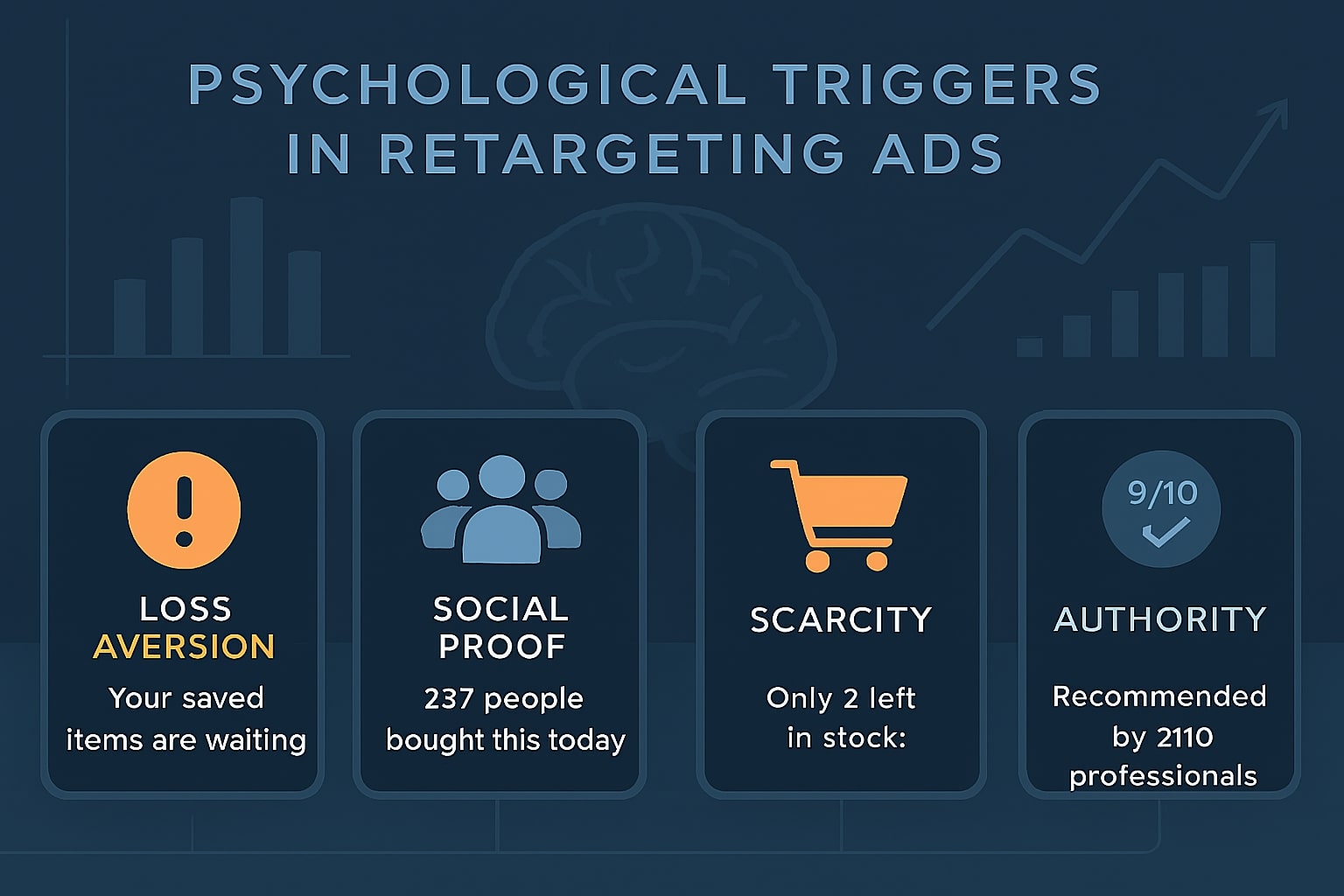
Understanding human psychology transforms good retargeting into great retargeting. 80% of consumers say they’re more likely to buy from brands offering tailored experiences. But personalization goes beyond showing the right product, it’s about triggering the right emotions.
Loss aversion: “Your saved items are waiting” performs better than “Complete your purchase.”
Social proof: “237 people bought this today” outperforms “Popular item.”
Scarcity: “Only 3 left in stock” beats “Limited availability.”
Authority: “Recommended by 9/10 professionals” trumps “High quality.”
These aren’t tricks—they’re psychological principles that align messaging with how humans actually make decisions. Use them ethically, honestly, and effectively.
Advanced Implementation Techniques
Let’s get technical. Setting up basic retargeting is straightforward, but advanced implementation separates amateurs from professionals.
Select Google Ads tag as the recommended method for its simplicity and suitability for standard remarketing campaigns. But don’t stop there. Implement enhanced conversions, integrate offline conversion tracking, and use Google Analytics 4 audiences for deeper behavioral insights.
Custom parameters allow tracking beyond page visits engagement depth, content consumption, video watch time. These micro-conversions predict macro-conversions, enabling proactive retargeting before users even realize they’re interested.
My technical checklist:
- Implement Google Tag Manager for flexible tracking
- Set up custom events for meaningful interactions
- Create calculated metrics combining multiple signals
- Build predictive audiences using machine learning
- Test server-side tagging for better data quality
The technical foundation determines campaign ceiling. Build it right, and there’s no limit to optimization potential.
Creating Urgency Without Being Pushy
Urgency drives action, but manufactured urgency destroys trust. The key is creating legitimate reasons for immediate action while respecting the customer’s intelligence.
WiserNotify builds urgency through countdown timers, offers, and announcements. But effective urgency goes beyond countdown clocks. It’s about communicating genuine scarcity, time-sensitive benefits, or exclusive opportunities.
Real urgency examples that work:
- “Price increases Monday” (with proof of planned increase)
- “Free shipping ends tonight” (part of regular promotional calendar)
- “Last units from this production run” (for genuinely limited products)
- “Bonus expires with your saved cart” (tied to individual user action)
Avoid fake urgency—customers remember, and trust, once broken, rarely returns. Better to have no urgency than false urgency.
The Synergy of Email and Display Retargeting
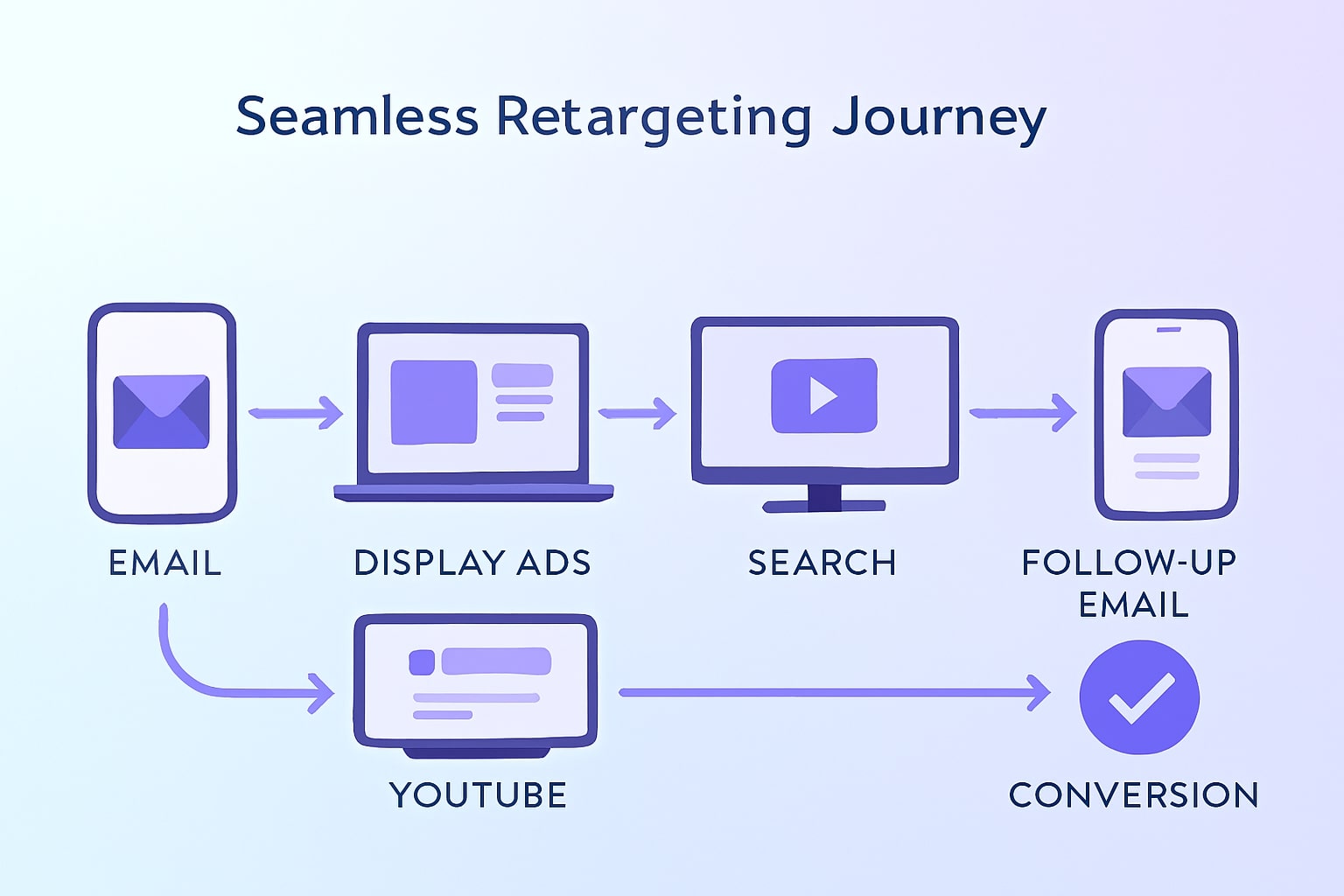
Email retargeting re-engages users who interacted with email campaigns but haven’t taken desired actions. This multichannel approach amplifies impact exponentially.
Someone opens your email but doesn’t click? Retarget them with display ads featuring the same offer. They click but don’t convert? Follow up with a personalized email sequence. Each channel reinforces the other, creating an ecosystem of persuasion.
My integrated approach:
- Email introduces the offer
- Display ads provide visual reminders
- Search ads capture high-intent moments
- YouTube videos deepen engagement
- Email closes the loop with personalized follow-up
This orchestrated approach typically doubles conversion rates compared to single-channel retargeting. The whole truly exceeds the sum of its parts.
Localizing Retargeting for Maximum Relevance
Nearly half of all searches on Google are local. Your retargeting should reflect this local intent, especially for businesses with physical locations or regional variations.
Geo-targeted retargeting adapts messaging based on user location, mentioning nearby stores, local events, regional preferences, weather-specific products. A user in Jakarta sees different messaging than someone in Surabaya, even for the same product.
Location-based strategies that excel:
- “Visit our Menteng store this weekend”
- “Free same-day delivery in South Jakarta”
- “Special offer for Bandung residents”
- “Beat the Jakarta rain with our waterproof collection”
Local relevance isn’t just geographic—it’s cultural, seasonal, and contextual. Master this, and you’ll see conversion rates jump 30-40%.
Measuring True Incrementality
Not all conversions attributed to retargeting actually result from retargeting. Some customers would have converted anyway. Understanding true incrementality—the additional conversions caused by retargeting—reveals actual campaign value.
Implement holdout testing: randomly exclude 10% of your retargeting audience from campaigns. Compare their conversion rates to the exposed group. The difference represents true incremental impact.
I typically find 60-70% incrementality rates for retargeting—meaning 30-40% of attributed conversions would happen regardless. This isn’t failure; it’s reality. Factor this into ROI calculations for honest performance assessment.
Transforming Abandonment Into Opportunity
Cart abandonment isn’t failure—it’s opportunity in disguise. Nike achieved a 35% increase in completed purchases from cart abandoners through strategic retargeting. They transformed a problem into profit.
My cart abandonment recovery system:
Hour 1: Email reminder, no incentive Hour 3: First display ad, showing exact cart contents Day 1: Email with customer service offer Day 2: Display ads with light incentive (free shipping) Day 3: Video ad addressing common concerns Day 4-7: Rotating creative with increasing urgency Week 2: Best offer with clear expiration
Recovery rates typically reach 25-30% with this systematic approach. That’s one in four abandoned carts converted—revenue that would otherwise vanish.
Building Long-Term Customer Value Through Retargeting
Sephora utilized retargeting not just for new sales but to increase repeat purchases, seeing a 40% increase in repeat purchases from retargeted customers. This strategic focus on existing customers represents retargeting’s highest ROI opportunity.
Post-purchase retargeting sequences:
- Days 1-7: Thank you message, usage tips, support resources
- Days 8-30: Complementary product suggestions
- Days 31-60: Loyalty program invitation, exclusive offers
- Days 61-90: Replenishment reminders (for consumables)
- Days 91+: New product announcements, seasonal promotions
Existing customers convert at 5-10x the rate of new prospects. Retargeting them isn’t an expense—it’s an investment in predictable, profitable growth.
Ready to Transform Your Retargeting Strategy?

You’ve just absorbed advanced strategies that Fortune 500 companies pay consultants six figures to implement. But here’s the truth I’ve learned after years optimizing campaigns: Knowledge without execution is merely potential energy waiting to be released.
If you’re serious about implementing these retargeting strategies but feeling overwhelmed by the technical complexity, or if you simply value your time more than the learning curve requires, I can help. As a Google Ads specialist who’s managed millions in ad spend and delivered consistent 200-300% ROI improvements for clients across Southeast Asia and beyond, I transform these strategies from theory into profit.
Whether you need a complete retargeting system built from scratch, an audit of your existing campaigns, or strategic guidance to accelerate your growth, let’s discuss how we can multiply your conversions together. My clients typically see results within the first 30 days, because when you combine proven strategies with experienced execution, success becomes predictable.
Ready to stop leaving money on the table? Schedule a strategy consultation or click the “Let’s Chat” button below to discuss your specific retargeting goals. I only work with a select number of clients each month to ensure exceptional results, so reach out today to secure your spot.
P.S. If you’re just starting your retargeting journey, you might also want to check out my comprehensive Retargeting with Google Ads: A Complete Beginner’s Guide for foundational concepts before diving into these advanced strategies.
Conclusion: Your Retargeting Revolution Starts Now
The gap between businesses that master retargeting and those that don’t will become a chasm in 2025. With 77% of businesses using retargeting to gain leads and seeing 150% increases in conversions, this isn’t a “nice to have”, it’s survival equipment in the digital economy. The tools exist, the data supports it, and your competitors are already doing it. Every day you delay implementing these strategies is money left on the table and customers lost to competitors who understand that in modern marketing, the fortune isn’t just in the follow-up, it’s in the intelligent, personalized, relentless pursuit of genuine value delivery. Your future customers have already shown interest; now it’s time to show them you’re worth their trust. The question isn’t whether you should implement these strategies it’s whether you’ll do it yourself or partner with someone who’s already mastered them.
Footnotes & Sources:
- Growth Minded Marketing. (2025, May 27). The Ultimate Guide to Remarketing in Google Ads [2025]
- Analytify. (2025). Google Ads Remarketing and Retargeting Tips and Strategies 2025
- Ads Institute. (2025, February 4). Boost Your Profits with Google Ads Retargeting in 2025
- DemandSage. (2025, May 27). 70+ Retargeting Statistics & Trends of 2025
- WordStream. (2025, May 20). Google Ads Benchmarks 2024: New Trends & Insights
- DemandSage. (2025, May 9). 82 Google Ads Statistics – 2025 Performance & Revenue
- Funnel.io. (2025, May 20). The Expert’s Guide to Retargeting – 2024 Edition
- WiserNotify. (2025, January 2). Best Retargeting Advertising Strategies That Work in 2025
- SearchEngineLand. (2025, June 26). What Is Retargeting? Strategy, Examples & Tools
- Torro Media. (2024, December 23). 7 Astonishing Google Ads Stats of 2024 to Shape Your 2025 Strategy
Ready to apply this to your business?
Let's Talk Strategy →