Margabagus.com – Imagine walking into a room where billions of potential customers are actively engaged, eagerly consuming content at an unprecedented rate. Now imagine having the ability to showcase your product or service to precisely the right people within that vast audience. This isn’t science fiction—it’s the reality of TikTok Ads in 2025. The platform that began as a quirky dance app has evolved into one of the most powerful scaling TikTok advertising campaigns engines in the digital landscape, reshaping how brands connect with consumers and redefining the metrics of advertising success.
According to recent data from eMarketer, TikTok’s advertising revenue surpassed $31 billion globally in 2024, representing a staggering 43% year-over-year growth. This trajectory shows no signs of slowing, as businesses of all sizes scramble to capture a piece of TikTok’s 1.8 billion monthly active users. But behind these impressive numbers lie intricate strategies, calculated risks, and innovative approaches that differentiate wildly successful campaigns from forgettable ones.
The Algorithm Advantage: Understanding TikTok’s Unique Recommendation Engine
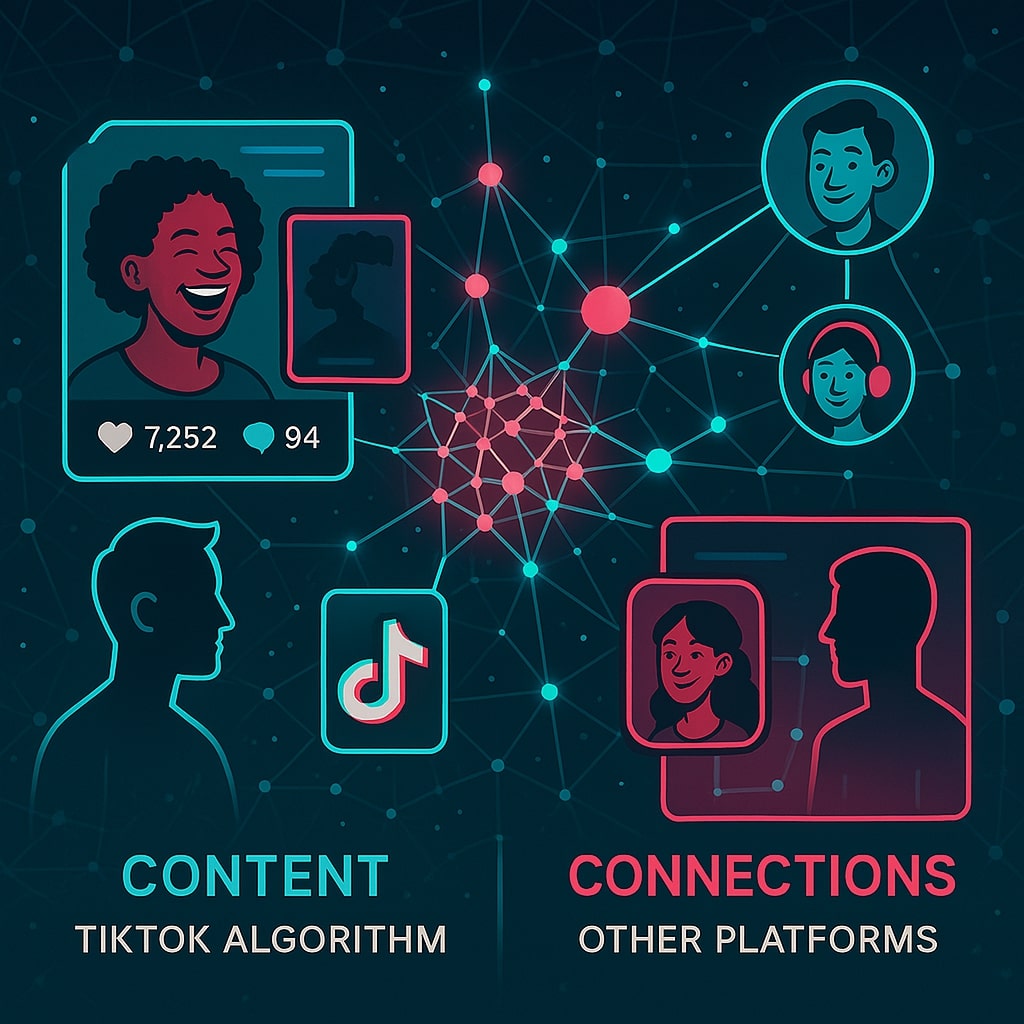
At the heart of TikTok’s advertising ecosystem lies its sophisticated algorithm—a complex system that has proven remarkably effective at matching content with interested viewers. Unlike other social platforms that rely heavily on social graphs and explicit user connections, TikTok’s algorithm focuses primarily on content engagement patterns.
“TikTok’s recommendation algorithm is fundamentally different from those of Facebook or Instagram,” explains Dr. Maya Weinstein, digital anthropologist and author of “Social Media Ecosystems.” “While most platforms prioritize who you know, TikTok prioritizes what you engage with, creating a more content-driven and less socially-driven experience.”
This algorithmic distinction has profound implications for advertisers. When you launch a TikTok Ads campaign, you’re not just competing for attention within existing social circles—you’re being evaluated by an AI system that’s constantly seeking to match engaging content with receptive audiences, regardless of social connections.
Research from the Advertising Research Foundation reveals that TikTok’s algorithm can identify potential high-engagement viewers with 73% accuracy after just three sessions on the platform. By comparison, similar predictive capabilities on other platforms typically require weeks or months of user data.
For advertisers, this means that creativity and engagement quality often trump targeting sophistication. CMO of sustainable footwear brand Tread, Julian Marcus, discovered this firsthand: “We initially overthought our targeting parameters, creating dozens of micro-segments. But our breakthrough came when we simplified our approach and focused instead on creating genuinely entertaining content that resonated emotionally. The algorithm found our audience better than we could.”
Check out this fascinating article: Targeting Gen Z on TikTok Ads: Music, Trends, and Challenges
The Spark That Ignites: Anatomy of Viral TikTok Campaigns
What truly separates TikTok from other advertising platforms is its unparalleled potential for virality. Unlike traditional digital advertising, where reach is primarily determined by budget, successful TikTok ad strategies can achieve exponential organic amplification when they resonate with users.
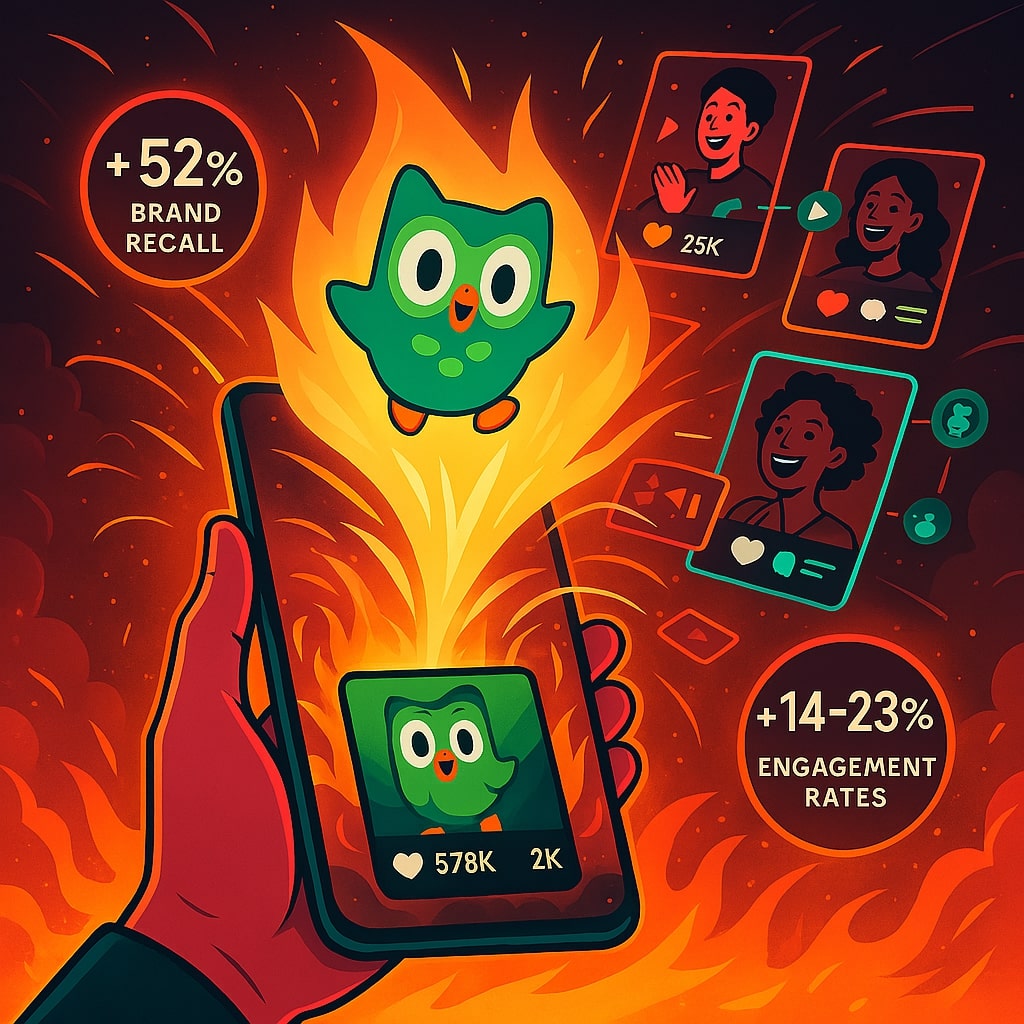
Take the case of Duolingo, whose anthropomorphized green owl mascot became a TikTok sensation, generating over 7.2 billion views across their campaigns. Zaria Parvez, the social media manager behind Duolingo’s TikTok strategy, attributes their success to authenticity and risk-taking: “We abandoned the corporate playbook and instead leaned into weird, slightly chaotic content that reflected internet culture. The result wasn’t just engagement—it was genuine cultural relevance.”
The statistics support this approach. According to TikTok’s internal research published in their 2024 Marketing Science Report, ads that incorporate trending sounds see a 52% increase in brand recall compared to those that don’t. Similarly, ads that use native TikTok creative formats experience 14-23% higher engagement rates than repurposed content from other platforms.
Financial services firm Klarna experienced this difference dramatically when they shifted from traditional banking-style advertisements to their “Dream Deal Days” campaign featuring surreal, dreamlike scenarios highlighting their payment solutions. The campaign generated 89 million views and drove a 47% increase in app installations—all while spending 22% less than their previous, more conventional campaigns.
The Scaling Challenge: From Viral Moment to Sustainable Growth

While viral moments can generate impressive metrics, the true challenge for marketers lies in ROI optimization for TikTok advertisements—converting fleeting attention into sustainable business growth. This requires a sophisticated approach to scaling that balances creative spontaneity with strategic rigor.
“The biggest mistake brands make is treating TikTok as a one-hit-wonder platform,” notes Alexandra Chen, Head of Social Media at global agency Horizon. “They chase virality without building the infrastructure to capitalize on attention when they get it.”
Data from TikTok Business reveals that brands with consistent posting schedules (3+ times weekly) see 93% better performance on their paid campaigns compared to those with irregular posting patterns. This suggests that organic content strategy and paid advertising efforts on TikTok are more interdependent than on other platforms.
Skincare brand Glow Recipe exemplifies this integrated approach. After their Watermelon Glow Mask went viral on TikTok, generating over 300 million views, they implemented a three-pronged scaling strategy:
- They rapidly expanded their creator partnerships from 8 to 67 diverse influencers
- They developed platform-specific landing pages optimized for TikTok traffic
- They created a tiered retargeting strategy that segmented users based on their engagement depth
The results were impressive: a 218% increase in direct sales attributed to TikTok, with a customer acquisition cost 31% lower than their Instagram campaigns during the same period.
“We learned that scaling on TikTok isn’t just about pouring more money into the same approach,” explains Sarah Lee, Glow Recipe’s co-founder. “It’s about creating an ecosystem around your viral moments that can capture and convert interest at multiple touchpoints.”
The Creator Economy: Collaborative Amplification Strategies
Perhaps the most distinctive aspect of TikTok’s advertising landscape is the central role of creators. Unlike traditional influencer marketing, TikTok’s creator partnerships often blur the lines between sponsored content and organic advocacy, creating opportunities for more authentic brand integration.
TikTok’s internal data indicates that creator-driven branded content generates 17% higher engagement and 10% better conversion rates compared to brand-produced content alone. This effectiveness has fueled the growth of TikTok’s Creator Marketplace, which now boasts over 800,000 verified creators available for brand partnerships.
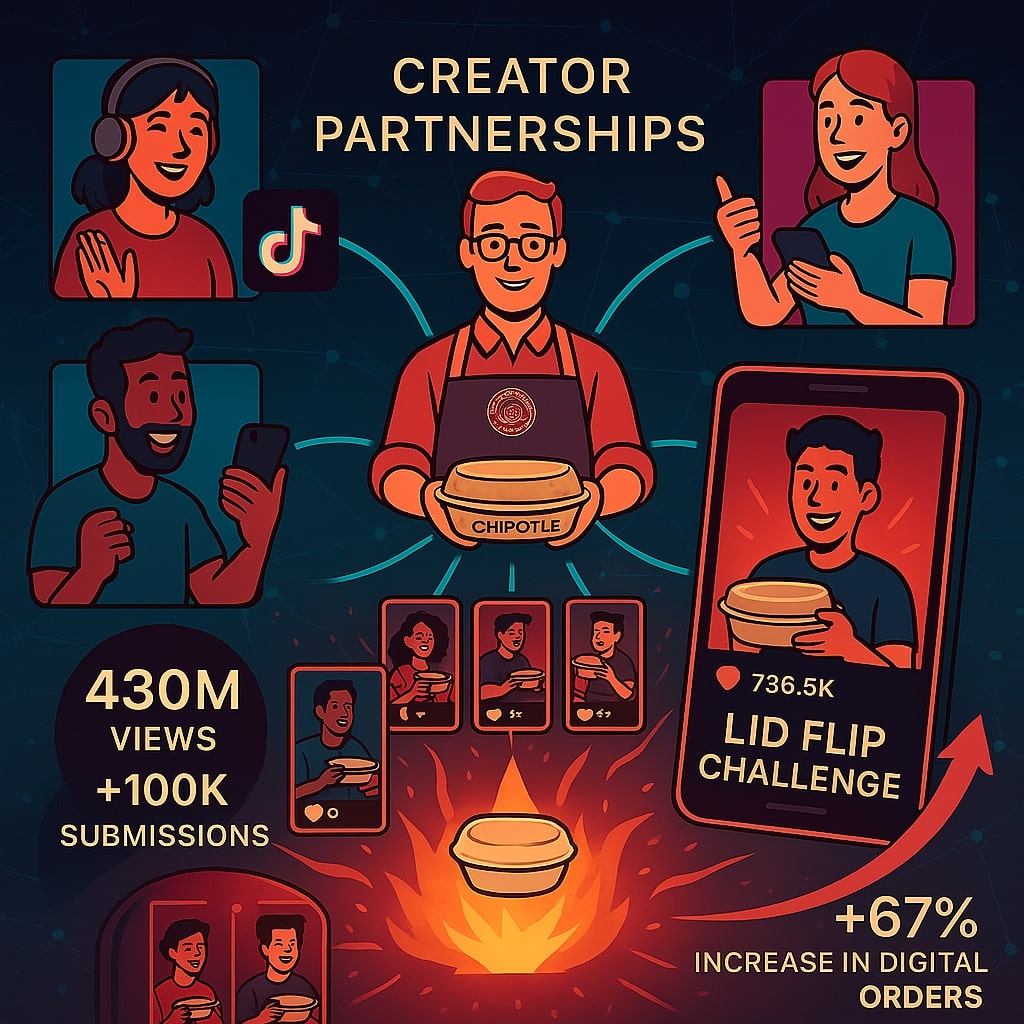
Chipotle’s “Lid Flip Challenge” campaign demonstrates the power of this approach. By partnering with creator David Dobrik and launching a branded hashtag challenge, they generated 430 million views and 100,000 video submissions from users. What made this campaign particularly effective was how it incorporated Chipotle’s product (their distinctive burrito bowl lid) into a participatory challenge that felt native to the platform.
“We didn’t ask creators to talk about our food quality or value proposition,” explains Tressie Lieberman, Chipotle’s VP of Digital Marketing. “Instead, we created a fun activity that naturally integrated our product into creators’ content without feeling forced.”
The brand continued building on this approach with their “Chipotle Royalty” campaign, which invited users to showcase their custom Chipotle orders for a chance to have them featured on the official menu. The campaign generated 3.5 billion views and drove a 67% increase in digital orders.
Data-Driven Creativity: The Science Behind TikTok’s Art
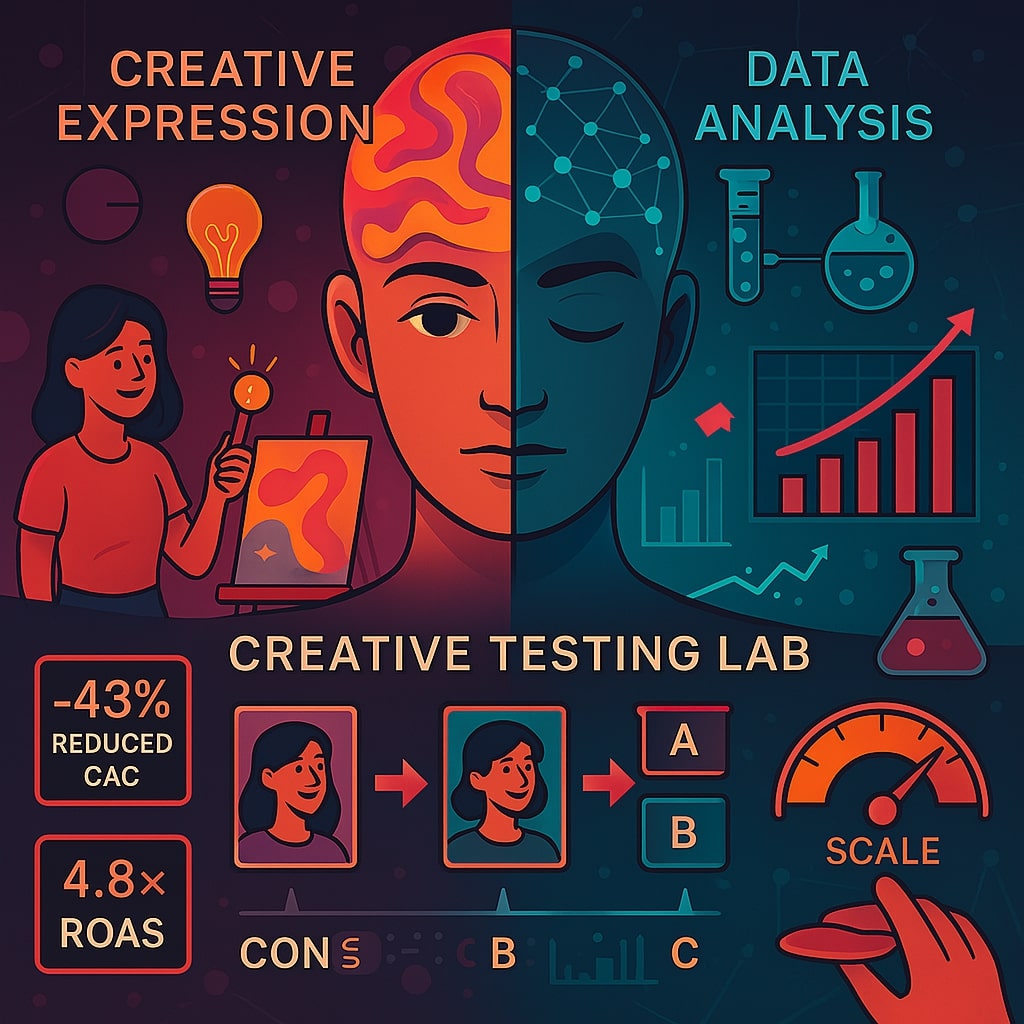
While TikTok’s creative, spontaneous nature is often emphasized, the most sophisticated advertisers on the platform combine this creativity with rigorous data analysis to inform their TikTok viral marketing techniques.
“There’s a common misconception that TikTok success is random or purely creative,” says Jonathan Mildenhall, former CMO of Airbnb and current CEO of TwentyFirstCenturyBrand. “The reality is that the best performers are applying structured experimentation methodologies to identify what resonates, then scaling those insights systematically.”
This approach is exemplified by cosmetics brand e.l.f., whose TikTok campaigns have consistently outperformed industry benchmarks. Their strategy involves:
- Launching multiple creative concepts simultaneously with minimal initial investment
- Analyzing performance data after 48 hours to identify top performers
- Rapidly scaling successful concepts while iterating on underperformers
- Creating a feedback loop between creative and analytics teams to apply learnings
“We’ve essentially built a creative testing lab,” explains Kory Marchisotto, e.l.f.’s CMO. “In a single quarter, we might test 200+ creative concepts, but only 15-20% will receive significant scaling investment. This approach has reduced our customer acquisition costs by 43% year-over-year while improving conversion rates.”
Analysis of e.l.f.’s TikTok performance from marketing intelligence firm Pathmatics reveals that this methodical approach has helped them achieve a remarkable 4.8x return on ad spend—more than double the industry average for beauty brands on the platform.
Check out this fascinating article: TikTok Ads Hacks for Explosive Growth in Views
Cross-Platform Integration: Extending TikTok Success Beyond the App
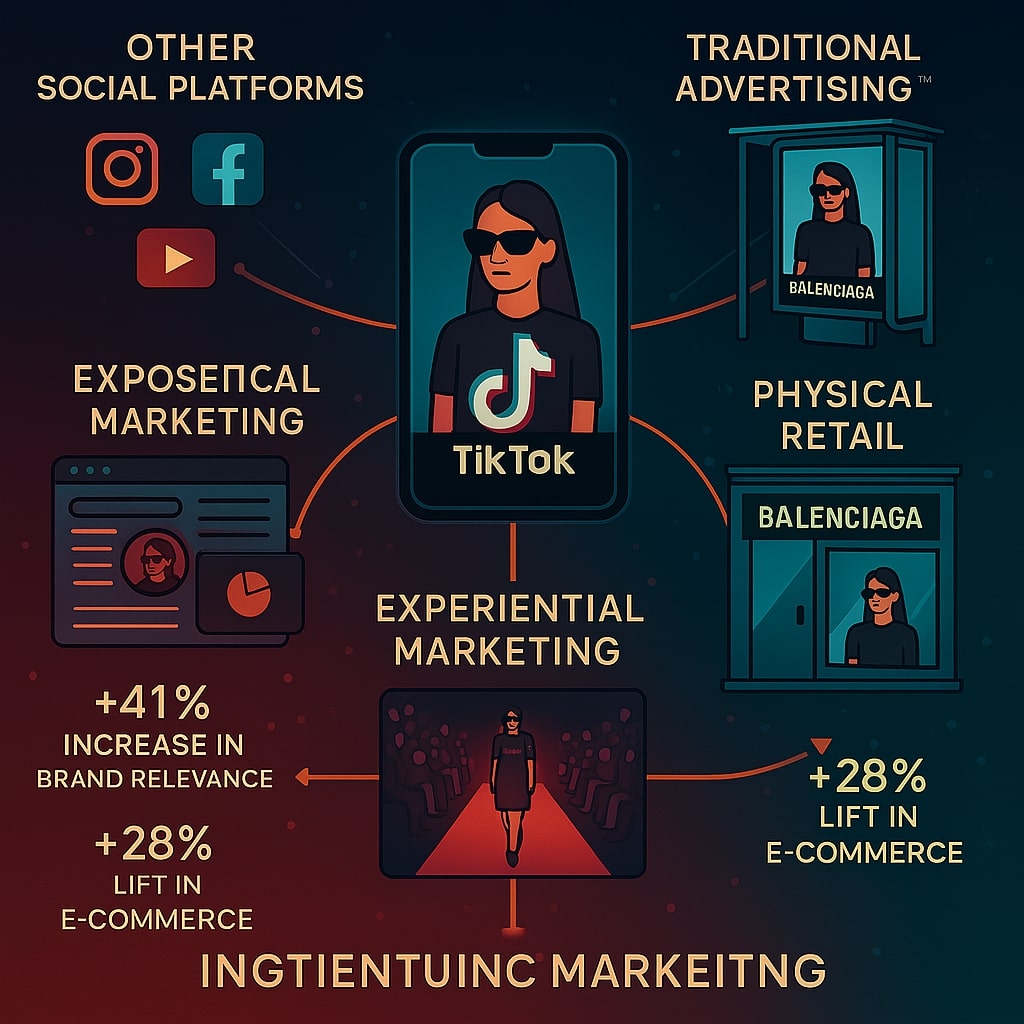
While TikTok can drive impressive results independently, the most sophisticated marketers are developing strategies that extend TikTok’s impact across their entire marketing ecosystem through smart ROI optimization for TikTok advertisements.
Research from marketing analytics firm Analytic Partners indicates that brands that integrate TikTok content into a broader omnichannel strategy see a 32% higher ROI compared to those that treat it as an isolated channel. This integration can take multiple forms:
- Content Repurposing: Adapting successful TikTok creative for use on other platforms
- Audience Insights Application: Using learnings from TikTok engagement to inform broader marketing strategies
- Cross-Platform Retargeting: Creating specialized audiences based on TikTok engagement for retargeting on other platforms
- Offline Integration: Extending TikTok campaigns into physical retail or experiential marketing
Luxury fashion brand Balenciaga exemplifies this approach. After their deliberately quirky and meme-inspired TikTok campaigns gained traction, they extended this aesthetic to their runway shows, store displays, and even product design. The result was a 41% increase in brand relevance among Gen Z consumers and a 28% lift in e-commerce sales.
“TikTok became our creative north star,” explains Balenciaga’s Digital Marketing Director, Luca Bertolini. “It wasn’t just a channel—it was a window into cultural relevance that informed our entire brand strategy.”
Similarly, fast-food chain Wendy’s leveraged their TikTok success to revitalize their overall brand positioning. After their “#HotAndCrispy” challenge—promoting their reformulated fries—generated 6.2 billion views, they integrated elements from the campaign into traditional TV spots, billboard advertising, and in-store promotions.
The Evolution of Measurement: Beyond Views and Likes
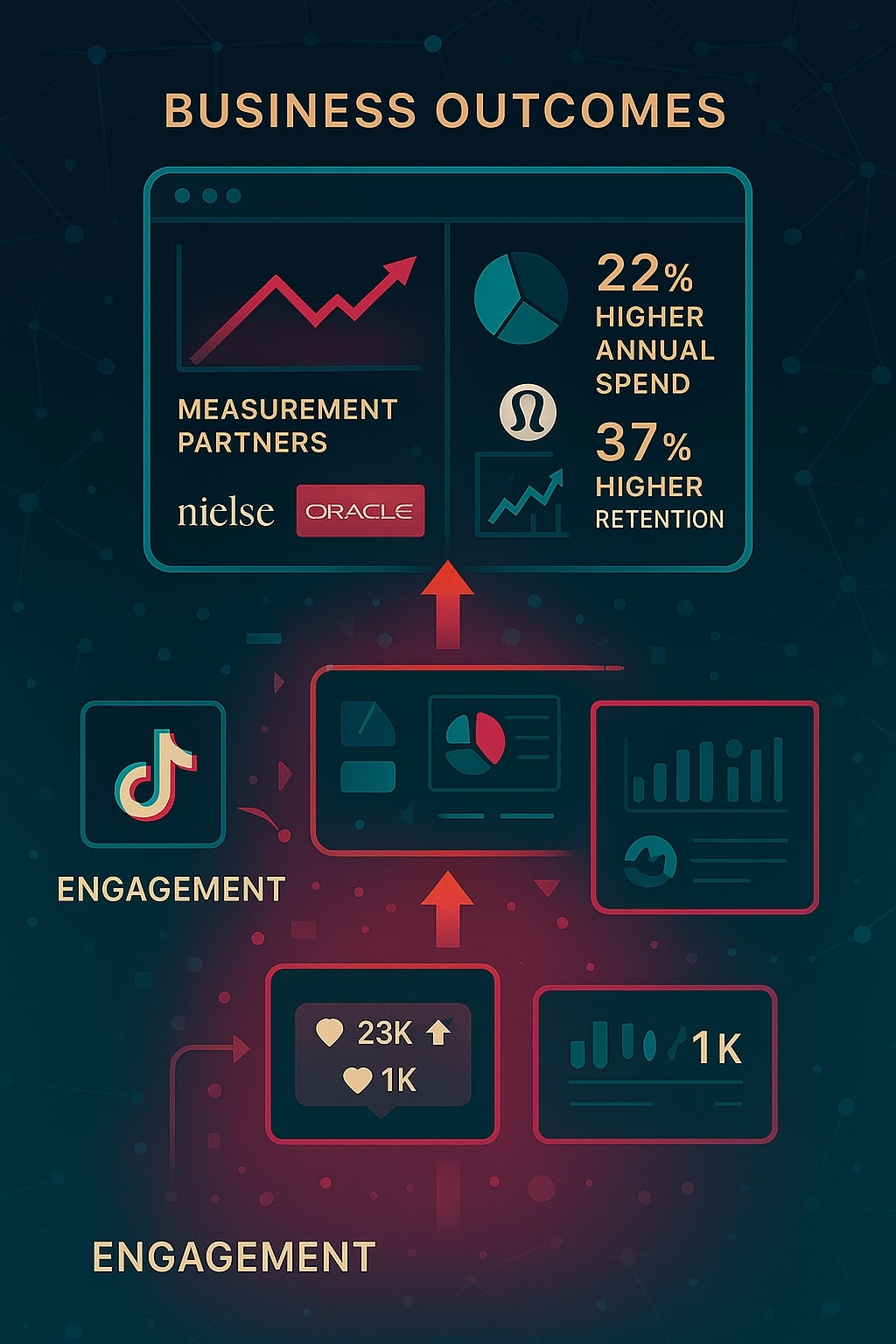
As TikTok advertising matures, measurement methodologies are evolving beyond basic engagement metrics to more sophisticated approaches that connect TikTok performance to business outcomes.
In 2024, TikTok expanded its partnership with data measurement firms like Nielsen, Oracle Data Cloud, and Kantar to provide more robust attribution capabilities. These partnerships have enabled advertisers to measure TikTok’s impact on metrics like brand lift, offline sales, and customer lifetime value.
Athletic apparel brand Lululemon utilized these enhanced measurement capabilities to quantify the impact of their “Movement Feels Better” TikTok campaign. By implementing cross-channel measurement protocols, they discovered that users exposed to their TikTok ads spent 22% more annually and had 37% higher retention rates compared to customers acquired through other channels.
“The measurement revelation changed how we allocate our marketing budget,” notes Celeste Burgoyne, Lululemon’s President of Americas and Global Guest Innovation. “We’re now investing in TikTok not just for top-of-funnel awareness but as a driver of long-term customer value.”
This evolution in measurement is particularly important as TikTok continues to expand its e-commerce capabilities. With the full rollout of TikTok Shop in major markets, advertisers can now create more seamless paths from discovery to purchase within the platform itself.
Future Horizons: What’s Next for TikTok Advertising
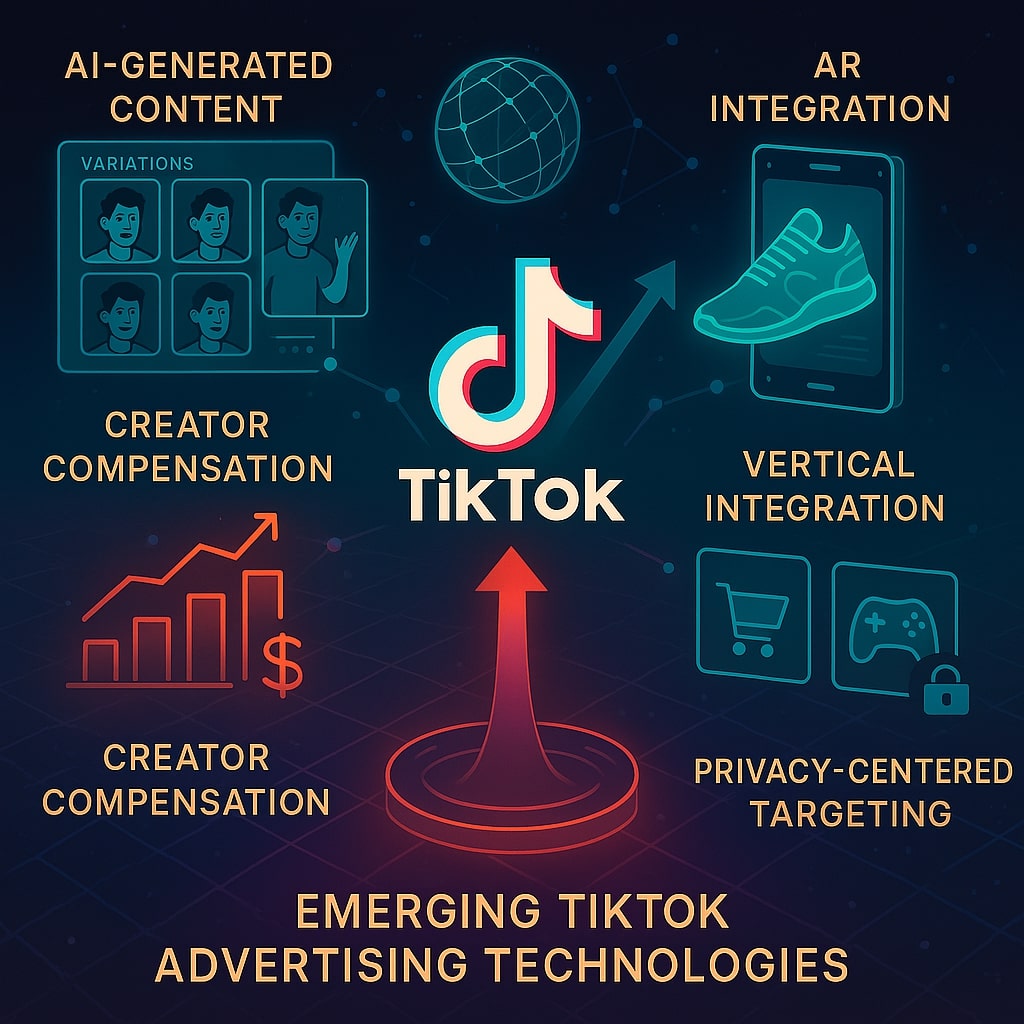
As we look toward the future of scaling TikTok advertising campaigns, several emerging trends are likely to shape the platform’s advertising ecosystem:
- AI-Generated Content: TikTok’s recent launch of AI creative tools allows advertisers to generate and test variations of creative concepts at scale. Early adopters report 41% improvements in creative efficiency and 23% better performance.
- Augmented Reality Integration: Advanced AR features are enabling more interactive ad experiences. Fashion retailer ASOS implemented “virtual try-on” capabilities in their TikTok ads, resulting in a 17% higher conversion rate and 34% lower return rate.
- Creator Compensation Evolution: New monetization models are emerging that tie creator compensation more directly to performance outcomes rather than flat fees, creating better alignment between creator incentives and advertiser goals.
- Vertical Integration: TikTok’s expansion into e-commerce, music distribution, and gaming is creating opportunities for more integrated marketing approaches that span the entire customer journey within the TikTok ecosystem.
- Privacy-Centered Targeting: As third-party cookies continue to phase out, TikTok is developing alternative targeting approaches based on content affinity and engagement patterns rather than personal identifiers.
Check out this fascinating article: How to Optimize Your Landing Page for Better Ad Performance in 2025
The Strategic Imperative: Why TikTok Matters Now More Than Ever
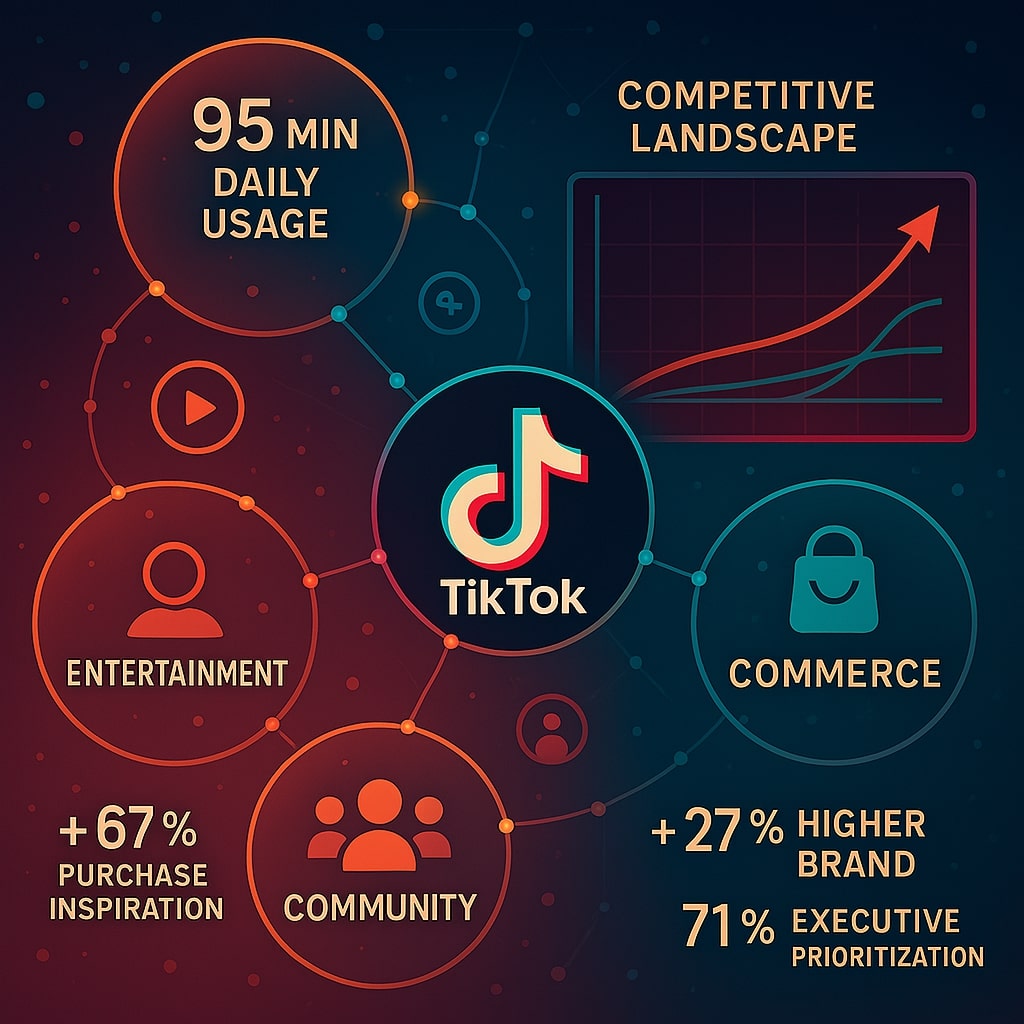
As digital advertising faces increasing challenges—from fragmented attention to privacy regulations—TikTok represents a rare bright spot of growth and engagement. Its ability to capture sustained attention, particularly among younger demographics, makes it an essential component of forward-thinking marketing strategies.
Consider these compelling statistics from the 2025 Global Media Outlook report by PwC:
- TikTok users spend an average of 95 minutes daily on the platform—29% more time than on any other social media app
- 67% of TikTok users say they’ve been inspired to make a purchase based on TikTok content, even when they weren’t explicitly shopping
- Brand recall from TikTok advertising is 27% higher than the digital platform average
- 71% of marketing executives now consider TikTok “essential” or “very important” to their digital strategy, up from 43% just two years ago
“What makes TikTok unique is its position at the intersection of entertainment, community, and commerce,” observes Scott Galloway, Professor of Marketing at NYU Stern. “It’s not just another advertising channel—it’s a cultural engine that shapes consumer behavior and expectations.”
For brands seeking growth in an increasingly competitive digital landscape, developing TikTok advertising competency isn’t just about staying current—it’s about securing a competitive advantage in the attention economy. The platform’s unique combination of algorithmic distribution, creative expressiveness, and cultural centrality makes it an unparalleled vehicle for brands looking to build relevance and resonance with contemporary consumers.
The untold stories behind viral TikTok campaigns reveal a common thread: success comes not to those who simply adapt existing marketing approaches to a new platform, but to those who embrace TikTok’s distinctive culture and capabilities to create something that couldn’t exist anywhere else. As TikTok continues to evolve, the brands that thrive will be those that view it not just as a marketing channel but as a creative canvas for building meaningful connections in the digital age.
FAQ (Frequently Asked Questions)
Ready to apply this to your business?
Let's Talk Strategy →