- TikTok Shop is making GMV Max the default and only supported campaign type for Shop Ads; industry coverage pegs broad enforcement to early September 2025.
- GMV Max automates creative, targeting, and spend, and can attribute organic and affiliate orders to your GMV Max dashboard.
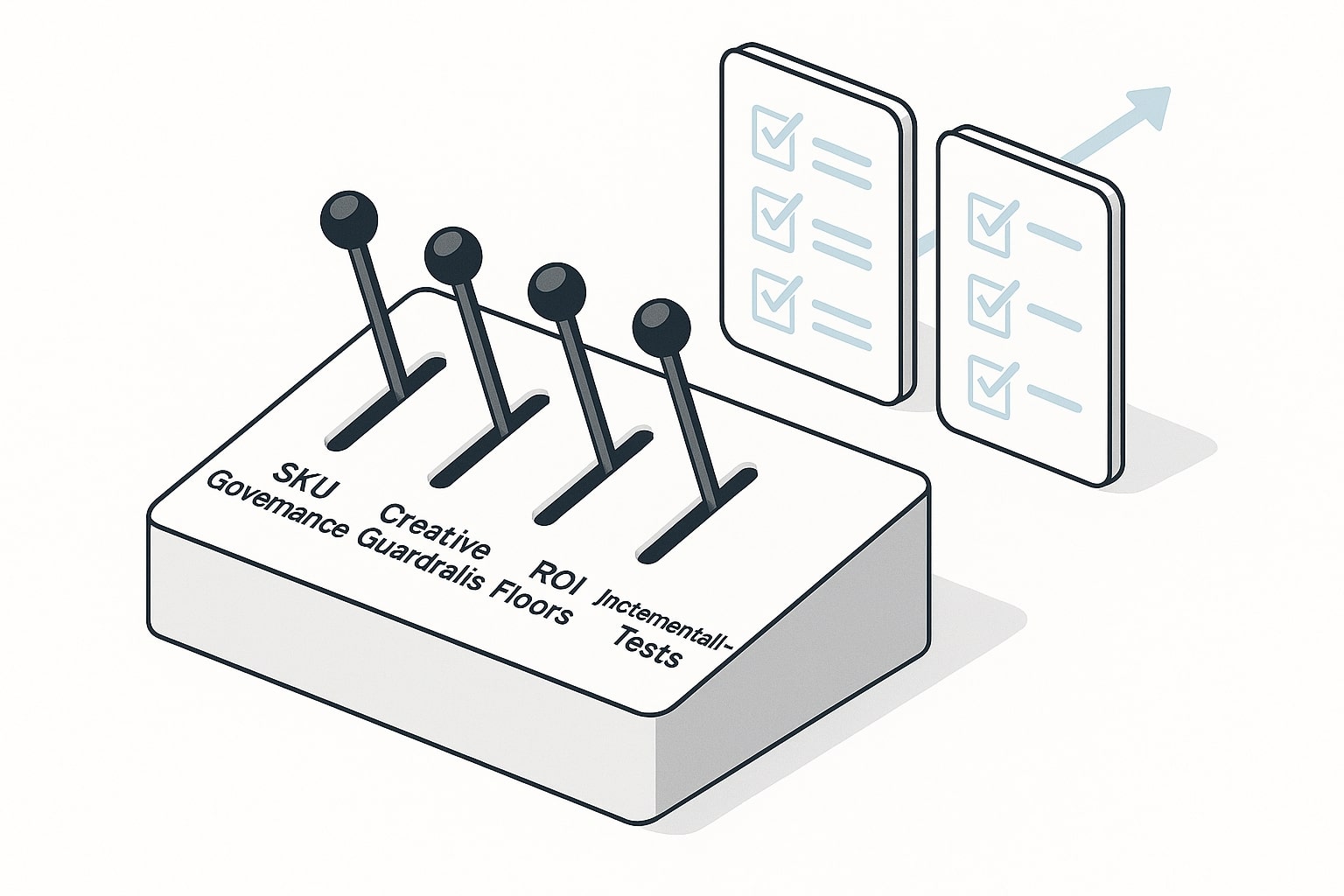
- Brands still control inputs (SKU selection, budgets, ROI goals) and should add guardrails for creative, inventory, and measurement.
- Watch the September 13, 2025 Community Guidelines update for commercial and AI-generated content rules.
Margabagus.com – TikTok Shop is shifting e-commerce advertising into full automation. Starting July 2025, GMV Max became the default and only supported campaign type for TikTok Shop Ads created with the Sales objective. That means the legacy manual formats (LIVE Shopping Ads, Product Shopping Ads, and Video Shopping Ads) are no longer available for new setups. Multiple industry round-ups report that broad enforcement for all advertisers is rolling out in early September 2025, which explains the current wave of confusion—and opportunity.
Under GMV Max, TikTok’s system composes ads from all available creative assets, optimizes both organic and paid delivery to maximize incremental GMV, and—crucially—attributes orders from organic and affiliate touchpoints back into the GMV Max dashboard for the promoted products. For e-commerce teams, this blurs the line between “paid,” “organic,” and “affiliate” performance and demands a new approach to guardrails, measurement, and governance.
At the same time, TikTok’s Community Guidelines update effective September 13, 2025 introduces clearer rules for commercial and AI-generated content. Creative pipelines and approvals should be refreshed accordingly.
What Changed and Why It Matters
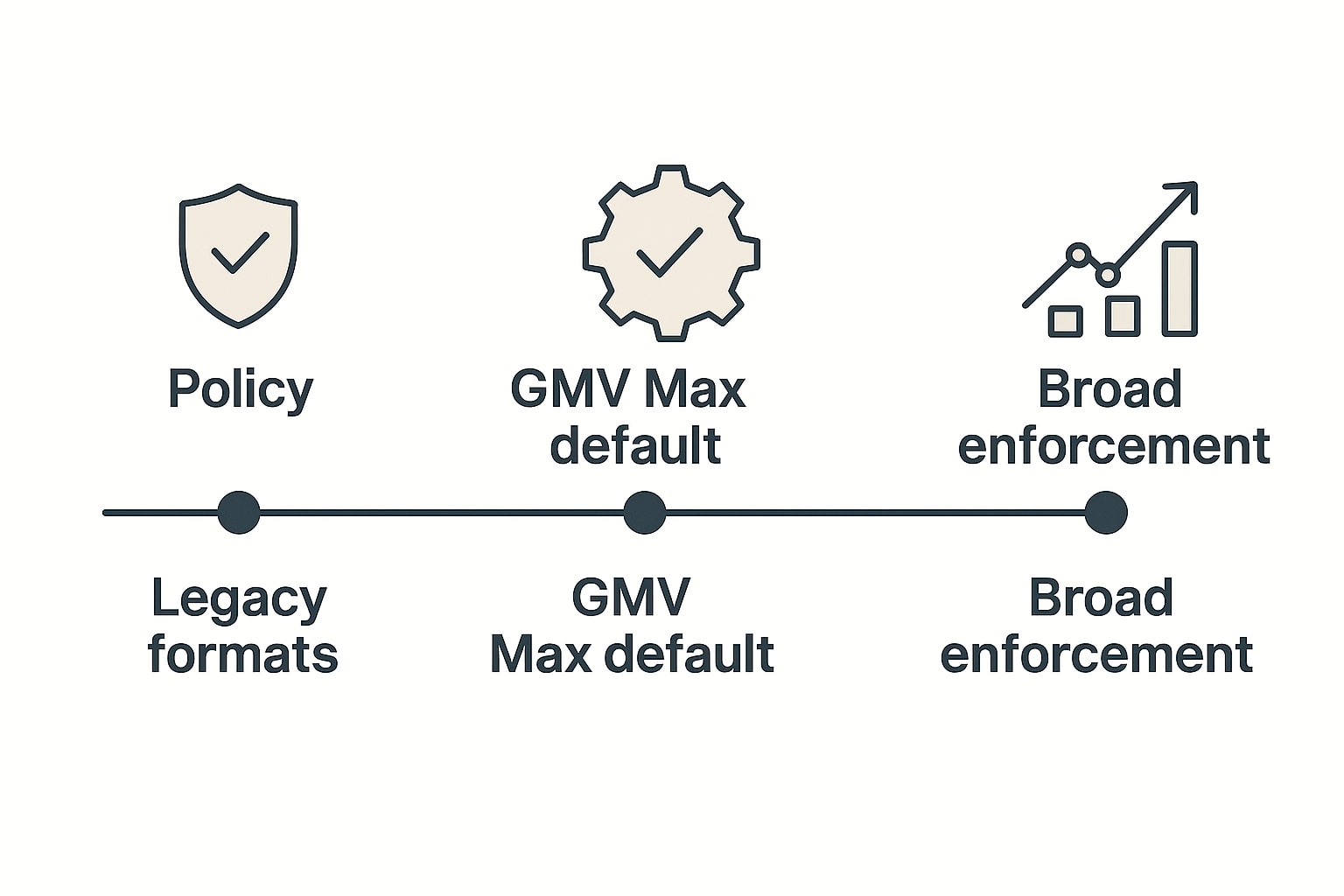
TikTok’s Help Center states that GMV Max is the default and only supported campaign type for TikTok Shop Ads created with the Sales objective, deprecating manual ad creation for new campaigns. Industry coverage describes a hard pivot toward automation with September 2025 positioned as the practical switchover for many sellers and agencies. The move has drawn pushback from large advertisers who worry about transparency and tactical control, even as smaller sellers welcome faster setup and automatic optimization.
For brands, the implications are immediate. Campaign building becomes more like configuring inputs and constraints, while the system handles creative assembly, targeting, and budget distribution. You will need fresh playbooks for SKU governance, creative guardrails, and incrementality measurement to prevent brand drift and maintain accountability.
Check out this fascinating article: TikTok Ads 101: How to Set Up Your First Campaign (the 2025 Way)
From Manual Ads to GMV Max Only
According to TikTok’s documentation, GMV Max replaces legacy formats for new Sales-objective Shop campaigns; existing legacy campaigns can continue to run but new creation and duplication are disabled. Practically, this means new growth initiatives must be launched under GMV Max and measured within its dashboard constructs.
How GMV Max Works Under the Hood
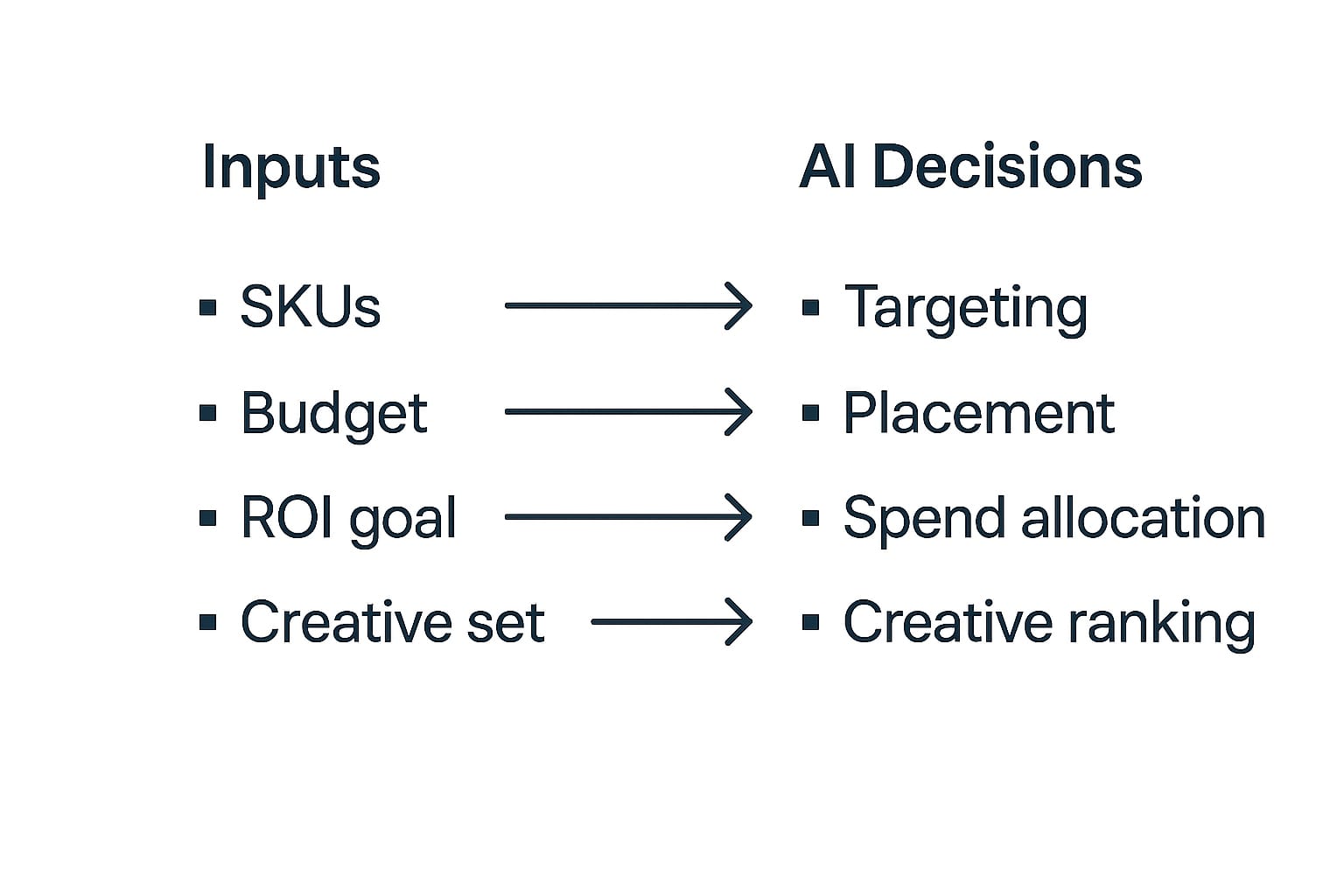
TikTok positions GMV Max as a channel-ROI optimizer for TikTok Shop. The system uses all available creative assets to assemble ads and sets campaign parameters automatically. It optimizes organic and paid delivery to increase incremental GMV, and in your Seller Center dashboard, attributions include orders from organic content and affiliate sources for the products you promote. This integrated view is powerful, but it also changes how teams should think about creative testing, budget governance, and reporting structure.
Inputs You Control vs Decisions the AI Makes
| You Control (Inputs) | AI Decides (System) |
|---|---|
| Product or SKU selection, catalog readiness | Targeting breadth, audience composition, and delivery allocation |
| Daily/total budgets and bid/ROI goals (where exposed) | Real-time bid/price, budget distribution across creatives and audiences |
| Creative availability and “safe” variants; brand rules | Creative ranking, combinations, and selection across placements |
| Exclusions/eligibility (e.g., country, inventory constraints) | Pace and sequencing of spend; organic vs paid emphasis |
Several vendor briefings summarize this model similarly: advertisers choose products, set budgets, define ROI goals, while the algorithm decides the rest. Treat this as “guardrail configuration” rather than micromanagement.
Note: Some write-ups also mention an ROI Protection mechanism that issues ad credits if performance falls below a threshold (e.g., 90% of your target ROI). If eligible in your region/account, that can de-risk early testing, but check your account terms before relying on it.
Brand Control Playbook (Practical)
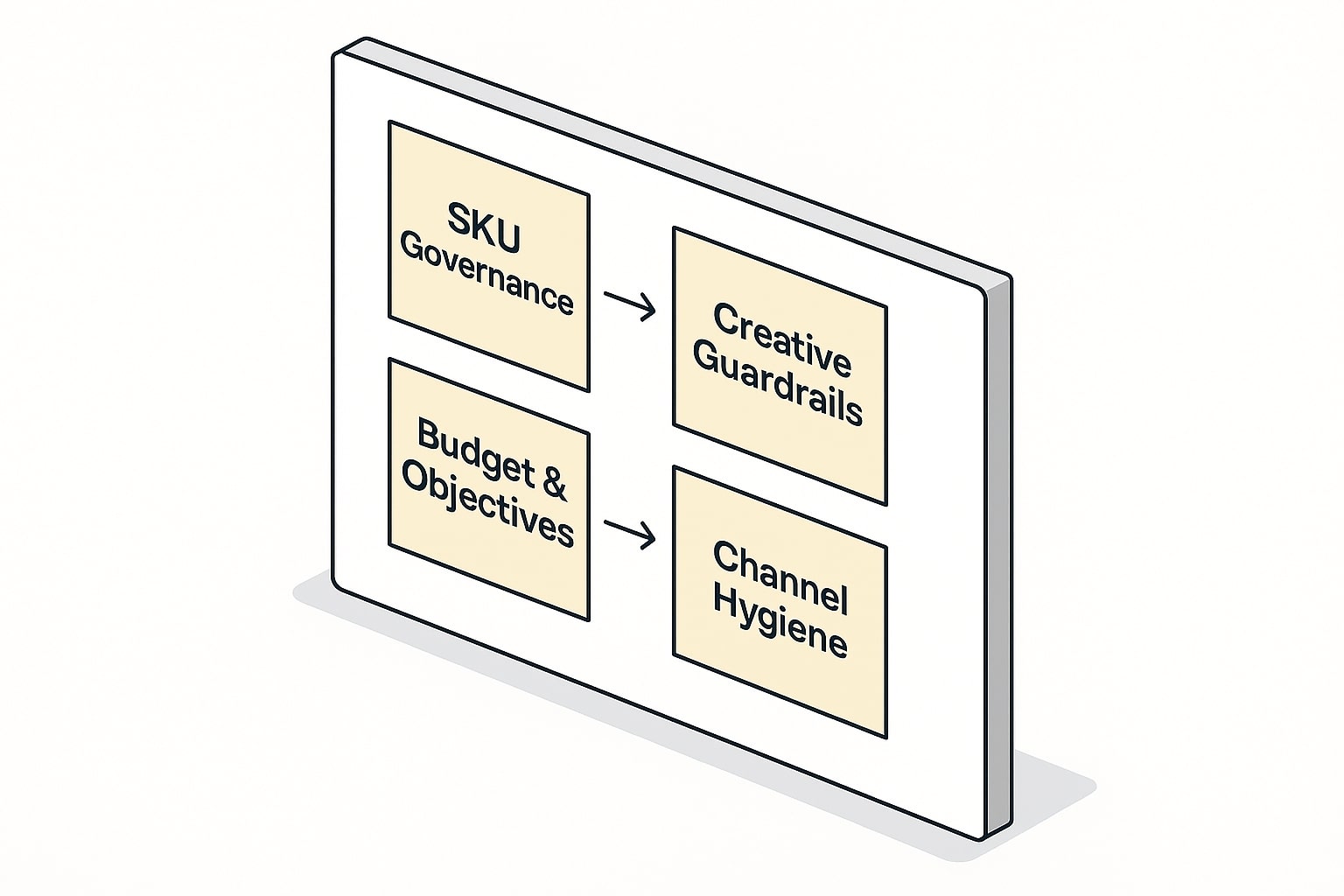
Even in an automated system, you can enforce brand standards and hit unit economics if you shift to governance-first operations.
1) SKU Governance & Inventory Strategy
-
Prioritize hero SKUs with stable margin, stock, and review density. Group long-tail SKUs into thematic bundles to help the system find lift without diluting budget.
-
Align promo cycles to availability: freeze low-stock or fragile inventory, and pre-stage replenishment windows so automated spend does not create stockouts.
-
Maintain a negative list of SKUs you never want advertised under GMV Max (compliance risks, packaging changes, or low CSAT).
2) Creative Guardrails
-
Build a “safe list” of approved hooks, captions, overlays, and product angles. Proactively upload multiple brand-safe variants so the system’s creative assembly has quality options.
-
Establish a two-step approval: internal brand check, then legal/compliance check mapped to TikTok’s newest Community Guidelines—especially around commercial disclosures and AI-generated content.
3) Budget & Objectives
-
Start with tiered budgets: 70% into proven SKUs, 20% into launch SKUs with strict guardrails, 10% into experimental SKUs.
-
Anchor on ROI or ROAS guardrails that match contribution margin after shipping and returns. Switch to profit-per-order or CM2 thinking, not just platform ROAS.
4) Channel Hygiene
-
Refresh catalog taxonomy, ensure images/videos meet spec, and unify product naming.
-
Audit affiliate program so commissions do not induce margin squeeze when GMV Max attributes affiliate conversions into the same dashboard.
Check out this fascinating article: How to Scale TikTok Ads in 2025: Unlocking the Power of Rapid Growth
Measurement That Actually Works with GMV Max
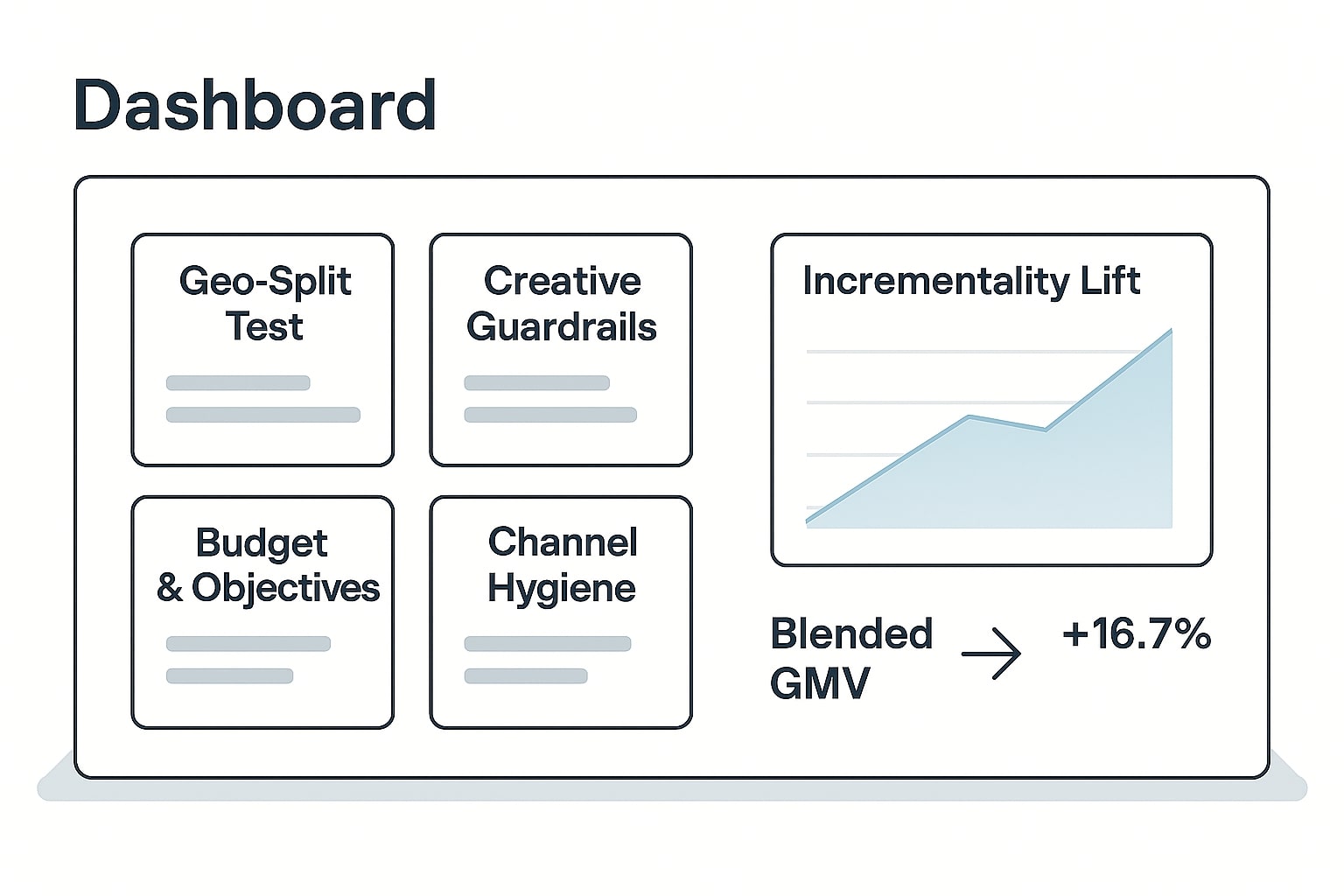
GMV Max alters attribution. Because organic and affiliate orders can roll into the GMV Max dashboard for the promoted products, judge success on incrementality, not just last-touch metrics. Consider:
-
Geo-split or time-based holdout tests to capture lift versus natural demand.
-
Use blended metrics—total shop GMV, units, and profit—alongside platform metrics.
-
For creative, run controlled asset rotations: hold one variable constant (e.g., hook) while varying others (e.g., overlay, CTA) to isolate drivers, even if the system performs ranking automatically.
Risk & Compliance in September 2025
The Community Guidelines update effective September 13, 2025 clarifies how commercial messaging and AI-generated content should be handled. Review labeling, disclosure, and safety cues across all assets, including creator and affiliate content that GMV Max may leverage. Build checklists for claim substantiation, brand safety categories, and age-restricted policies, and update them quarterly.
Migration Checklist (30 Minutes)
- Eligibility check: Confirm Shop eligibility and GMV Max availability in your region/account.
- Catalog audit: Fix titles, thumbnails, and variant mapping; remove SKUs you cannot fulfill at scale.
- SKU tiers: Tag hero / launch / experimental; set guardrails and negative lists.
- Creative pack: Upload 8–12 brand-safe short-form assets per hero SKU (mix UGC, demo, benefit clip, social proof).
- Budget plan: Allocate 70/20/10 across tiers; set ROI/ROAS floors.
- Tracking & reporting: Align platform metrics with shop GMV and profit; define incrementality test.
- Compliance sweep: Map all assets to September 13 guidelines; document approvals.
- Launch and watch: Daily checks on spend volatility, SKU cannibalization, and creative drift for the first 7–10 days.
Check out this fascinating article: Targeting Gen Z on TikTok Ads: Music, Trends, and Challenges
Ready to apply this to your business?
Let's Talk Strategy →